Easy Risotto alla Milanese
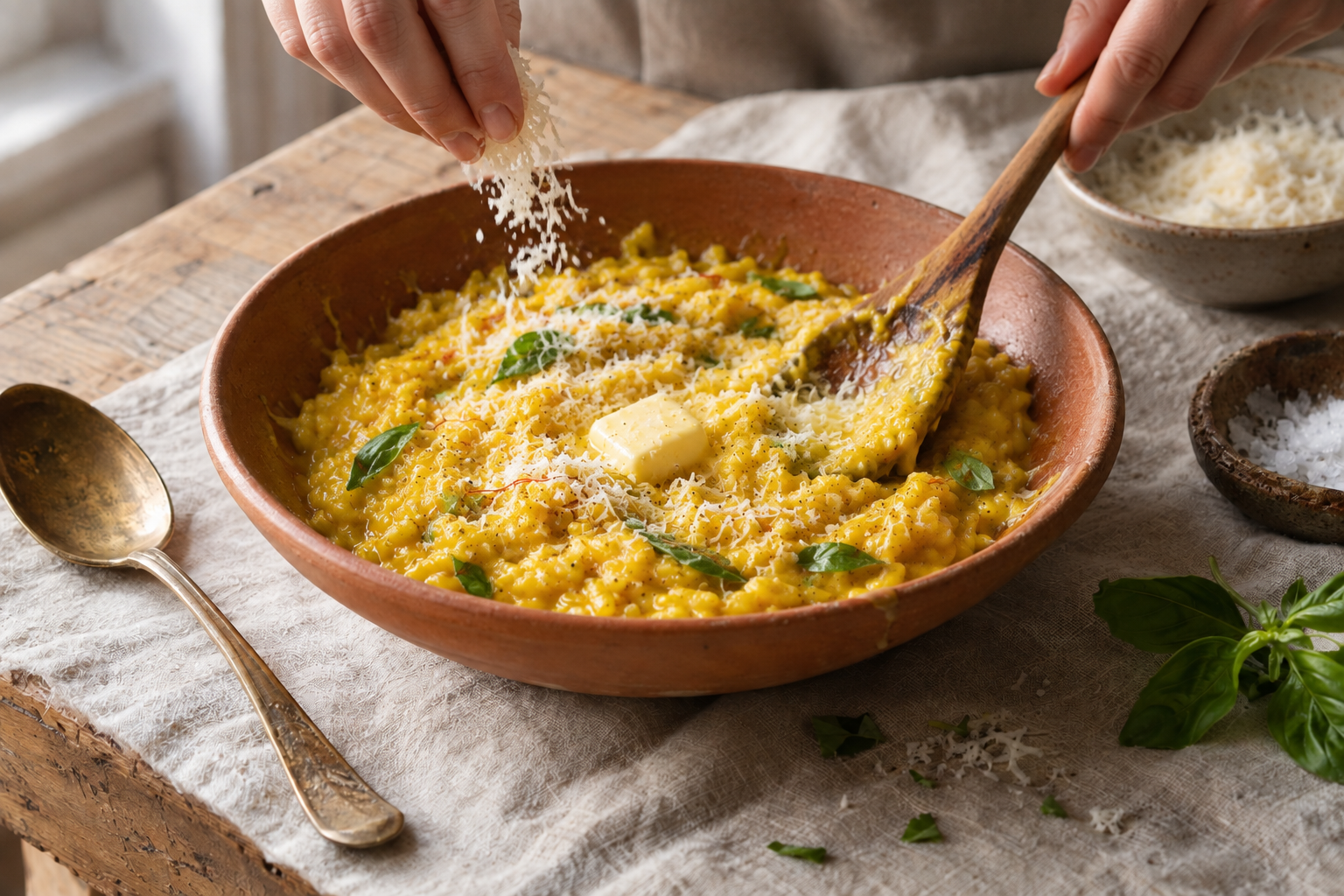
This easy Risotto alla Milanese gets its golden color from bloomed saffron and its silky finish from warm broth, steady stirring, butter, and Parmesan.
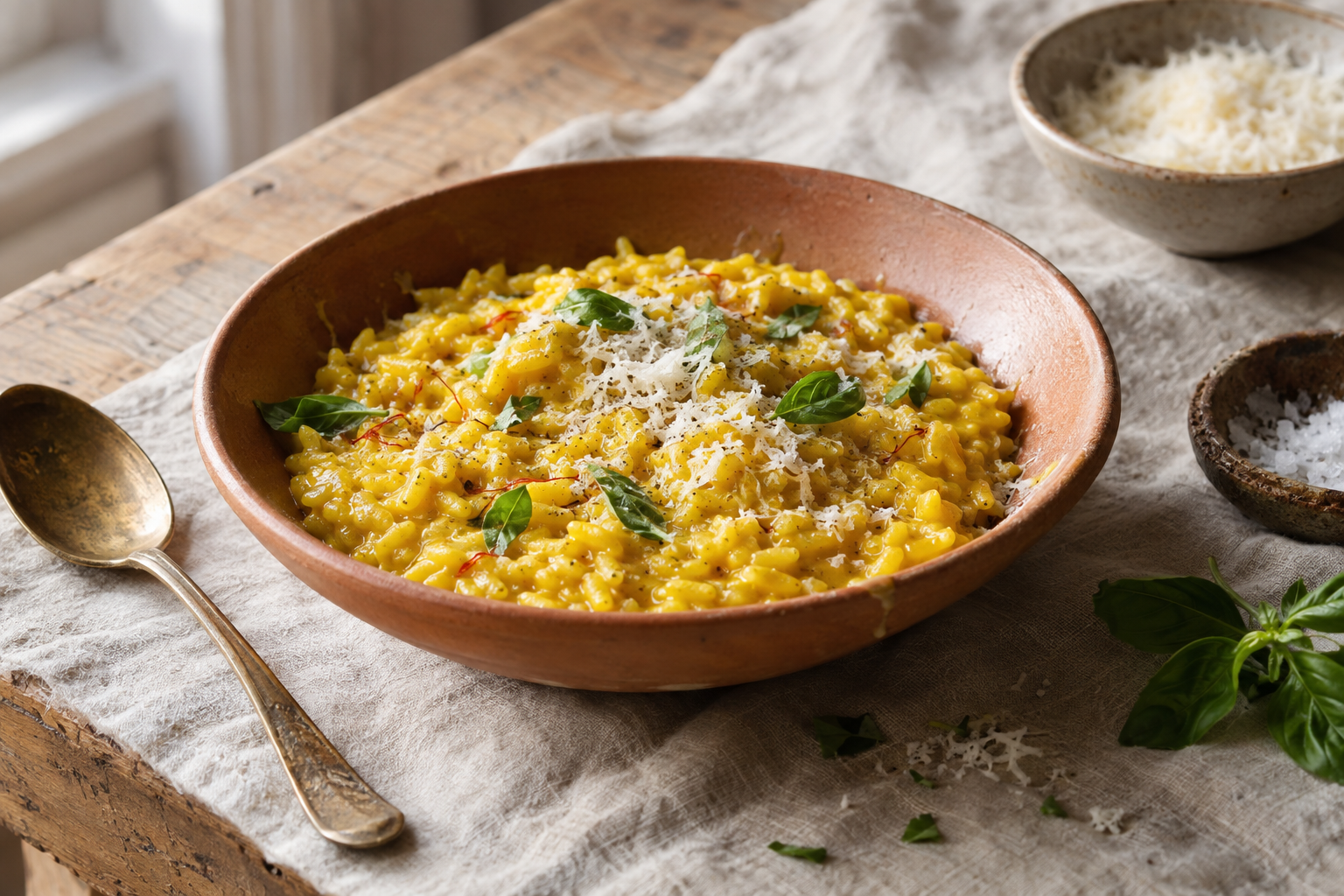
Risotto alla Milanese is a creamy Lombard rice dish colored and scented with saffron. In Milan, it is often served with ossobuco, and its deep golden color is part of what makes it instantly recognizable. This easy version skips the traditional marrow but keeps the technique that matters: warm broth added a little at a time, so the rice releases starch without turning mushy.
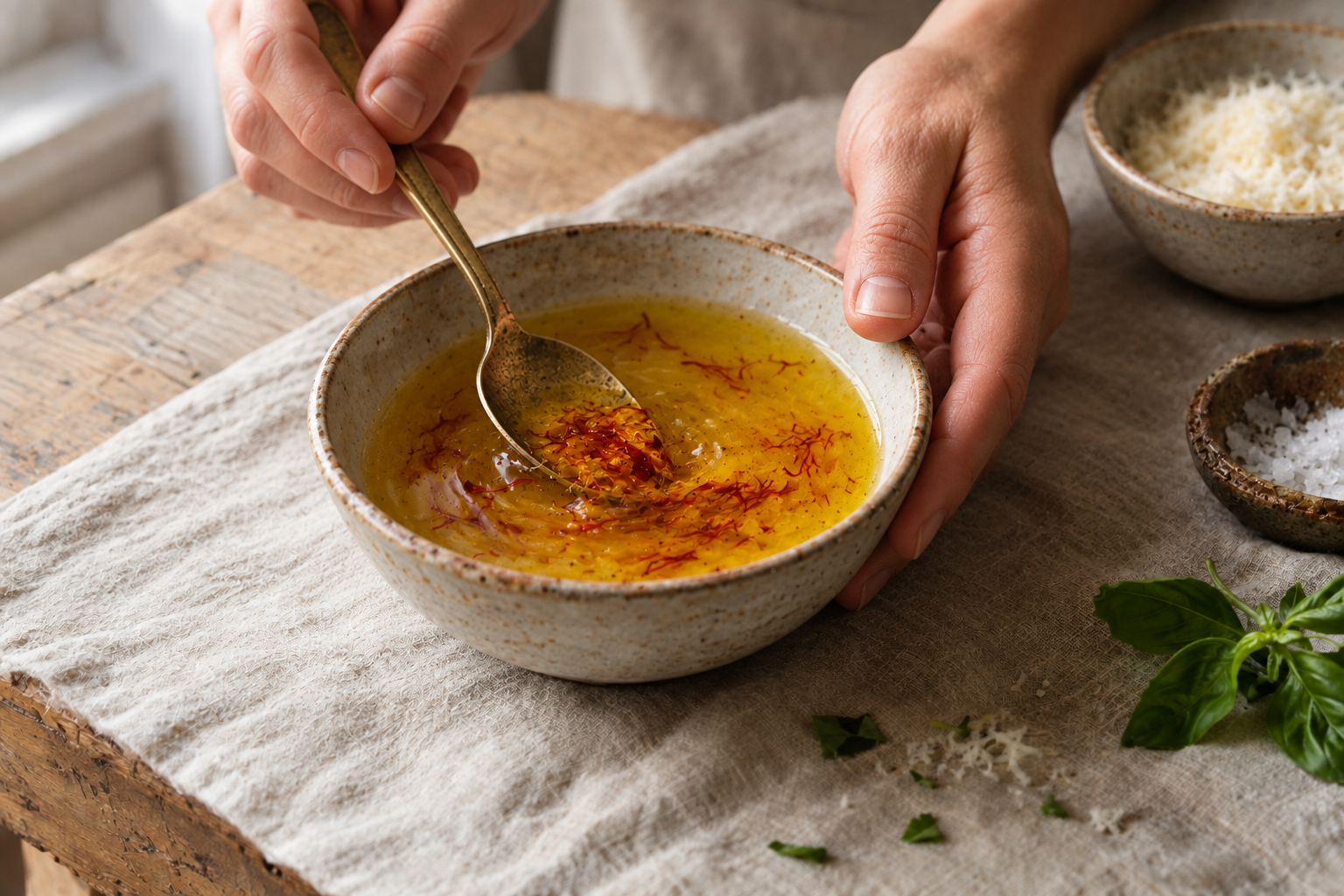
I steep the saffron in warm broth before it goes into the pan. That gives the threads time to release their color and keeps the flavor even throughout the rice. Stir often, but you do not need to stand over the pot stirring every second; add more broth when the previous ladleful is mostly absorbed. Finish with butter and Parmesan off the heat. This is the mantecatura (the final mixing of butter and cheese), which makes the risotto creamy rather than heavy. For another Italian main to cook next, try Saltimbocca alla Romana Recipe. This version works because the saffron blooms first and the rice finishes loose, glossy, and tender with a slight bite.
By Lucia Moretti
Step by step
These photos follow the method in order, from the first prep step to the plated dish.
Where It Goes Wrong
The rice is pale or unevenly colored. Steep the saffron in warm broth before adding it to the pan, and stir the infusion through the rice.
| Symptom | Cause | Fix |
|---|---|---|
| The rice is pale or unevenly colored. | The saffron was added dry or not given time to bloom. | Steep the saffron in warm broth before adding it to the pan, and stir the infusion through the rice. |
| The rice is crunchy in the center. | It needs more cooking time or the broth was added too quickly and the pan cooled. | Keep the broth hot and continue cooking, adding it a ladle at a time until the grains are tender with a slight bite. |
| The risotto is thick and clumpy. | The rice has absorbed too much liquid or sat too long before serving. | Stir in a splash of hot broth just before serving until the rice flows slowly when the pan is tilted. |
| The onion or rice tastes browned and bitter. | The pan was too hot during the gentle cooking and toasting stages. | Use medium-low heat for the onion and stir frequently while toasting the rice. |
| The finished dish tastes flat or too salty. | Broth salt levels vary, and the seasoning was not checked at the end. | Use low-sodium broth when possible, start with less salt if unsure, and taste before adding more. |
Recipe
Ingredients
Method
- 1
Warm the broth in a saucepan over low heat; keep it hot but not boiling. Ladle about 1/2 cup (120 ml) into a small bowl, add the saffron, and let it steep while you prepare the rice. The liquid should turn a vivid yellow.
- 2
Melt 2 tablespoons (28 g) of butter in a wide, heavy saucepan over medium-low heat. Add the onion and salt and cook for 4–5 minutes, stirring, until soft and translucent but not browned.
- 3
Stir in the rice and toast it for about 2 minutes, coating the grains in butter. The edges should look slightly translucent while the centers remain opaque.
- 4
Pour in the wine and stir until it is almost completely absorbed, about 1–2 minutes. You should no longer smell sharp alcohol, and the rice should look moist rather than soupy.
- 5
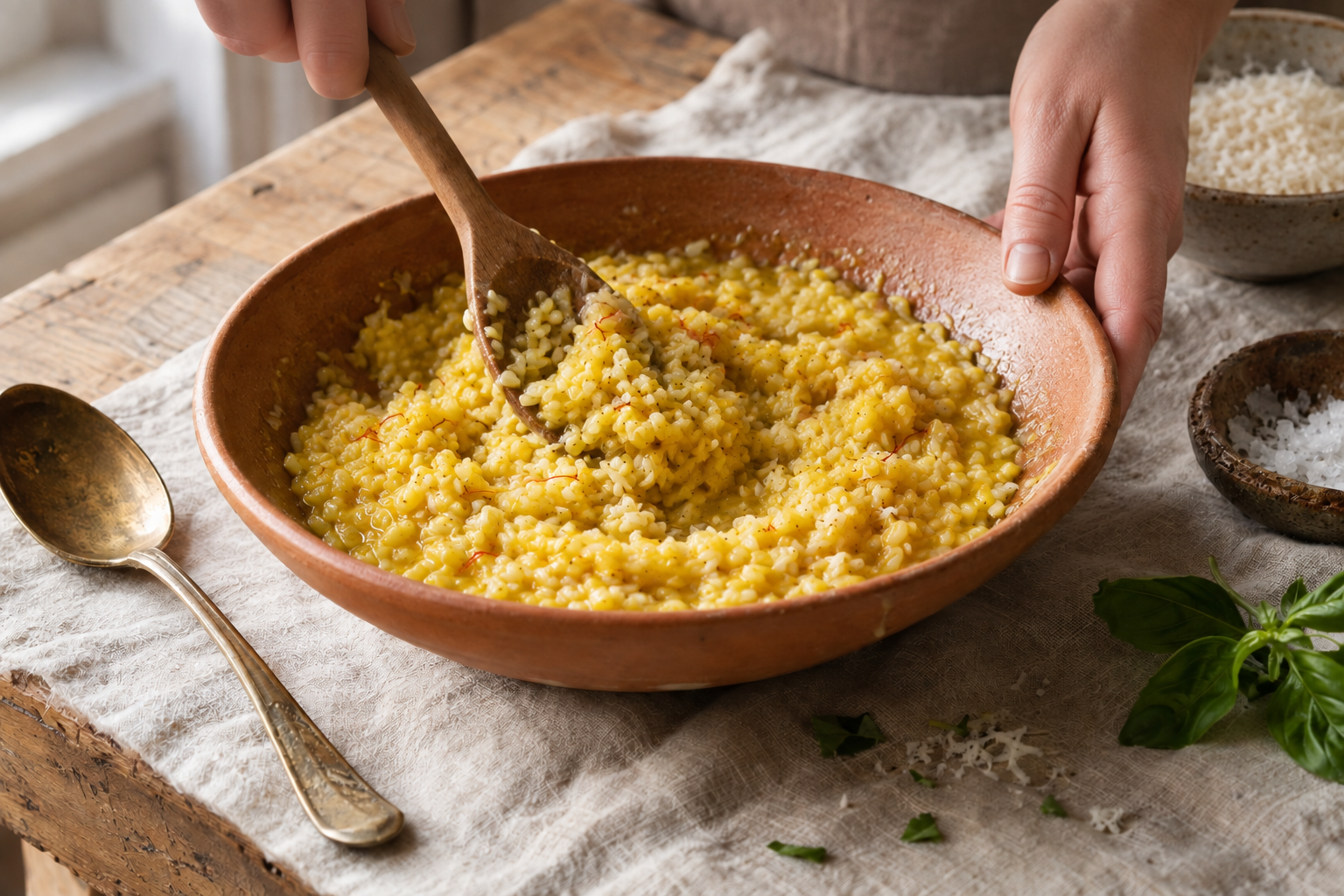
Add a ladle of hot broth and stir often as the rice simmers. When most of the liquid is absorbed, add another ladle. After about 8 minutes, stir in the saffron broth. Continue adding broth as needed and cook for 16–20 minutes total, until the rice is creamy and tender with a slight bite. You may not need all the broth.
- 6
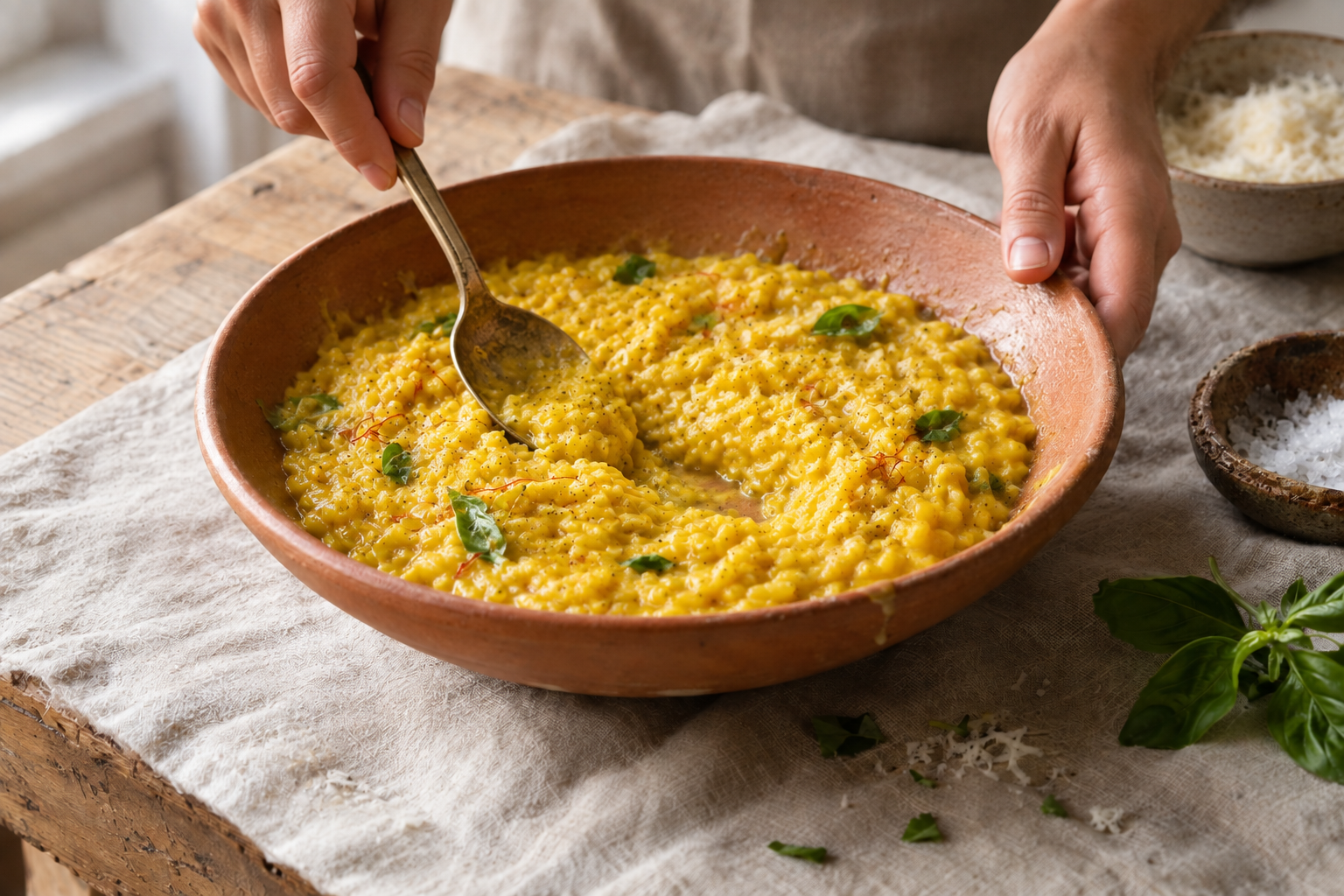
Take the pan off the heat. Stir in the remaining 2 tablespoons (28 g) butter and the Parmesan until melted. The risotto should flow slowly when you tilt the pan; stir in a splash of hot broth if it looks stiff. Taste and adjust the salt.
- 7
Serve immediately in warm shallow bowls, with extra Parmesan if you like. The rice will continue to thicken as it sits, so aim for a loose, creamy consistency in the pan.
FAQ
What rice is best for Risotto alla Milanese? Arborio rice is easy to find and works well for this recipe. Carnaroli also makes a creamy risotto and tends to hold its shape well.
What rice is best for Risotto alla Milanese?
Arborio rice is easy to find and works well for this recipe. Carnaroli also makes a creamy risotto and tends to hold its shape well.
Can I make Risotto alla Milanese without wine?
Yes, you can leave out the wine. Replace it with the same amount of hot broth and continue cooking as directed.
Can I make Risotto alla Milanese ahead of time?
Risotto is best served right after cooking because it thickens as it sits. For leftovers, refrigerate promptly and reheat gently with a splash of broth or water.
How do I know when risotto is done?
The grains should be tender with a slight bite in the center, and the rice should look creamy and flow slowly when you tilt the pan.
Comments
No approved comments yet.
Sign in to leave a comment. Comments stay hidden until they are approved.
Related recipes
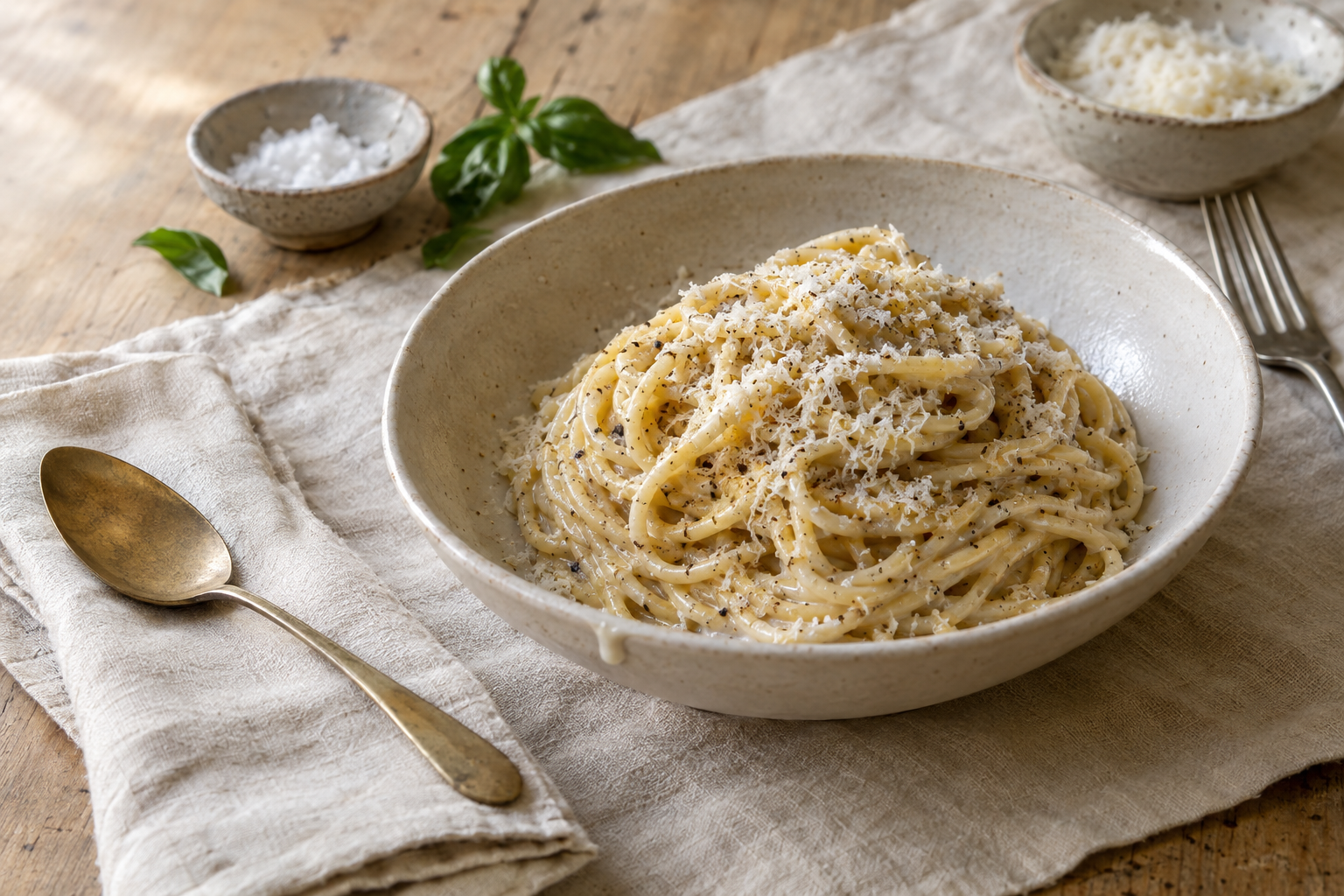
Easy Cacio e Pepe Recipe
This easy cacio e pepe recipe uses finely grated Pecorino Romano, toasted black pepper, and starchy pasta water for a smooth, clingy Roman sauce without cream.
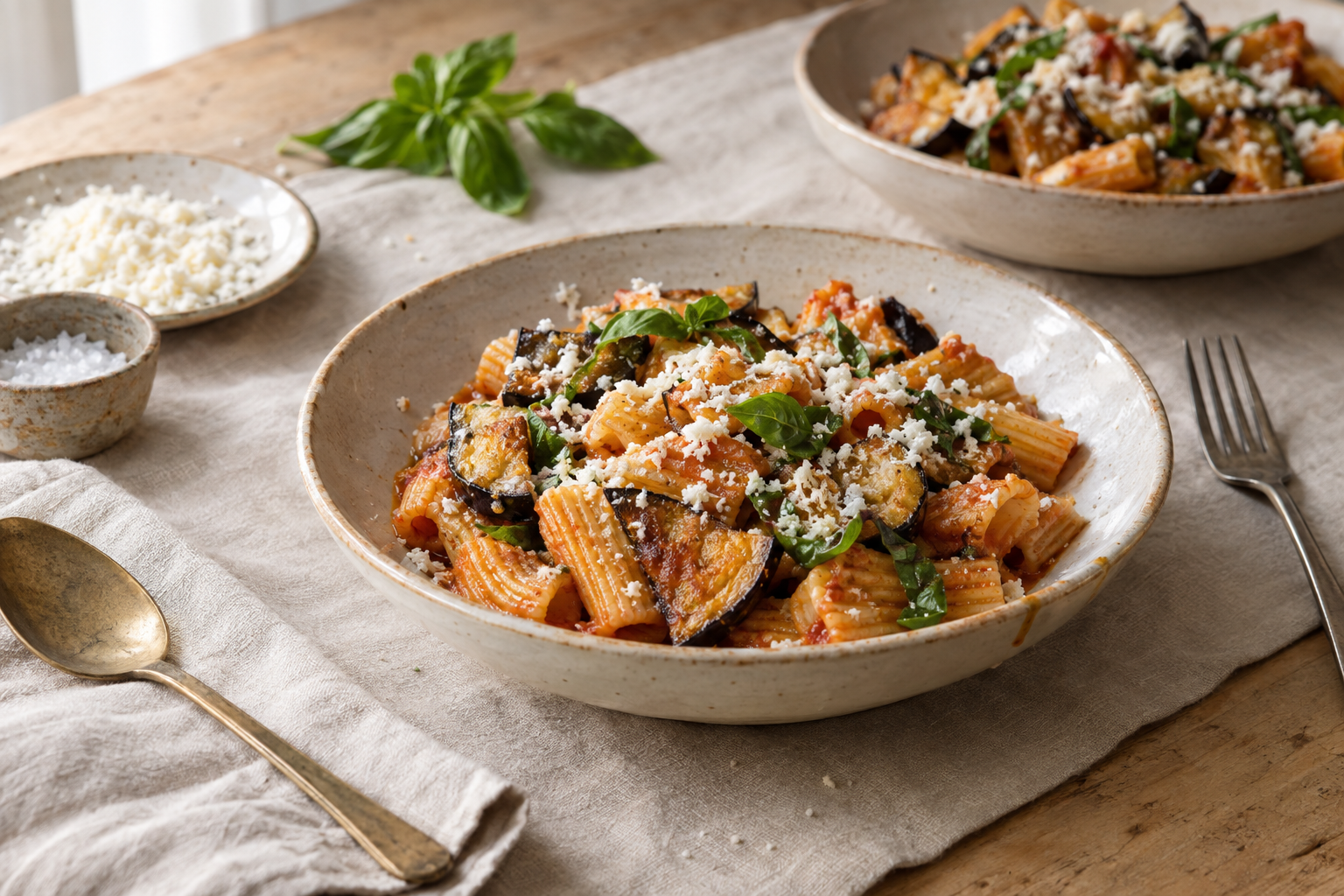
Pasta alla Norma Recipe
This pasta alla Norma recipe pairs tender tomato sauce and basil with crisp fried eggplant and salty ricotta salata for a balanced Sicilian supper.
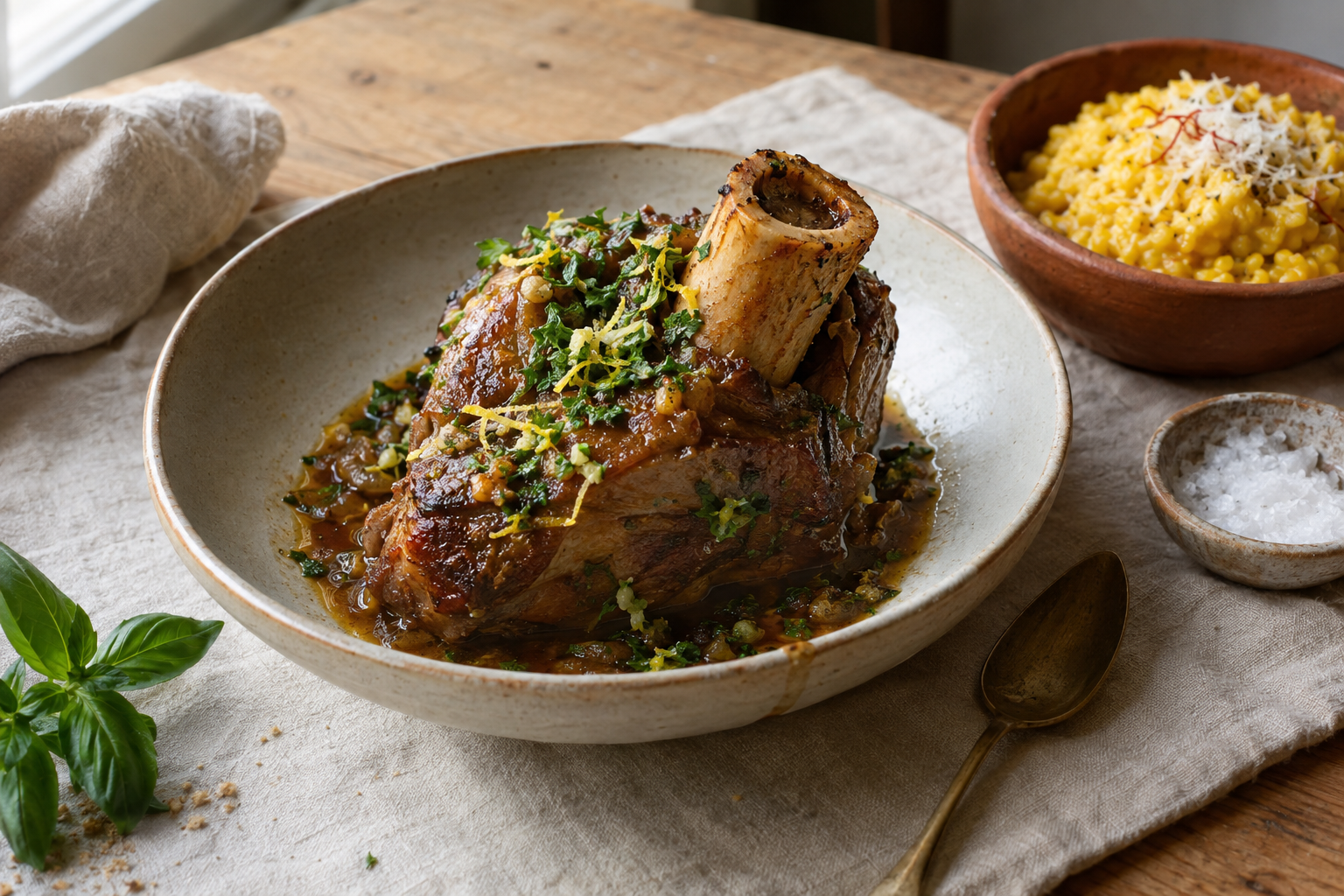
Ossobuco alla Milanese Recipe
This ossobuco alla Milanese recipe braises veal shanks gently in a Dutch oven until tender, then adds lemon-parsley gremolata for a fresh, balanced finish.
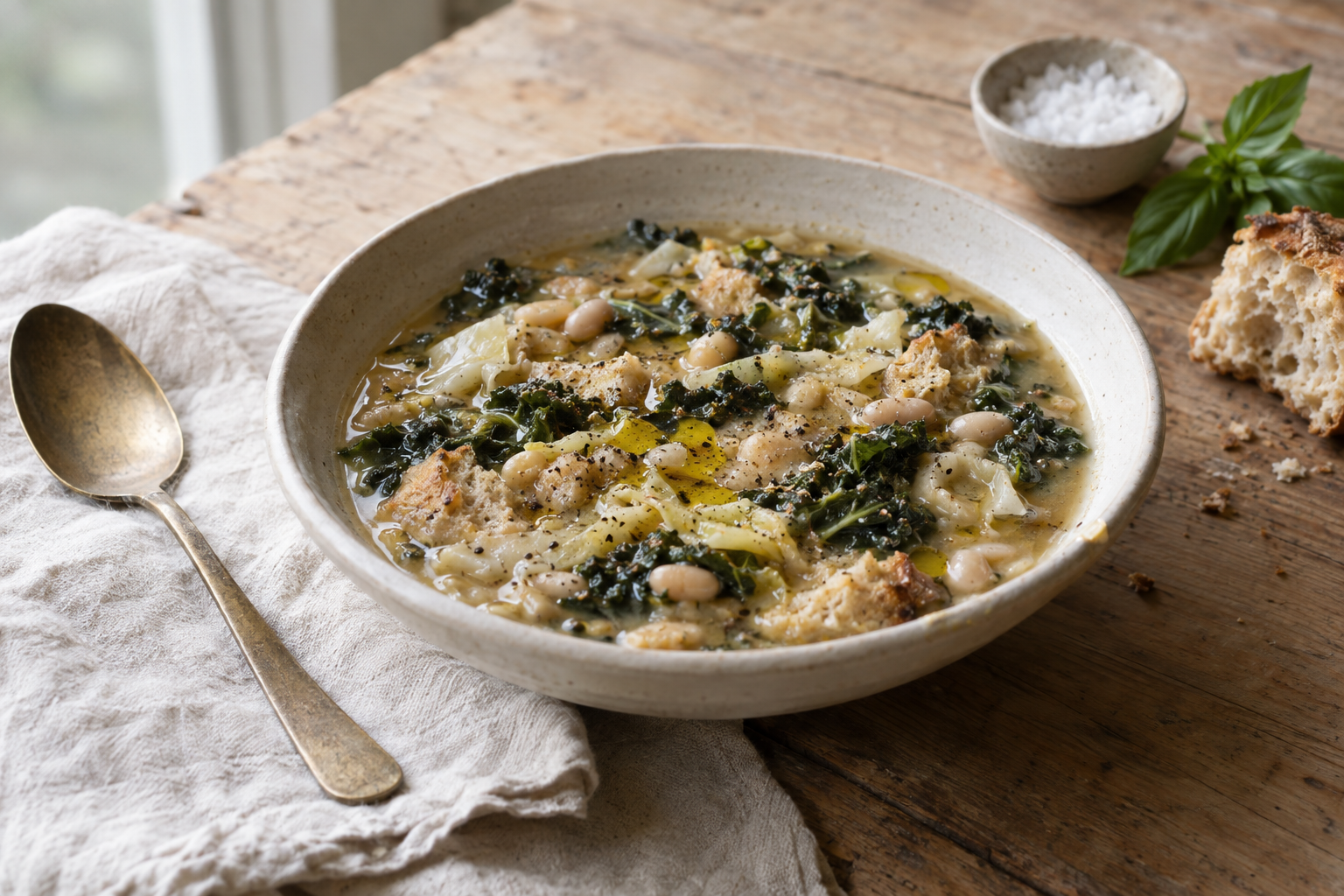
Traditional Tuscan Ribollita Recipe
A hearty Tuscan bean, kale, cabbage, and bread soup, ribollita is reheated so its broth turns rich and stale bread gives the pot body and substance.