Ossobuco alla Milanese Recipe
This ossobuco alla Milanese recipe braises veal shanks gently in a Dutch oven until tender, then adds lemon-parsley gremolata for a fresh, balanced finish.
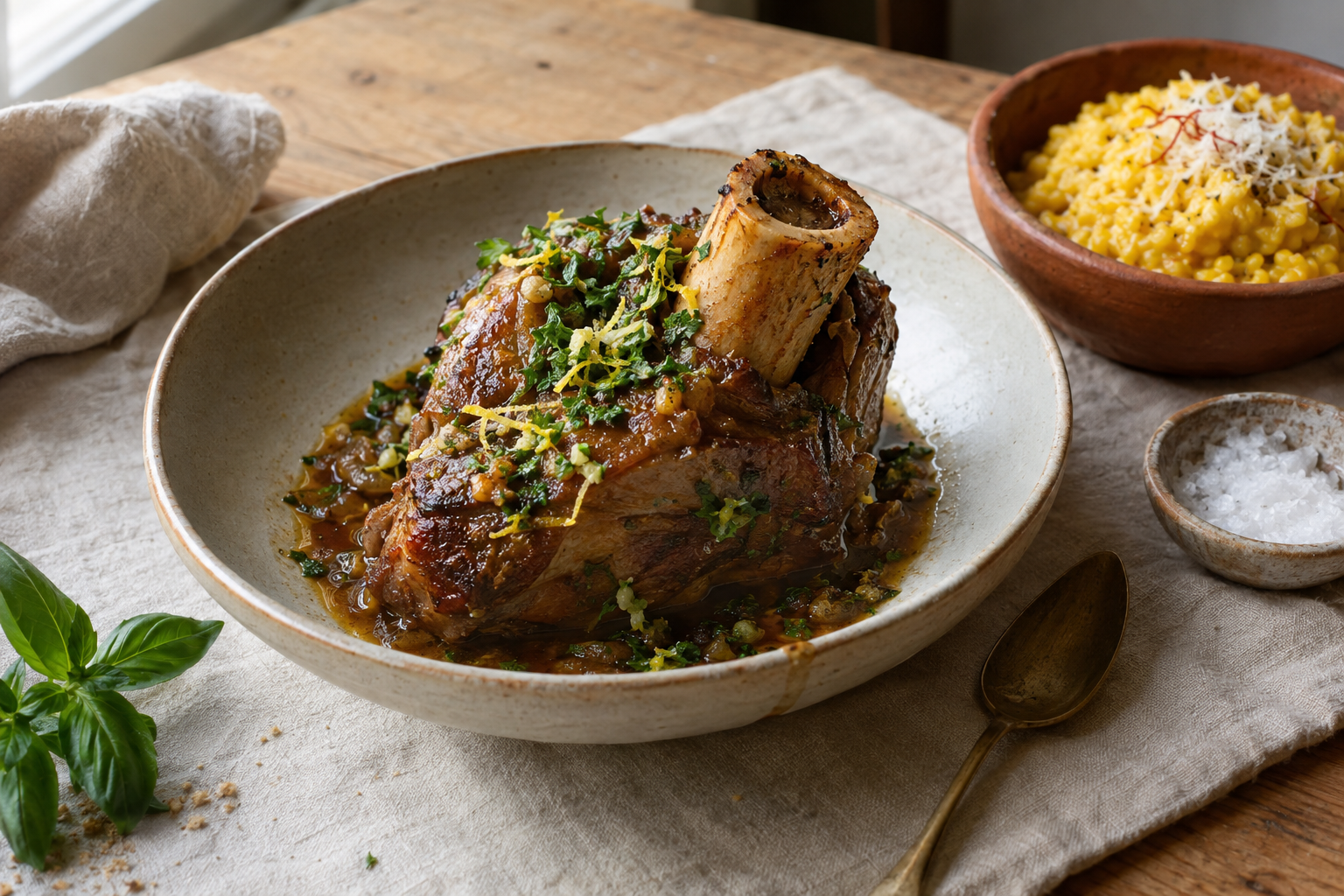
Ossobuco alla Milanese is veal shank slowly braised until tender and finished with a bright mix of parsley, lemon, and garlic. It comes from Milan, in Lombardy, where the marrow-filled shank is often served beside saffron risotto. The cross-cut bone is part of the pleasure here, not something to work around: it keeps the meat moist and holds the marrow that enriches the sauce.
I brown the shanks first, then cook onion, carrot, and celery into a soffritto (the slow-cooked base of onion, carrot, and celery). White wine loosens the browned bits, and a covered Dutch oven does the patient work in a low oven. The meat is ready when a fork slips in easily and it nearly falls from the bone. Gremolata goes on at the end, so its lemon and parsley stay fresh instead of fading into the braise.
For the classic Milanese plate, cook it with Easy Risotto alla Milanese. This version works because gentle oven heat tenderizes the shanks evenly, while the gremolata keeps every rich bite lively.
By Lucia Moretti
Step by step
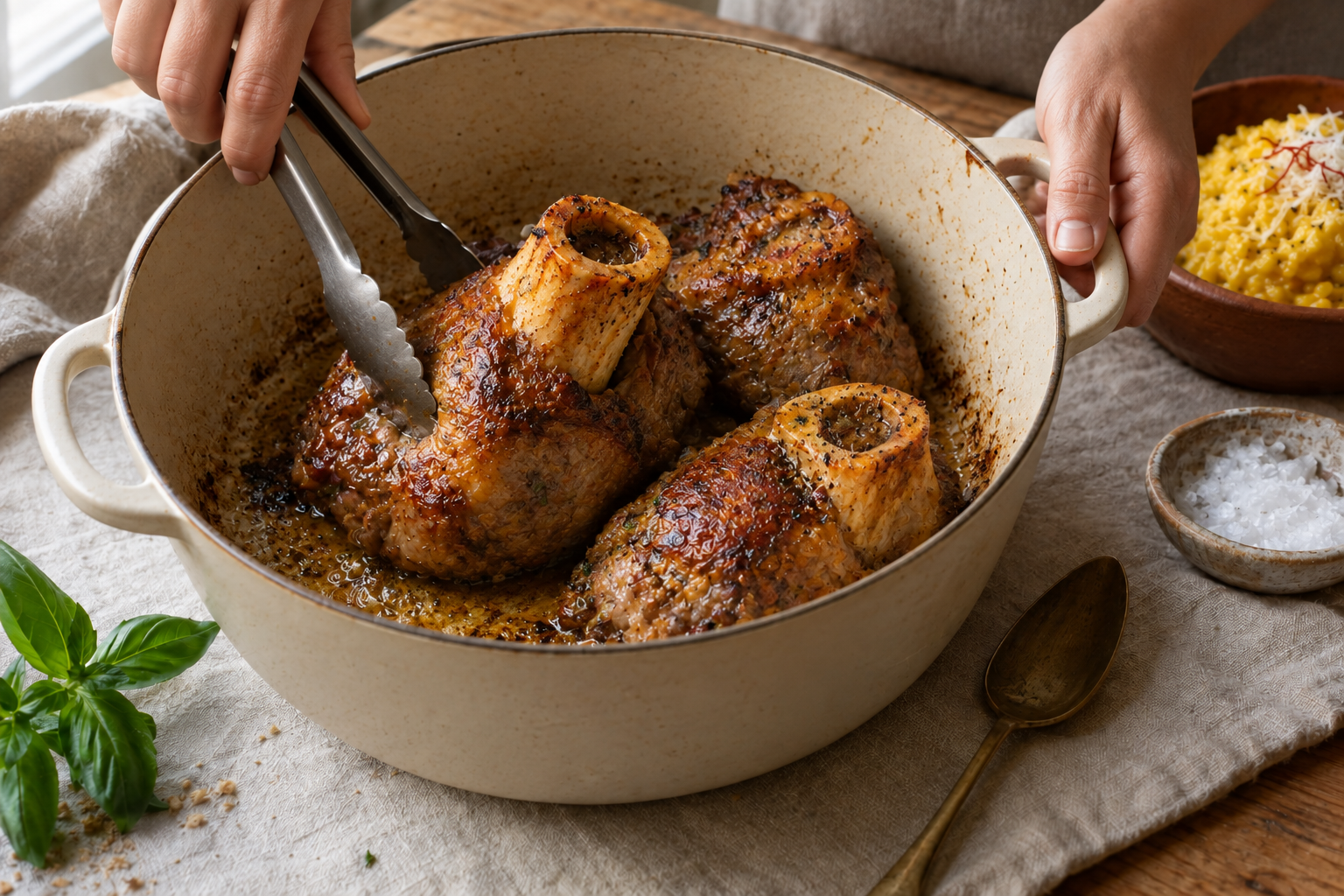
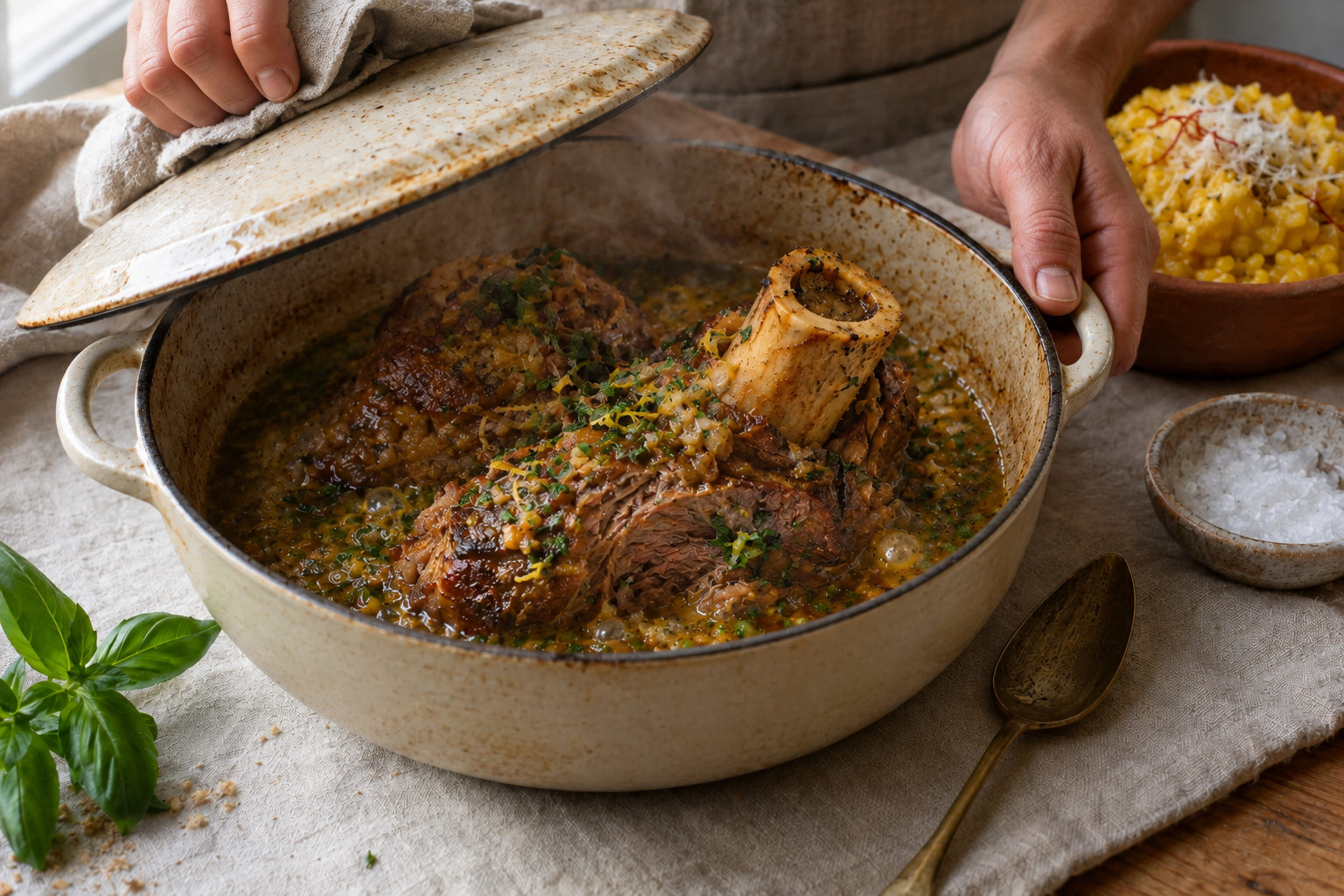
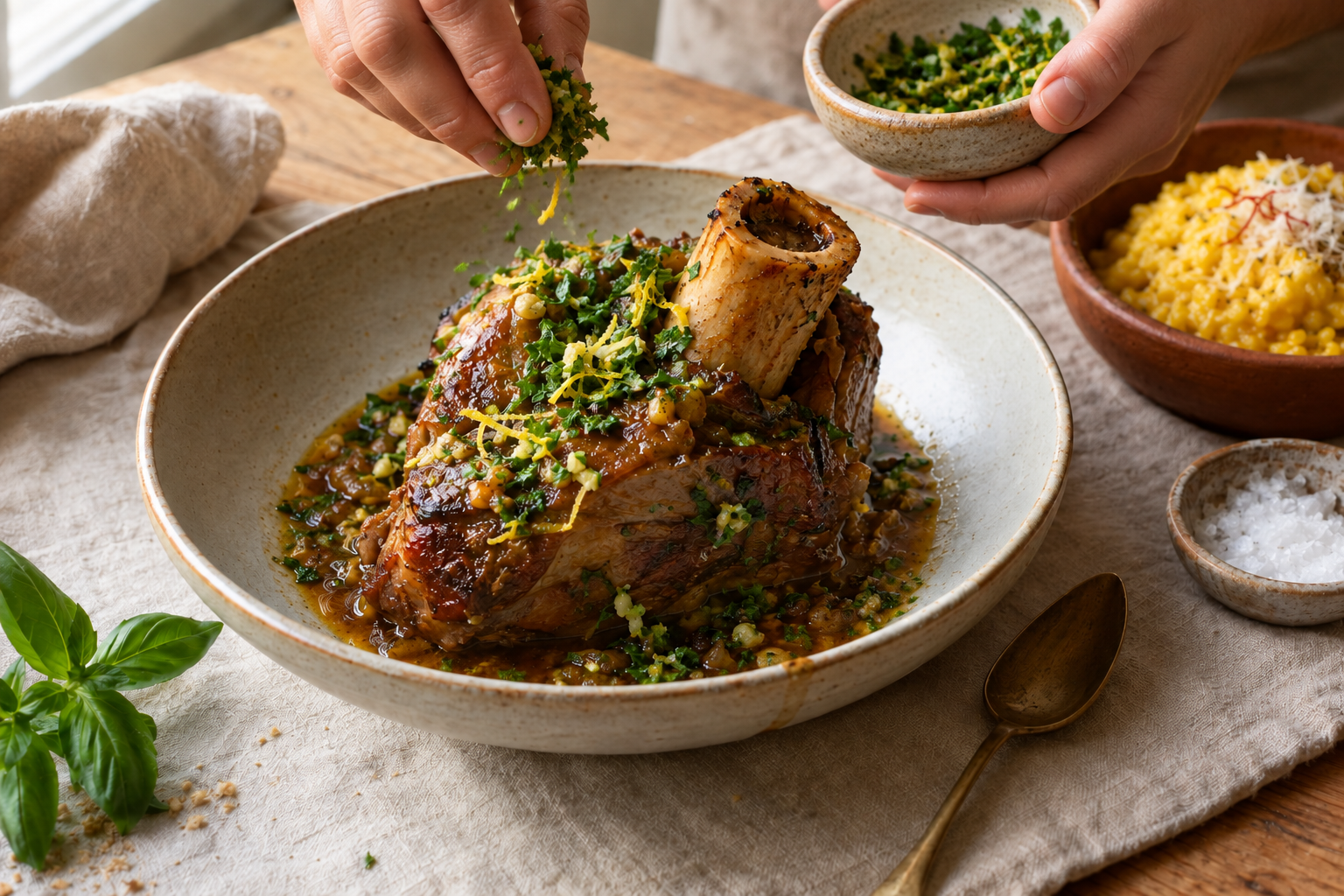
These photos follow the method in order, from the first prep step to the plated dish.
Where It Goes Wrong
The shanks look gray rather than browned. Pat the shanks dry and brown them in batches over medium-high heat.
| Symptom | Cause | Fix |
|---|---|---|
| The shanks look gray rather than browned. | The pot was crowded, the meat was damp, or the heat was too low. | Pat the shanks dry and brown them in batches over medium-high heat. |
| The sauce tastes harsh or strongly of wine. | The wine did not simmer long enough before the stock went in. | Let the wine reduce for 3–4 minutes, until its sharp alcohol smell fades. |
| The meat is still chewy after braising. | The collagen has not had enough time to soften. | Keep the pot covered and braise in 20-minute increments until a fork slips into the meat easily. |
| The sauce is watery. | Too much liquid was added or the braising liquid was not reduced. | Move the tender shanks to a warm plate and simmer the sauce uncovered until lightly thickened. |
| The gremolata tastes flat or bitter. | The lemon pith got into the zest, or the gremolata was cooked in the sauce. | Grate only the yellow zest and add the parsley mixture after the shanks are plated. |
Recipe
Ingredients
Method
- 1
Heat the oven to 325°F (165°C). Pat the veal shanks dry. If a shank has a loose strip of membrane around its edge, tie it snugly with kitchen twine so it holds its shape. Season the shanks all over with the salt and pepper, then dust lightly with flour and shake off the excess.
- 2
Heat the olive oil in a 5- to 6-quart Dutch oven over medium-high heat. Brown the shanks in batches, about 3 minutes per side, until the surfaces are deep golden. Transfer them to a plate; avoid crowding the pot or they will steam instead of brown.
- 3
Lower the heat to medium and add the butter, onion, carrot, and celery. Cook for 8–10 minutes, stirring often, until the vegetables soften and the onion turns translucent without taking on much color.
- 4
Pour in the white wine and scrape up the browned bits from the bottom of the pot. Simmer for 3–4 minutes, until the sharp smell of alcohol fades and the wine reduces slightly.
- 5
Return the shanks to the pot and pour in enough hot stock to come about halfway up their sides. Add the bay leaf. Bring the liquid just to a simmer, cover the pot tightly, and place it in the oven.
- 6
Braise for 2–2½ hours, turning the shanks once after about an hour. They are done when a fork enters the meat easily and the meat is very tender but still holds together. If the liquid drops below halfway, add a splash of hot stock. Remove the bay leaf.
- 7
While the shanks finish, mix the parsley, lemon zest, and garlic in a small bowl. Taste the sauce and adjust the salt if needed. Serve the shanks with sauce spooned over them and scatter the gremolata on top just before serving.
FAQ
What cut of meat is used for ossobuco? Ossobuco is made with cross-cut veal shanks. Ask for pieces about 1½–2 inches thick, with the marrow bone left in the center.
What cut of meat is used for ossobuco?
Ossobuco is made with cross-cut veal shanks. Ask for pieces about 1½–2 inches thick, with the marrow bone left in the center.
Can I make ossobuco alla Milanese ahead of time?
Yes, you can braise the shanks a day ahead and refrigerate them in their sauce. Reheat them gently, covered, until hot throughout, then add freshly made gremolata just before serving.
What should I serve with ossobuco alla Milanese?
Risotto alla Milanese is a classic pairing. Polenta or mashed potatoes also work well with the rich braising sauce.
Can I use beef shanks instead of veal?
Yes, beef shanks can work, but they may need more time to become tender. Check them with a fork and continue braising until the meat yields easily.
Comments
No approved comments yet.
Sign in to leave a comment. Comments stay hidden until they are approved.
Related recipes
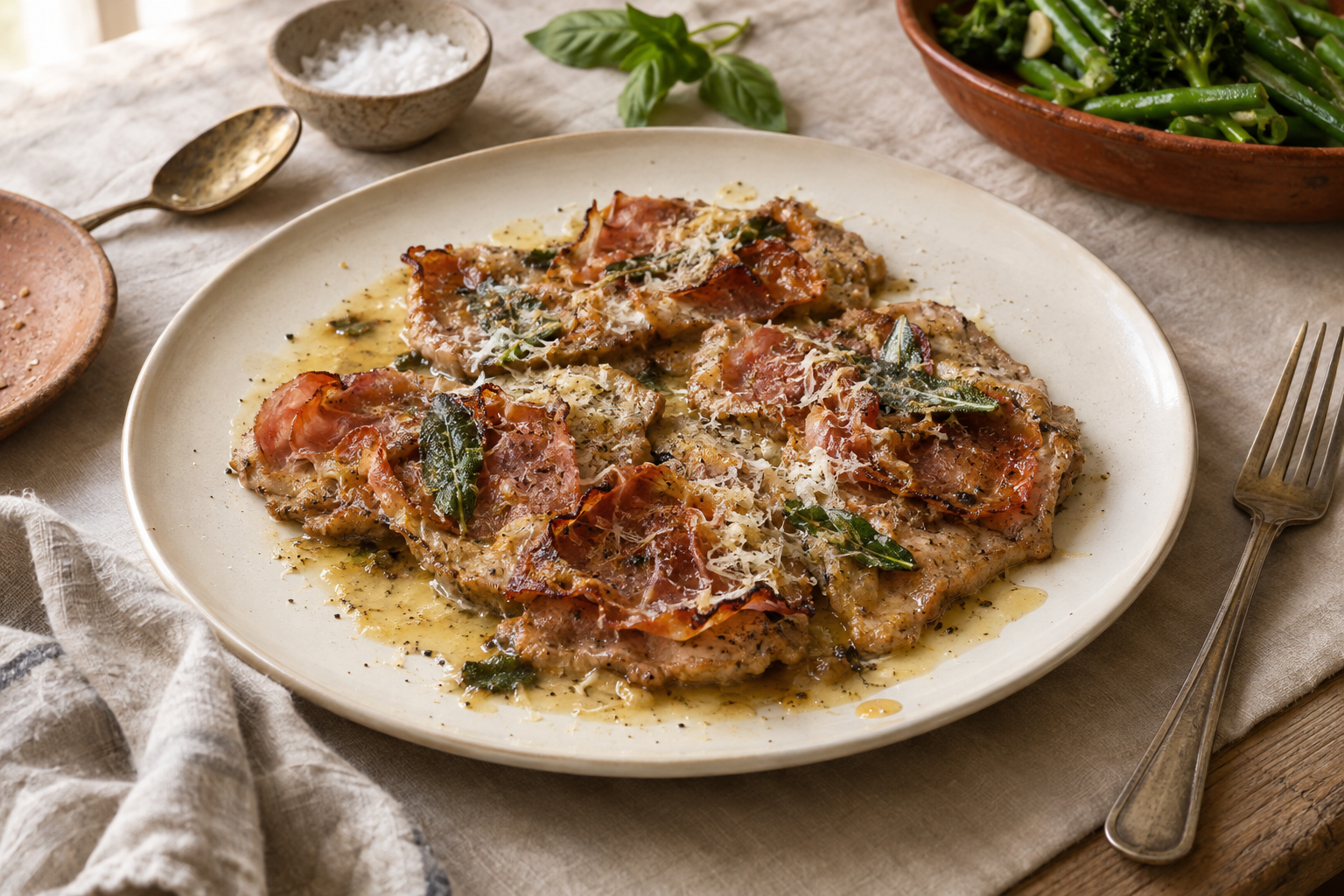
Saltimbocca alla Romana Recipe
This saltimbocca alla romana recipe pairs thin veal with prosciutto and sage, then finishes in a quick white-wine butter sauce for a fast, polished main.
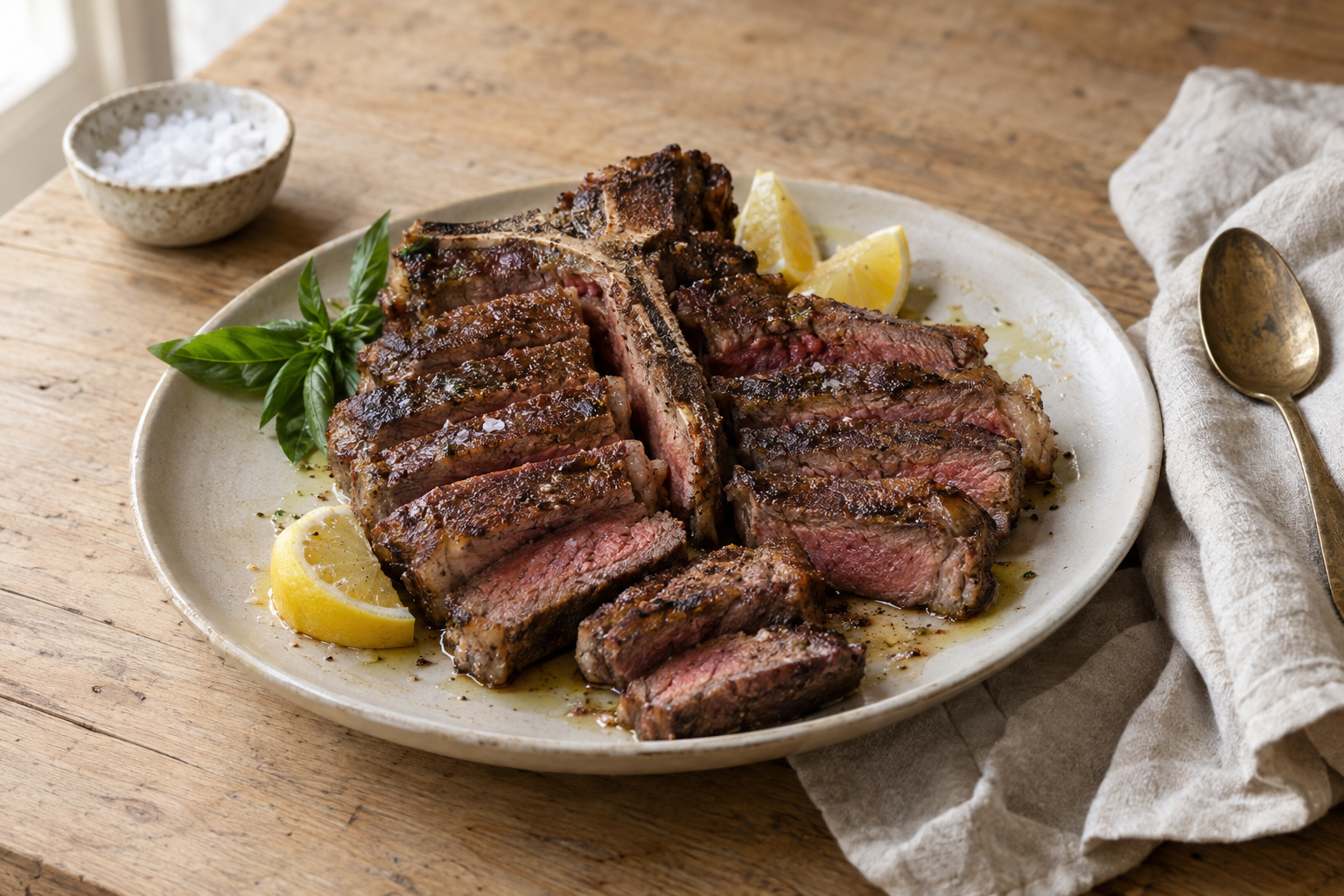
Bistecca alla Fiorentina Recipe (Pan-Seared)
This bistecca alla fiorentina recipe seasons a thick T-bone simply, then sears it hard and finishes it in the oven for a deeply browned crust at home.

Easy Risotto alla Milanese
This easy Risotto alla Milanese gets its golden color from bloomed saffron and its silky finish from warm broth, steady stirring, butter, and Parmesan.
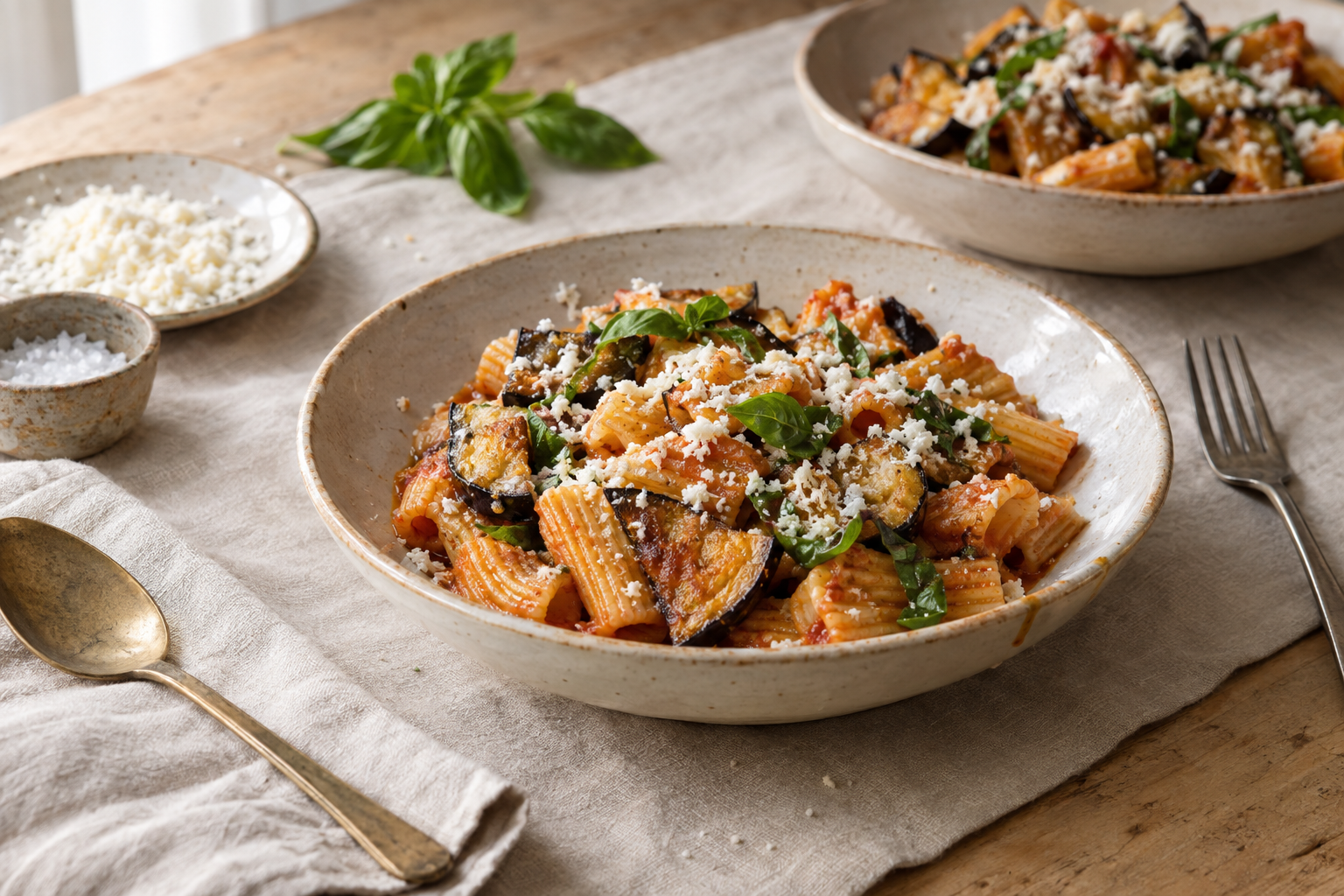
Pasta alla Norma Recipe
This pasta alla Norma recipe pairs tender tomato sauce and basil with crisp fried eggplant and salty ricotta salata for a balanced Sicilian supper.