Easy Cacio e Pepe Recipe
This easy cacio e pepe recipe uses finely grated Pecorino Romano, toasted black pepper, and starchy pasta water for a smooth, clingy Roman sauce without cream.
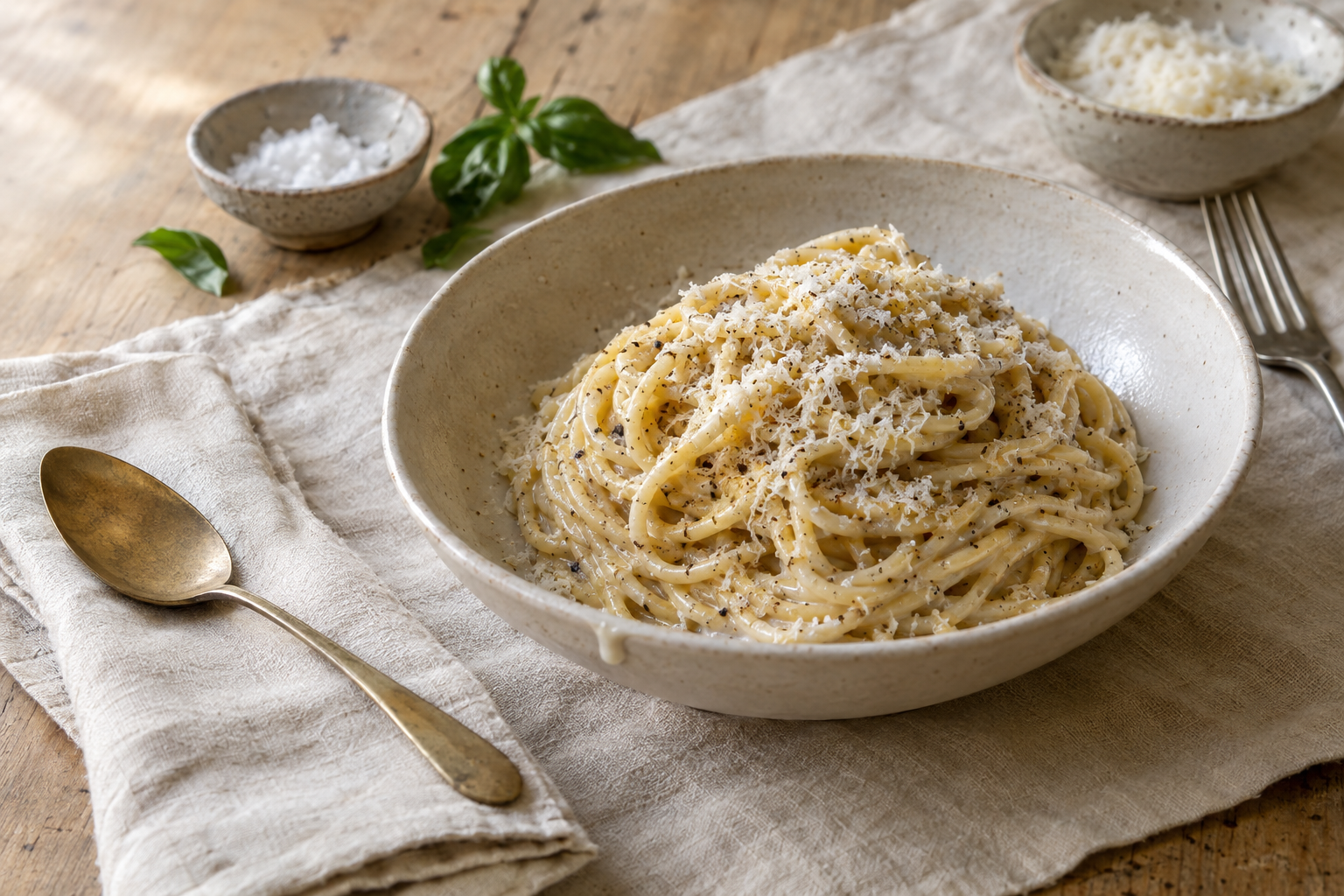
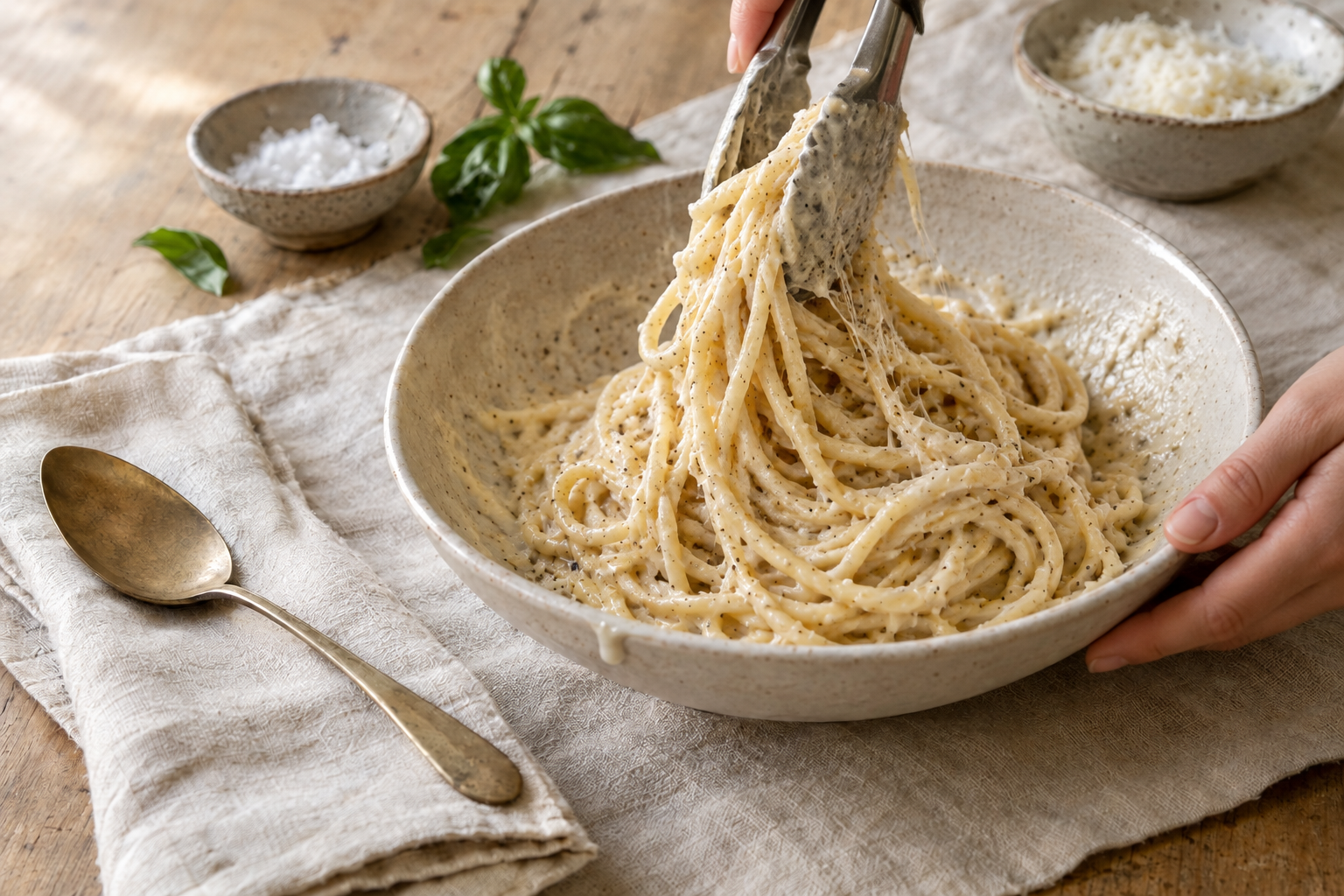
Cacio e pepe is a Roman pasta made with Pecorino Romano, black pepper, and starchy pasta water, not cream or butter. In Lazio, especially Rome, it is a spare pantry dish; cacio is the Roman word for cheese, and tonnarelli, a thick square-cut pasta, is a familiar choice. I use spaghetti here because it is easy to find and gives the sauce plenty to cling to. The key is controlling heat. Pecorino turns stringy when it meets a very hot pan, so I mix it with warm—not boiling—pasta water into a smooth paste, then toss it with the pasta off the heat. Toasting the pepper first gives it a deeper aroma, while a little pasta water helps the cheese coat each strand. I use a modest amount of boiling water, which makes it starchier than water from a huge stockpot, but there is still enough for the noodles to move freely. Work gradually and keep extra water nearby; a glossy sauce is the goal, not a puddle. For another Roman pasta, try Authentic Spaghetti Carbonara Recipe. This method keeps the ingredients classic and makes the sauce easier to control on a home stove.
By Lucia Moretti
Step by step
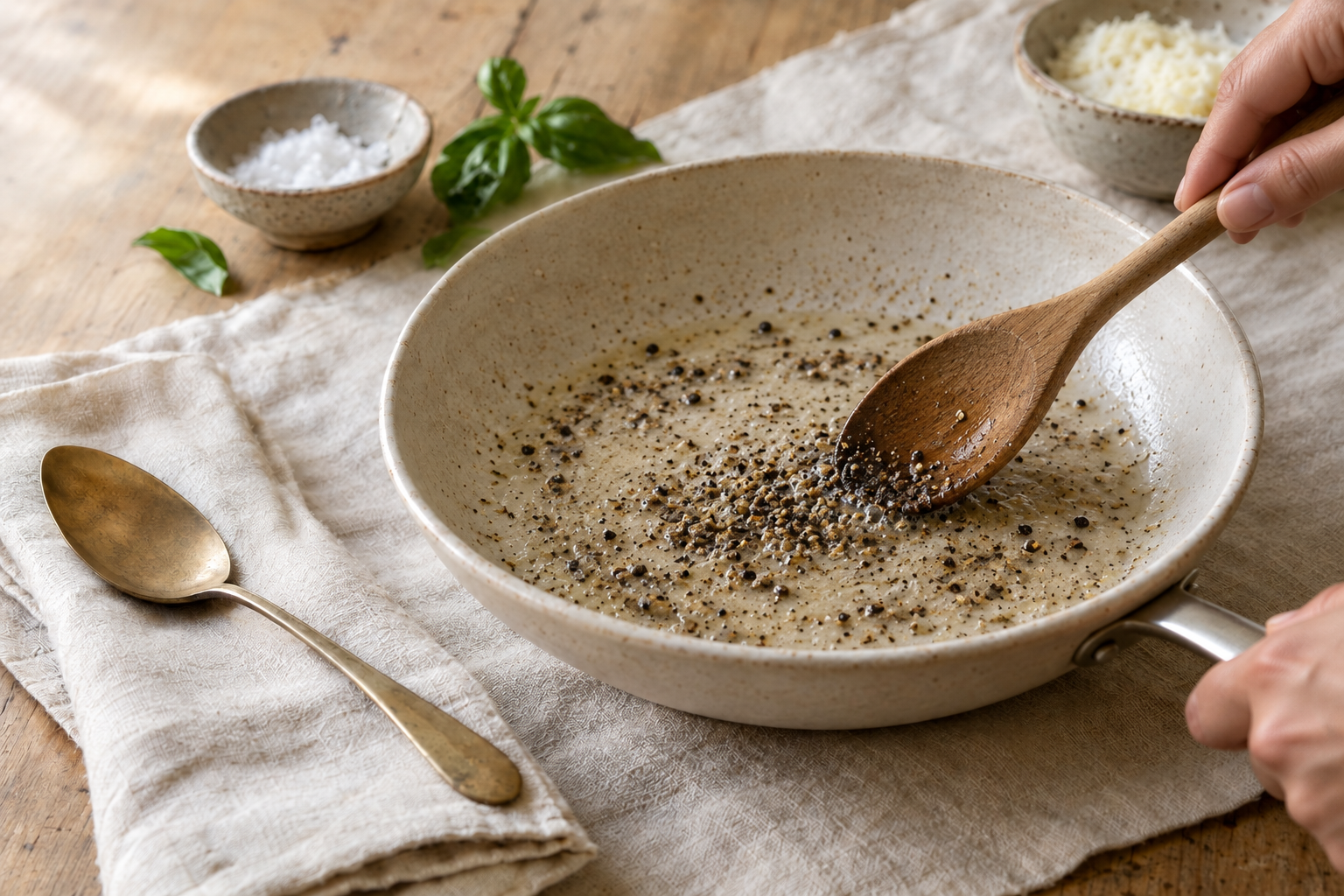
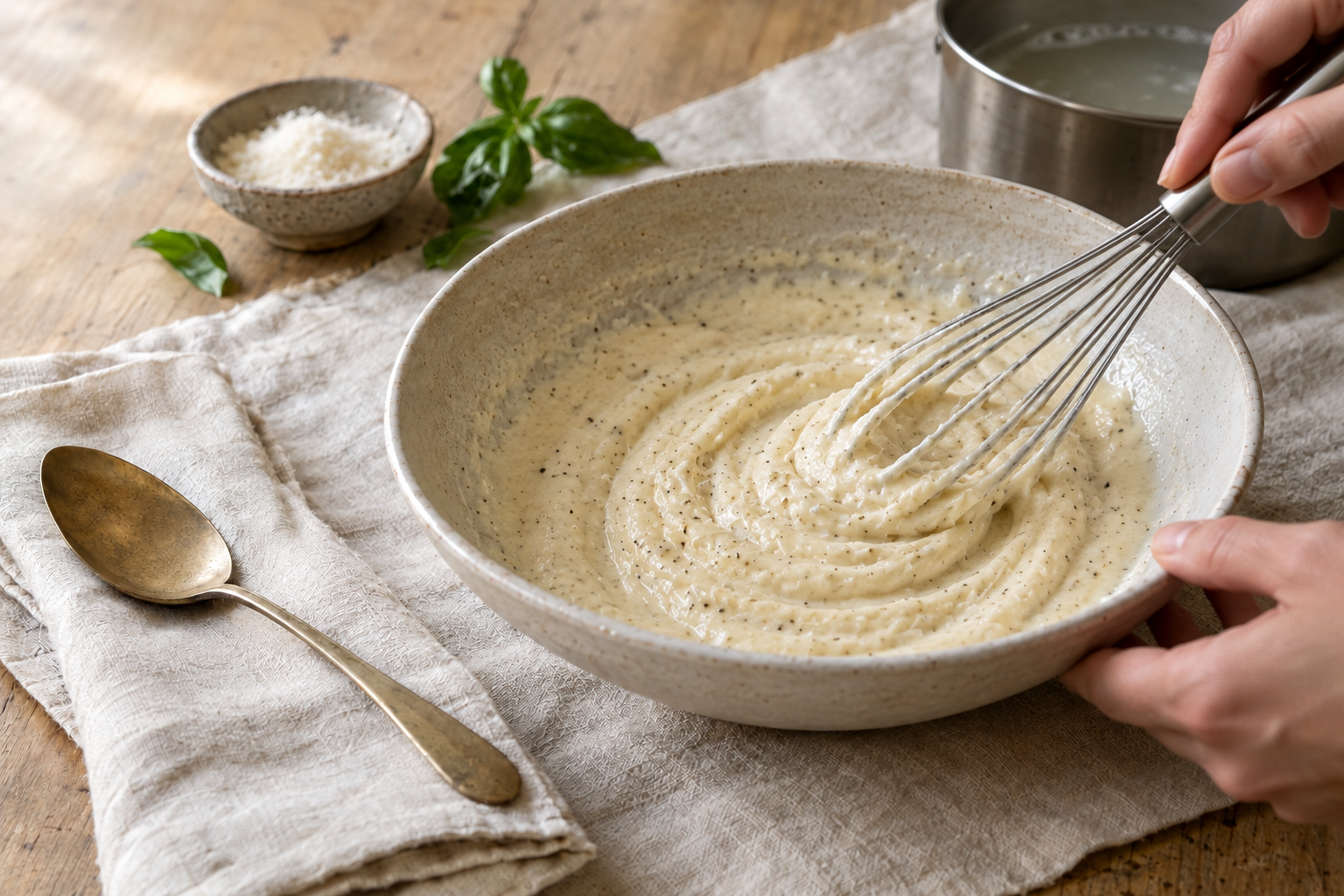
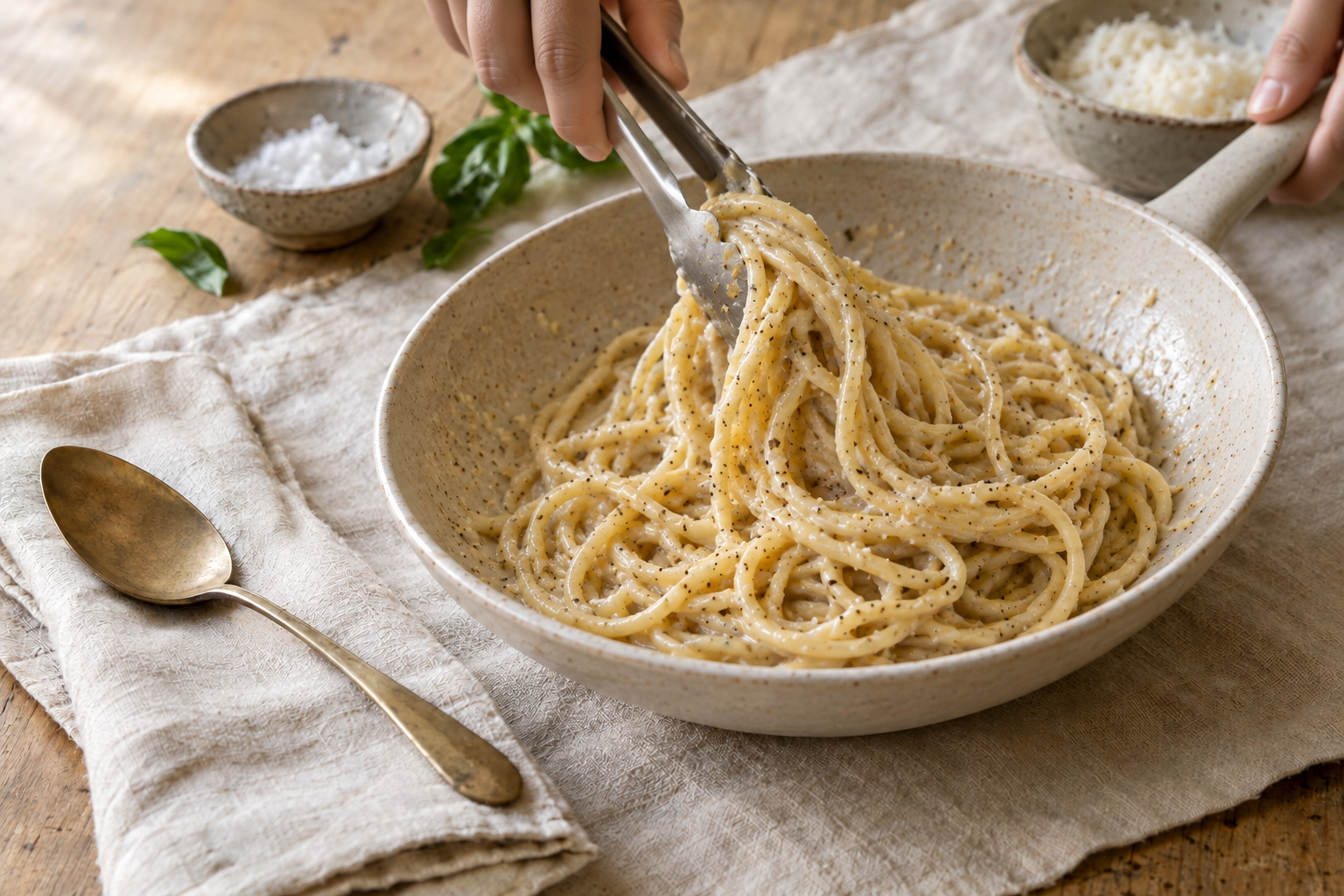
These photos follow the method in order, from the first prep step to the plated dish.
Where It Goes Wrong
The cheese forms strings or clumps. Remove the skillet from the heat and wait about 30 seconds before adding the cheese paste. Toss continuously and loosen with pasta water.
| Symptom | Cause | Fix |
|---|---|---|
| The cheese forms strings or clumps. | The pasta or skillet was too hot when the cheese went in. | Remove the skillet from the heat and wait about 30 seconds before adding the cheese paste. Toss continuously and loosen with pasta water. |
| The sauce looks grainy. | The cheese was grated too coarsely, or it met very hot water. | Grate the cheese finely and let the pasta water cool briefly before mixing it into the cheese. |
| The sauce is watery and slides off the pasta. | Too much pasta water was added before the cheese had emulsified. | Add water a tablespoon at a time while tossing. If it is already loose, keep tossing off the heat for a few seconds so the sauce can thicken. |
| The pepper tastes bitter. | It was toasted over heat that was too high or left in the pan too long. | Toast it over medium-low heat only until fragrant, then add the pasta water to stop it cooking further. |
| The finished pasta is too salty. | Pecorino Romano is naturally salty, and the pasta water may have been heavily salted. | Use the stated salt amount and taste before adding extra cheese at the table. |
Recipe
Ingredients
Method
- 1
Bring the 10 cups (2.4 L) water to a boil in a large pot. Stir in the salt and add the spaghetti, nudging it under the water as it softens. Cook until about 2 minutes shy of the package's al dente time; the pasta should still have a firm center.
- 2
While the pasta cooks, add the black pepper to a wide skillet over medium-low heat. Toast for about 1 minute, stirring, until fragrant but not browned. Ladle in 1/2 cup (120 ml) pasta water; it will sputter. Simmer gently for 30 seconds, then turn off the heat.
- 3
Put the grated Pecorino Romano in a medium bowl. Let 1/2 cup (120 ml) pasta water cool for 1 to 2 minutes, then drizzle it into the cheese a little at a time while stirring. Stop when you have a smooth, thick paste with no dry cheese at the bottom.
- 4
Before draining the pasta, scoop out at least 1 cup (240 ml) of its cooking water. Transfer the spaghetti directly to the pepper skillet with tongs, keeping the pot of water nearby.
- 5
Set the skillet over medium heat and toss the spaghetti with the pepper water for 1 to 2 minutes, until it is al dente and the liquid has thickened slightly around the strands. Add a splash of reserved pasta water if the skillet looks dry.
- 6
Take the skillet off the heat and let it stand for about 30 seconds. Add the cheese paste in two or three portions, tossing continuously with tongs. Add reserved pasta water a tablespoon at a time until the sauce turns smooth and glossy and clings to the spaghetti.
- 7
Serve immediately in warm bowls. Finish with a little extra black pepper and Pecorino Romano if you like.
FAQ
Can I make cacio e pepe with Parmesan? Yes, but the flavor will be milder and less salty than with Pecorino Romano. For the most Roman-style result, use Pecorino Romano; if substituting, grate Parmesan finely and add pasta water gradually.
Can I make cacio e pepe with Parmesan?
Yes, but the flavor will be milder and less salty than with Pecorino Romano. For the most Roman-style result, use Pecorino Romano; if substituting, grate Parmesan finely and add pasta water gradually.
What pasta works best for cacio e pepe?
Spaghetti is an easy choice, while tonnarelli is a traditional Roman option. Choose a long pasta that can be tossed well with the sauce.
Can I reheat leftover cacio e pepe?
Yes, but the sauce is best freshly made. Reheat leftovers gently in a skillet with a splash of water, tossing until the sauce loosens; avoid high heat, which can make the cheese clump.
Does cacio e pepe contain cream?
No, traditional cacio e pepe gets its creamy texture from Pecorino Romano and starchy pasta water. This recipe uses no cream or butter.
Comments
No approved comments yet.
Sign in to leave a comment. Comments stay hidden until they are approved.
Related recipes
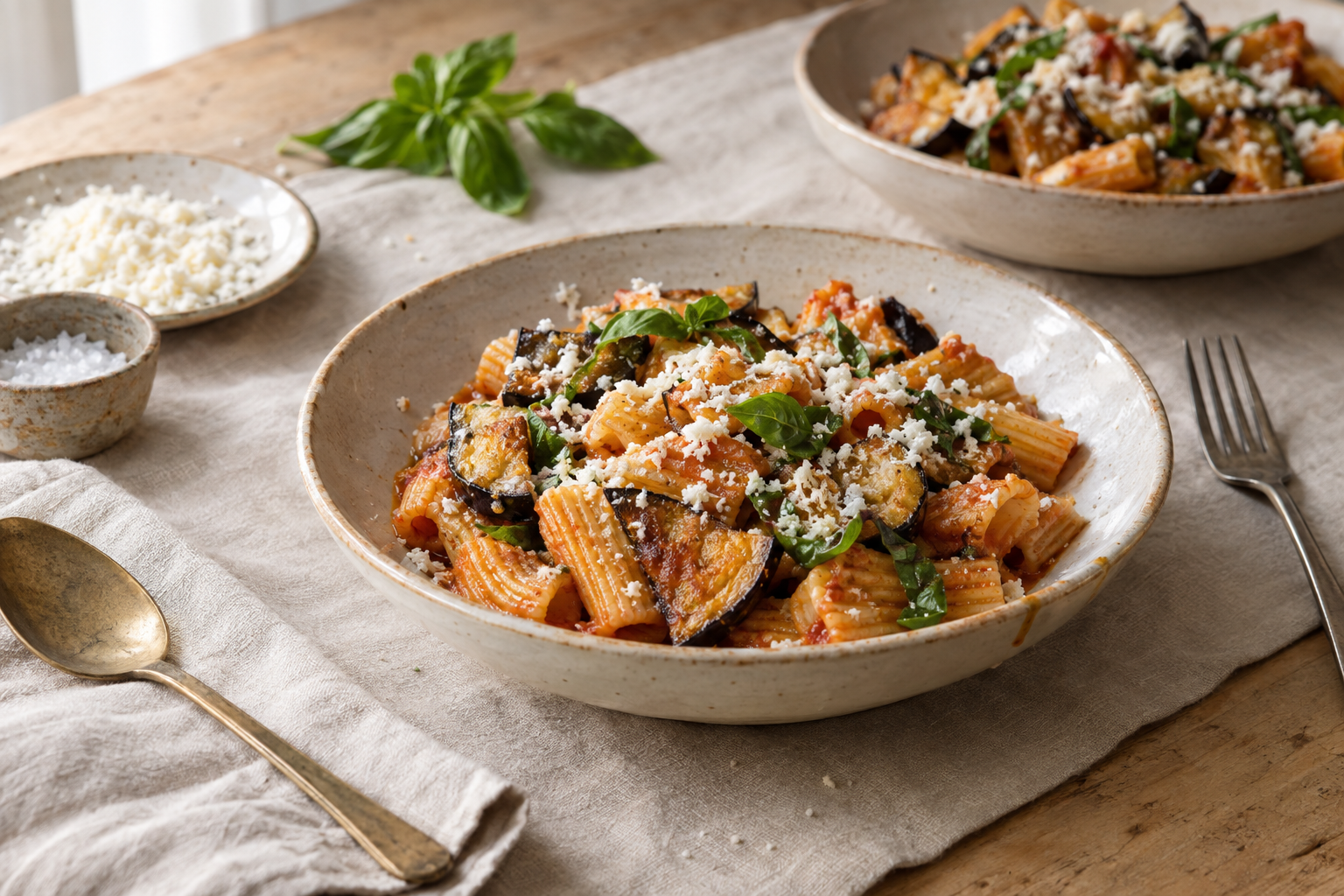
Pasta alla Norma Recipe
This pasta alla Norma recipe pairs tender tomato sauce and basil with crisp fried eggplant and salty ricotta salata for a balanced Sicilian supper.
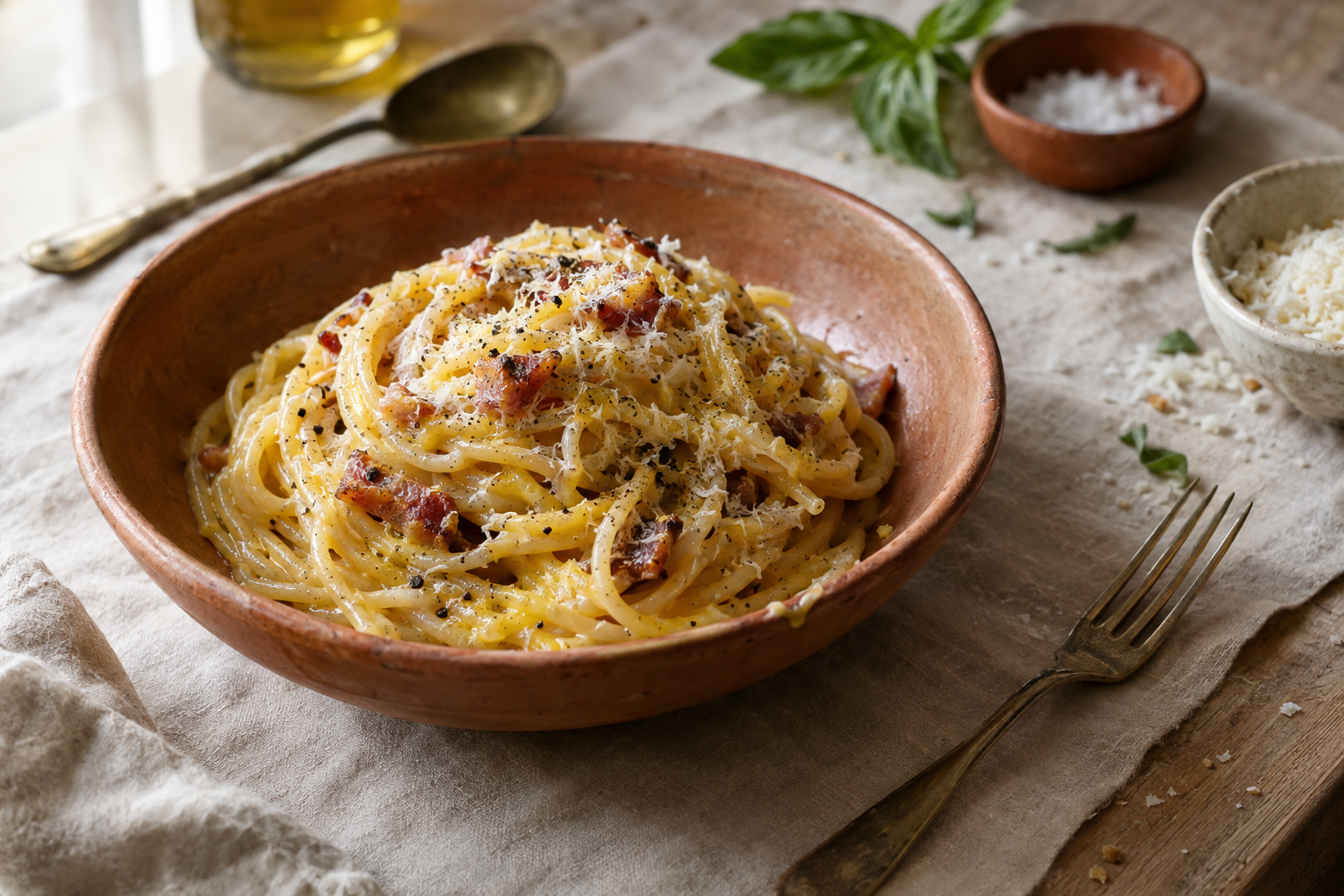
Authentic Spaghetti Carbonara Recipe
This Roman spaghetti carbonara coats pasta in a silky egg, Pecorino Romano, and guanciale sauce; a gentle water bath cooks the eggs without adding cream.
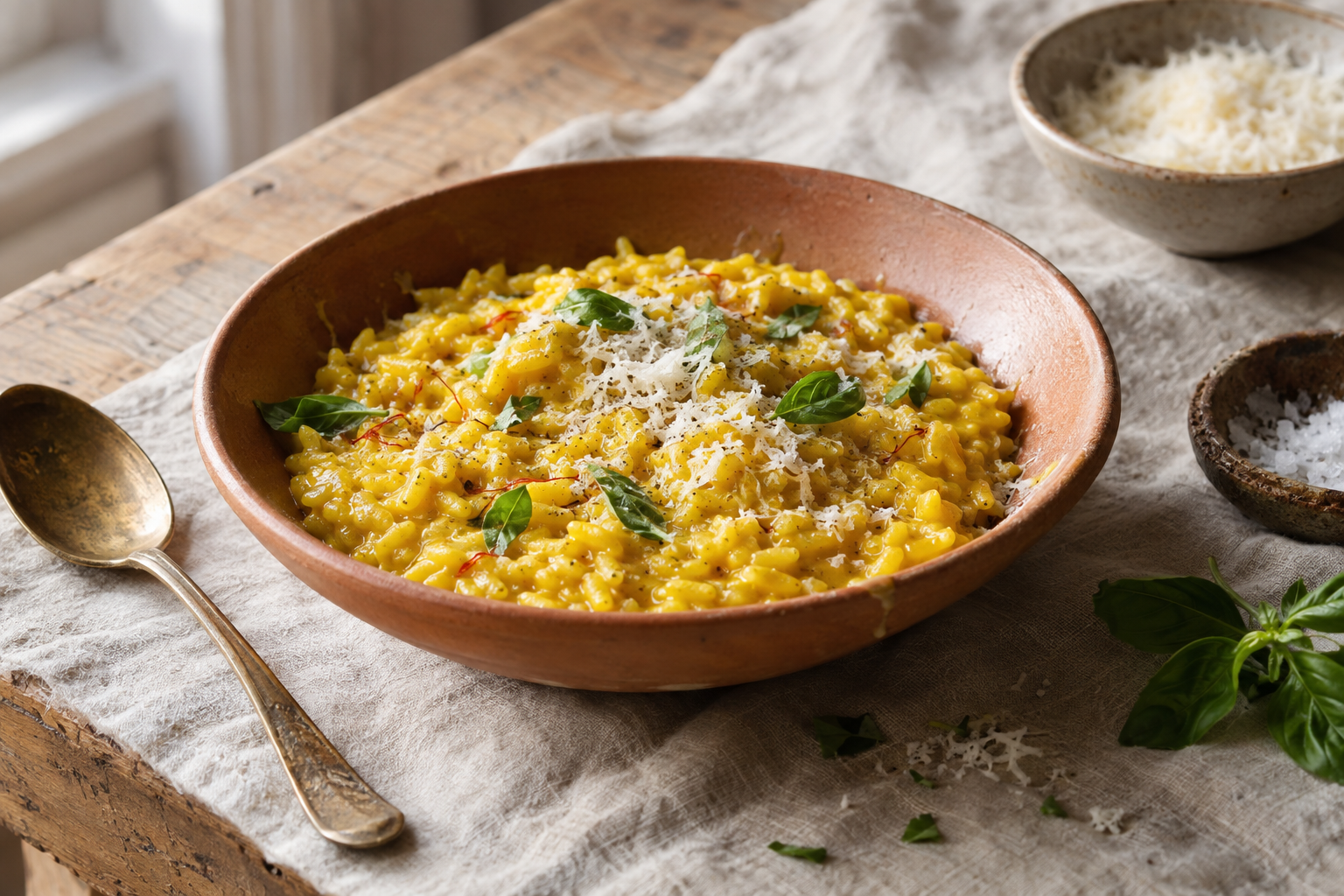
Easy Risotto alla Milanese
This easy Risotto alla Milanese gets its golden color from bloomed saffron and its silky finish from warm broth, steady stirring, butter, and Parmesan.
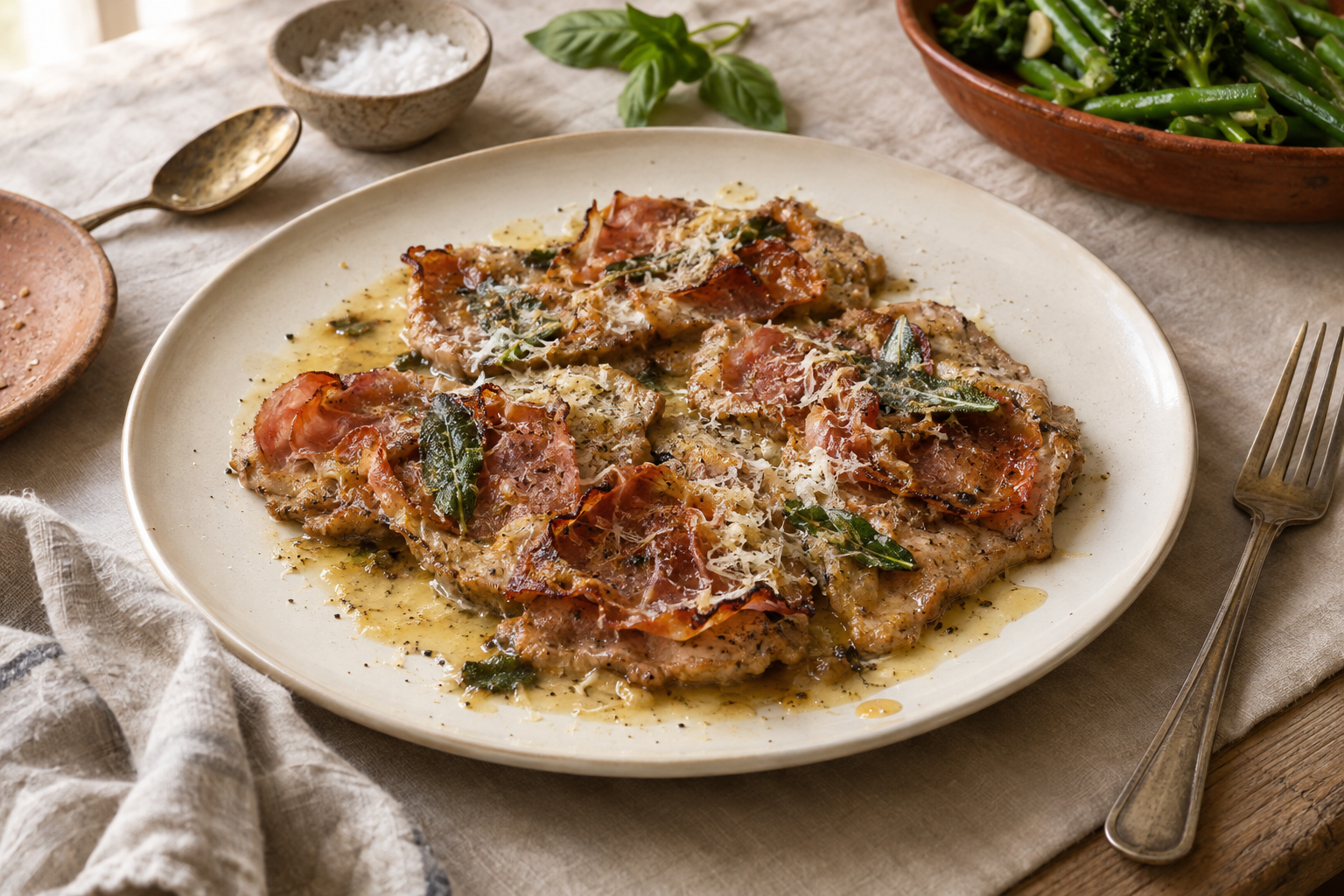
Saltimbocca alla Romana Recipe
This saltimbocca alla romana recipe pairs thin veal with prosciutto and sage, then finishes in a quick white-wine butter sauce for a fast, polished main.