Traditional Tuscan Ribollita Recipe
A hearty Tuscan bean, kale, cabbage, and bread soup, ribollita is reheated so its broth turns rich and stale bread gives the pot body and substance.
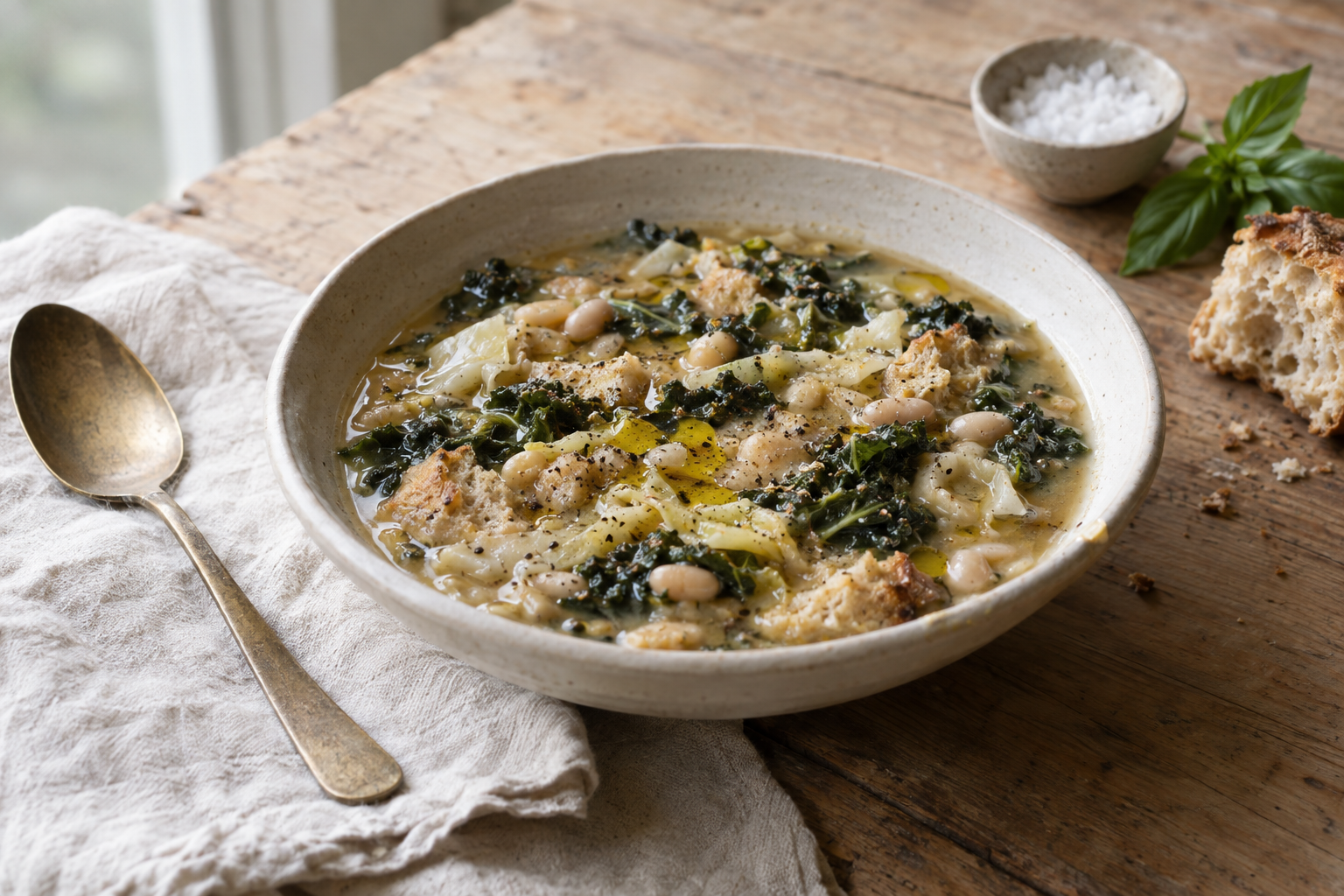
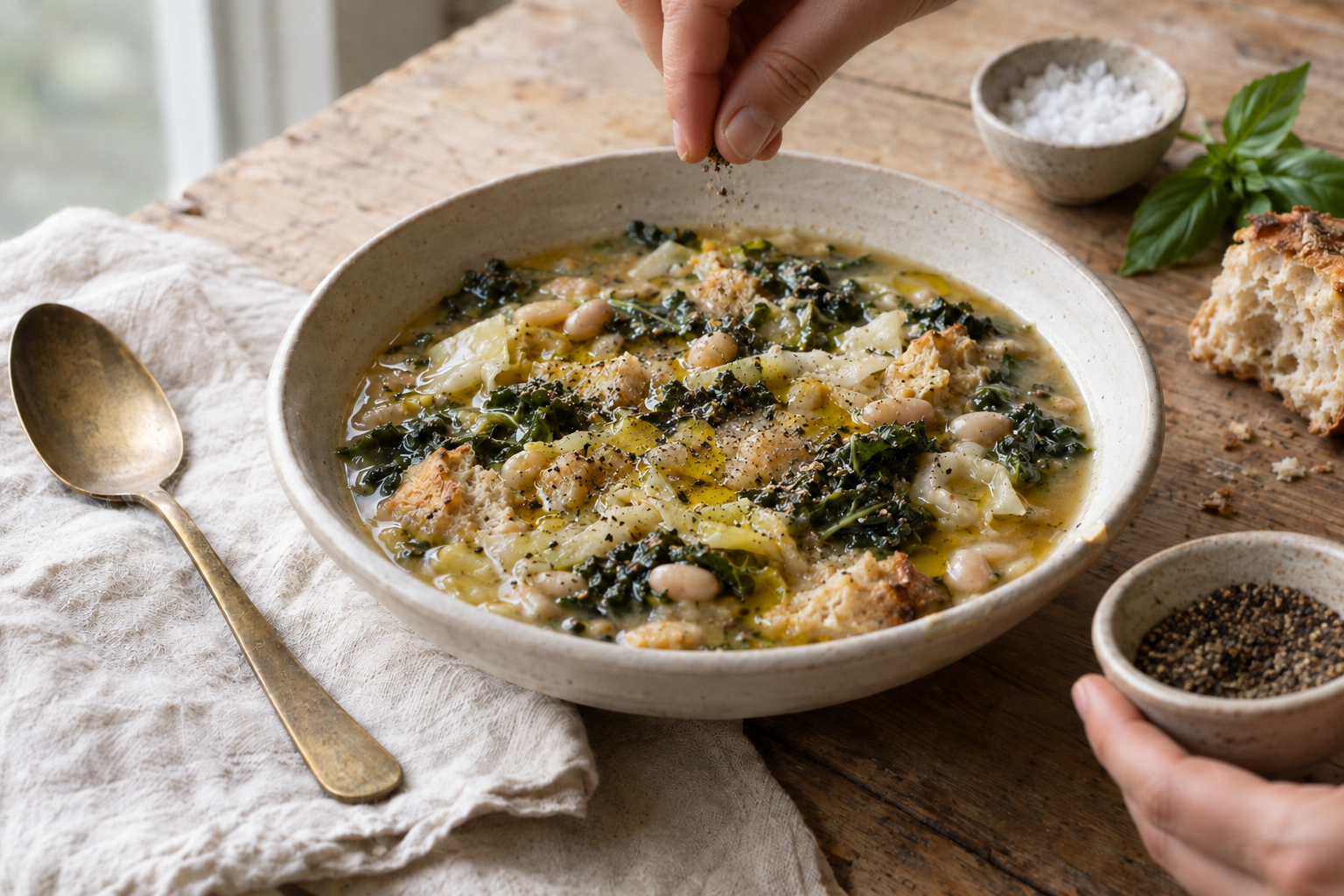
Traditional Tuscan ribollita is a thick bean, kale, cabbage, and stale-bread soup that is cooked, rested, and reheated before serving. In Florence and across Tuscany, cavolo nero (Tuscan kale) gives the pot its dark, earthy flavor, while bread turns the broth spoon-thick instead of merely filling the bowl.
I build the base with soffritto (slow-cooked onion, carrot, and celery), then simmer the vegetables with cannellini beans and tomatoes until the cabbage and kale are tender. Mashing some beans thickens the soup without cream or flour. Torn, day-old country bread goes in near the end; after a short rest, I bring the pot back to a gentle boil. That second heating is the point, not an optional flourish. The bread absorbs the broth and the flavors settle into a cohesive, hearty soup.
Use sturdy, unsliced country bread, not soft sandwich bread, and keep extra broth nearby if you prefer a looser bowl. The soup thickens as it stands, so leftovers need a splash of water when reheated. For another Tuscan bowl, try Authentic Pappa al Pomodoro Recipe, or make Easy Cacio e Pepe Recipe another night. Mashed beans, sturdy greens, and a deliberate second simmer are what make this version work.
By Lucia Moretti
Step by step
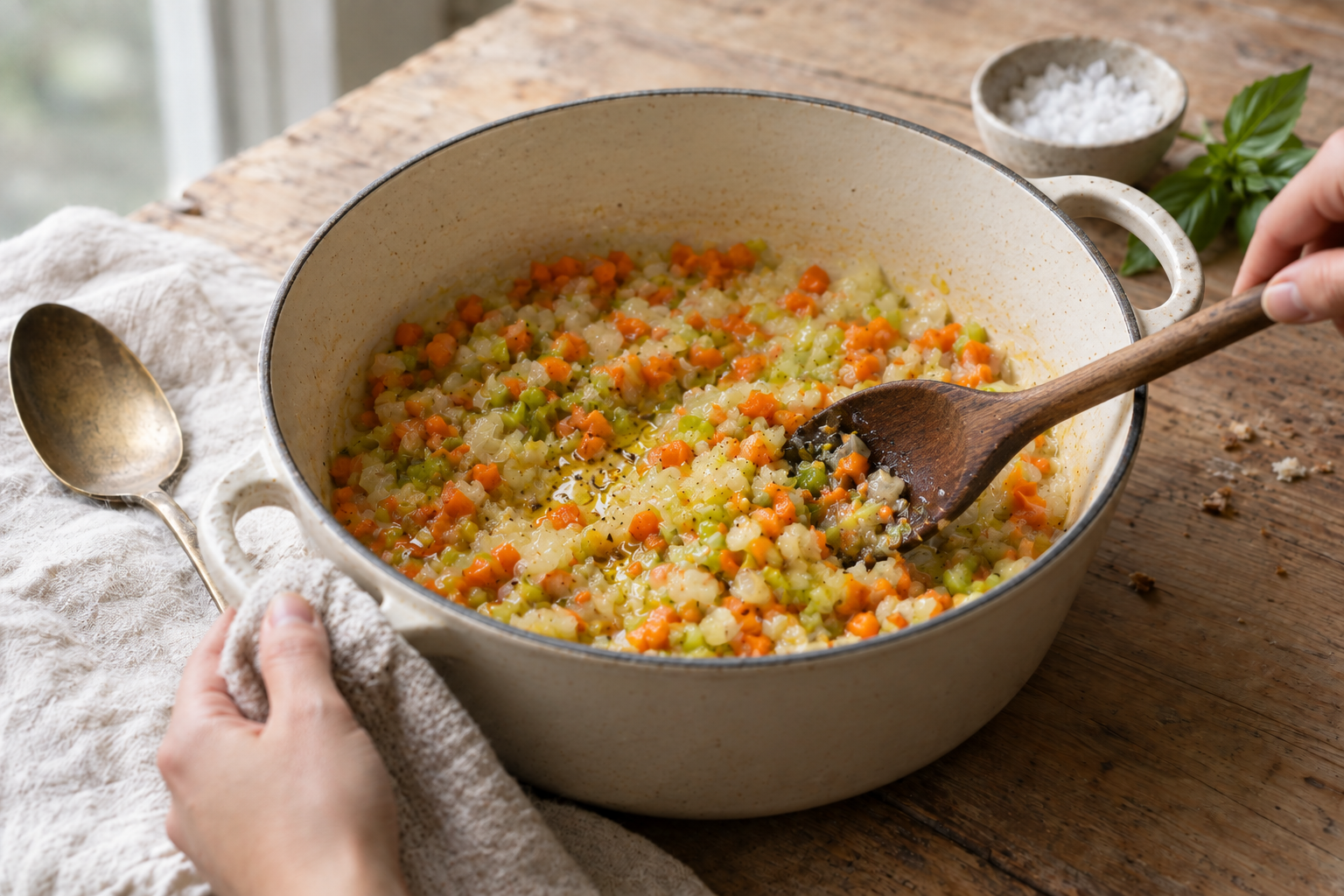
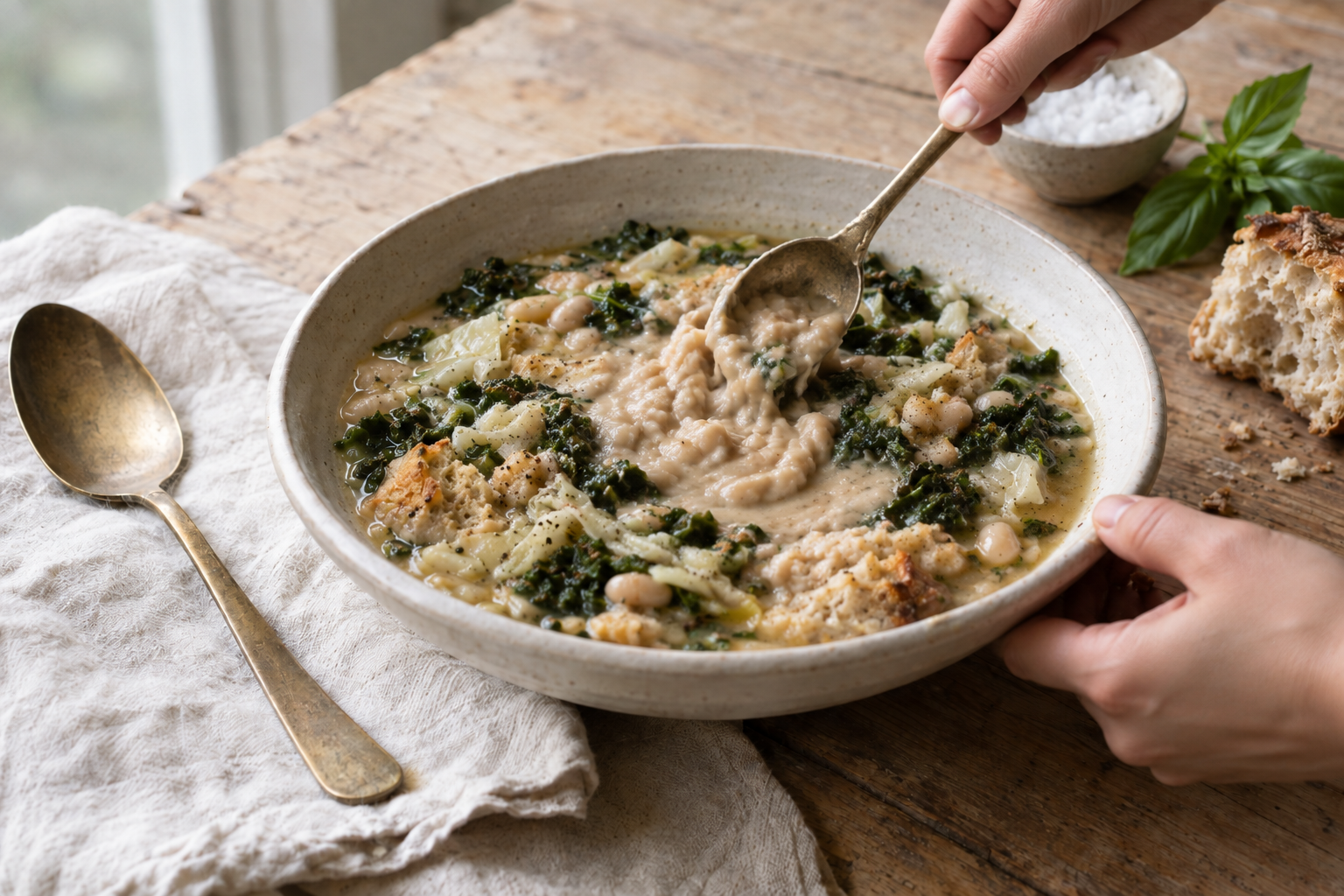
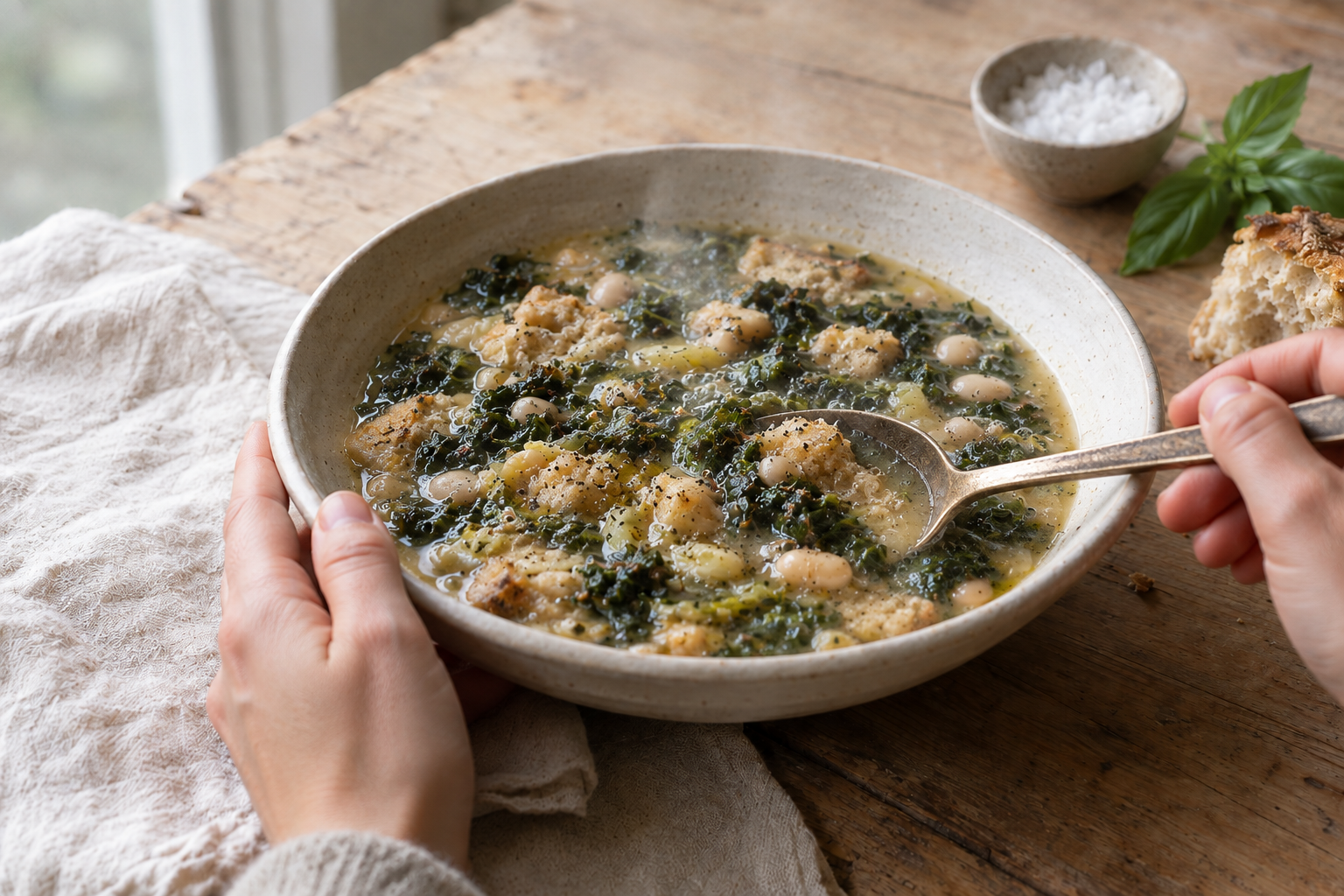
These photos follow the method in order, from the first prep step to the plated dish.
Where It Goes Wrong
The soup is thin and watery. Mash some beans into the soup and simmer it a few minutes longer with the bread stirred in.
| Symptom | Cause | Fix |
|---|---|---|
| The soup is thin and watery. | The bread has not absorbed enough broth, or the beans were left whole. | Mash some beans into the soup and simmer it a few minutes longer with the bread stirred in. |
| The bottom of the pot catches or scorches. | The bread thickened the soup and settled while the heat was too high or it was not stirred. | Lower the heat and stir from the bottom often, especially during the final simmer. |
| The kale and cabbage are still tough. | The greens did not simmer long enough, or the kale stems were left in large pieces. | Remove thick stems before chopping and simmer the soup until the greens are fully tender. |
| The soup turns into a very stiff mass. | The bread continues absorbing liquid as the soup stands. | Loosen it with hot broth or water while reheating, adding a small splash at a time. |
| The soup tastes flat. | The beans and greens need more seasoning, or the broth is very low in sodium. | Taste after simmering and adjust with salt, pepper, and a finishing drizzle of olive oil. |
Recipe
Ingredients
Method
- 1
Heat the olive oil in a large Dutch oven over medium heat. Add the onion, carrots, and celery and cook, stirring now and then, until softened and glossy but not browned, about 8 minutes. Stir in the garlic and tomato paste and cook for 1 minute, until fragrant.
- 2
Stir in the crushed tomatoes, cabbage, kale, broth, bay leaf, salt, and pepper. Bring to a boil, then lower the heat and simmer uncovered for 20 minutes, stirring occasionally, until the greens have wilted and the cabbage is tender.
- 3
Mash one can's worth of drained beans with a fork or potato masher until mostly smooth. Stir the mashed beans and the remaining whole beans into the pot. Simmer for 15 minutes, until the broth looks thicker and the vegetables are very tender. Remove the bay leaf and taste for salt and pepper.
- 4
Fold the torn bread into the soup until most pieces are wet. Simmer gently for 8 to 10 minutes, stirring carefully so the bread breaks down slightly but the pot does not stick. The soup should be thick and spoonable, not dry; add a little water or broth if needed.
- 5
Take the pot off the heat and let it stand for 10 minutes so the bread can absorb the broth. Set the pot back over low heat and bring the soup to a gentle bubble, stirring from the bottom, for 5 minutes. This second heating gives ribollita its characteristic dense texture.
- 6
Ladle into warm bowls and finish each serving with a drizzle of olive oil and a few grinds of black pepper. If the soup is thicker than you like, stir in hot water or broth a little at a time.
FAQ
Can I make ribollita a day ahead? Yes, ribollita is an excellent make-ahead soup. Cool it promptly, refrigerate it, and reheat it gently the next day with a splash of broth or water because the bread will keep absorbing liquid.
Can I make ribollita a day ahead?
Yes, ribollita is an excellent make-ahead soup. Cool it promptly, refrigerate it, and reheat it gently the next day with a splash of broth or water because the bread will keep absorbing liquid.
What bread is best for ribollita?
Use day-old, sturdy country bread with a firm crumb. It absorbs broth without dissolving as quickly as soft sandwich bread.
Can I use regular kale instead of Tuscan kale?
Yes, curly kale works in ribollita. Remove the tough stems and simmer it until tender; it may need a few extra minutes.
Can I freeze ribollita?
Yes, but the bread becomes softer after freezing and thawing. Freeze cooled portions in airtight containers, thaw them in the refrigerator, then reheat with a little broth or water.
Comments
No approved comments yet.
Sign in to leave a comment. Comments stay hidden until they are approved.
Related recipes
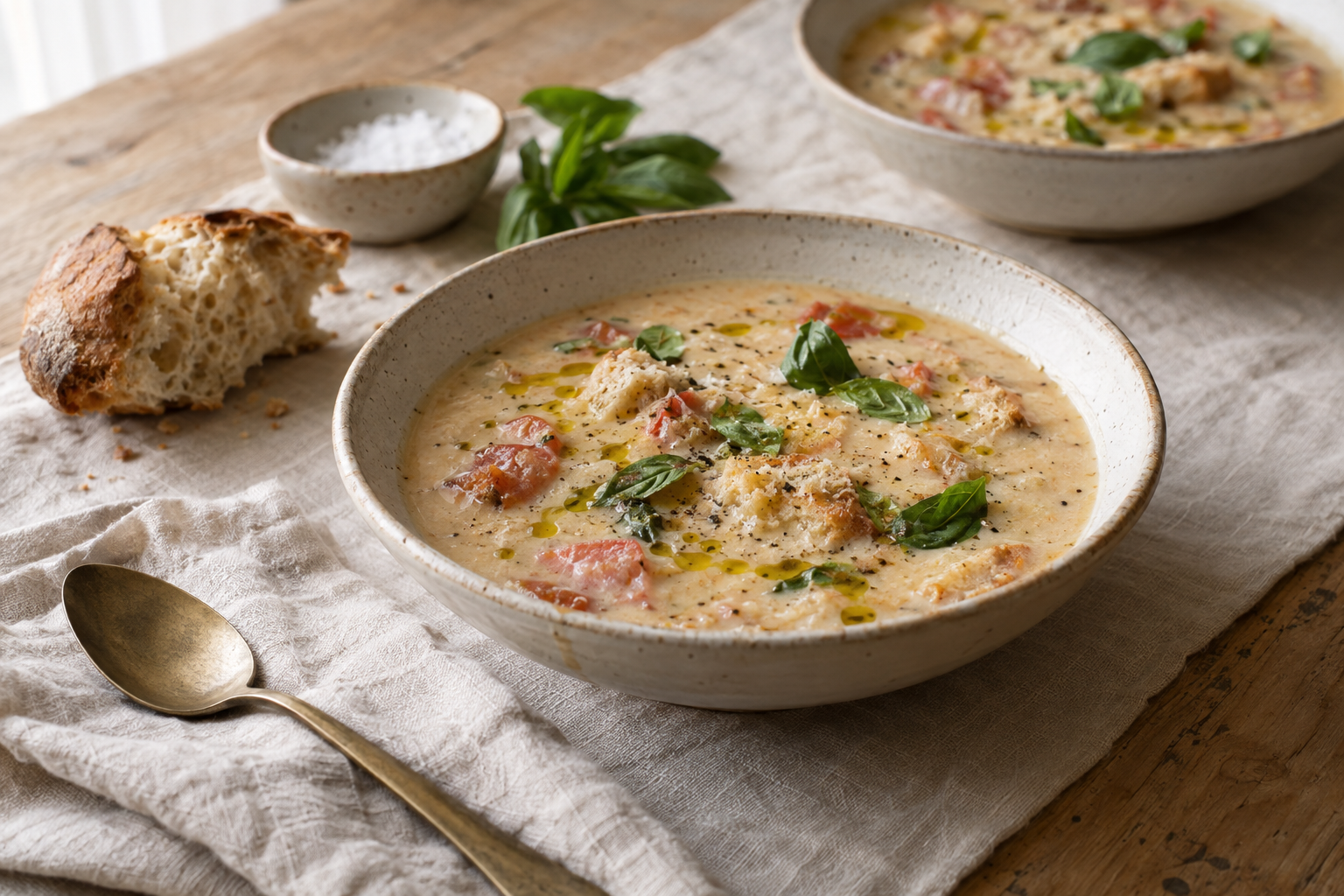
Authentic Pappa al Pomodoro Recipe
This authentic pappa al pomodoro recipe turns ripe tomatoes and day-old bread into a thick Tuscan soup, finished with basil and good olive oil for dinner.
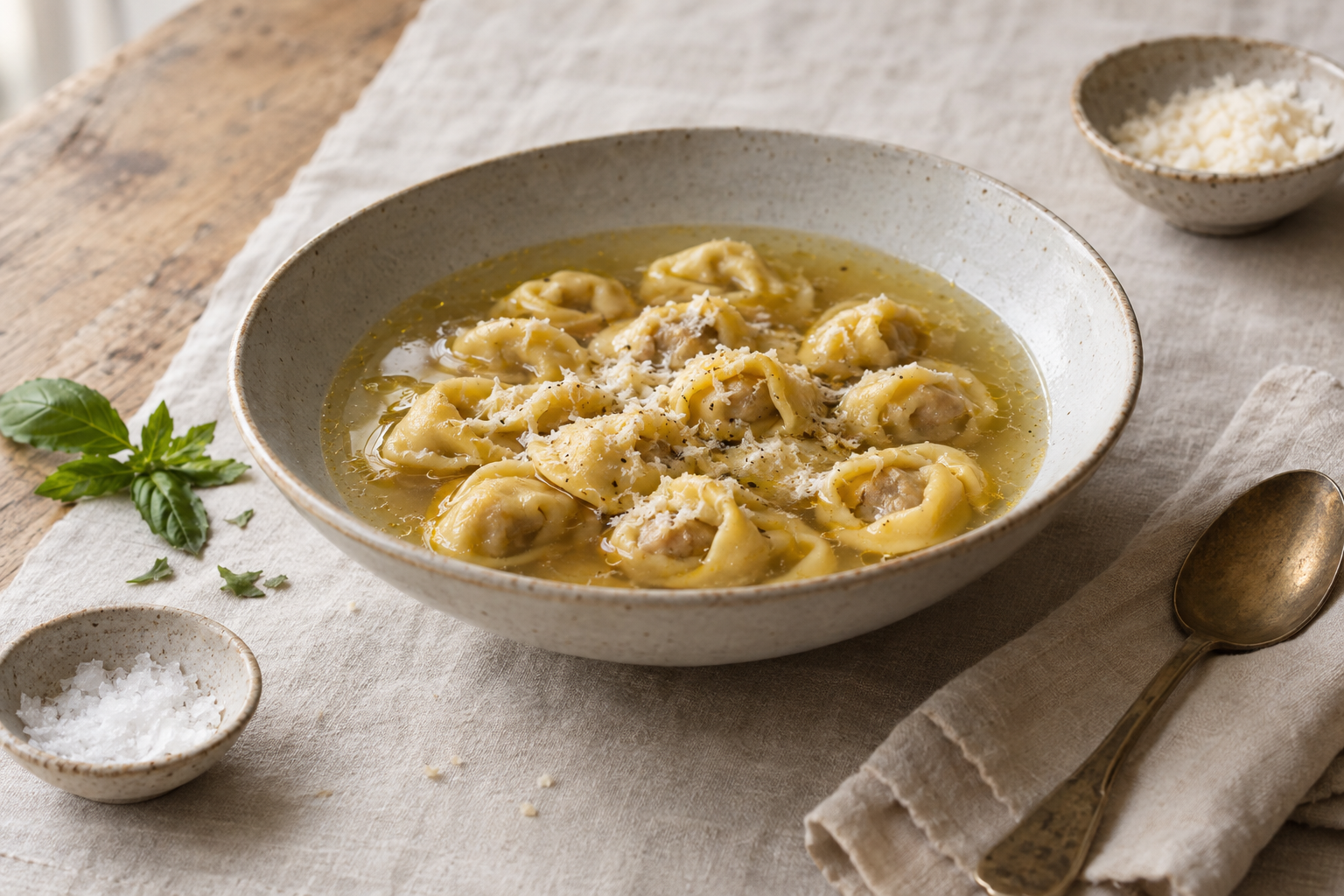
Tortellini in Brodo Recipe
This tortellini in brodo recipe pairs tender filled pasta with clear chicken-and-beef broth, gently simmered with vegetables for deep, clean flavor.
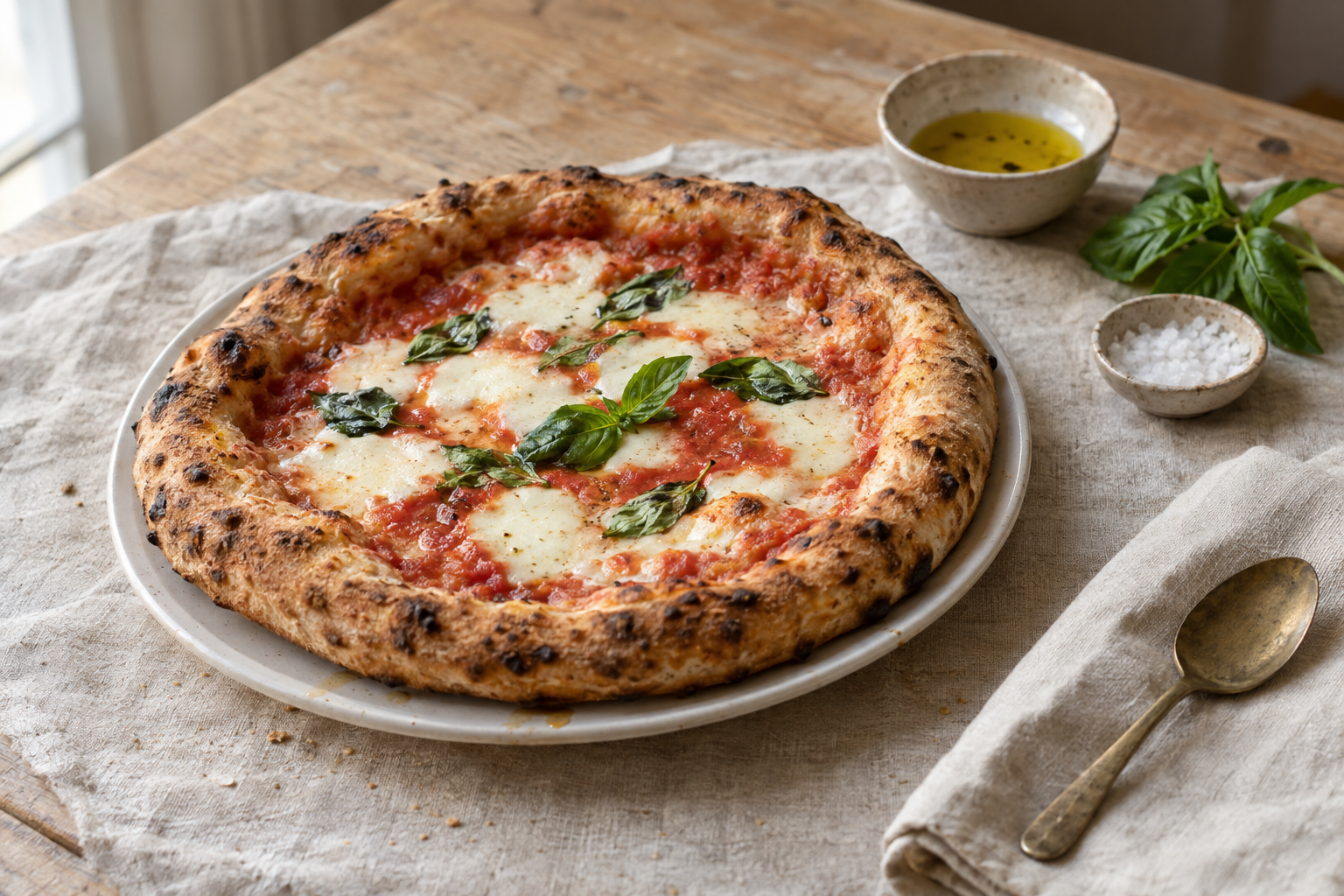
Neapolitan Pizza Margherita Recipe
Slow-rise dough and a hot home-oven steel give this Neapolitan Margherita a tender center, crisp edge, and balanced tomato, mozzarella, and basil at home.
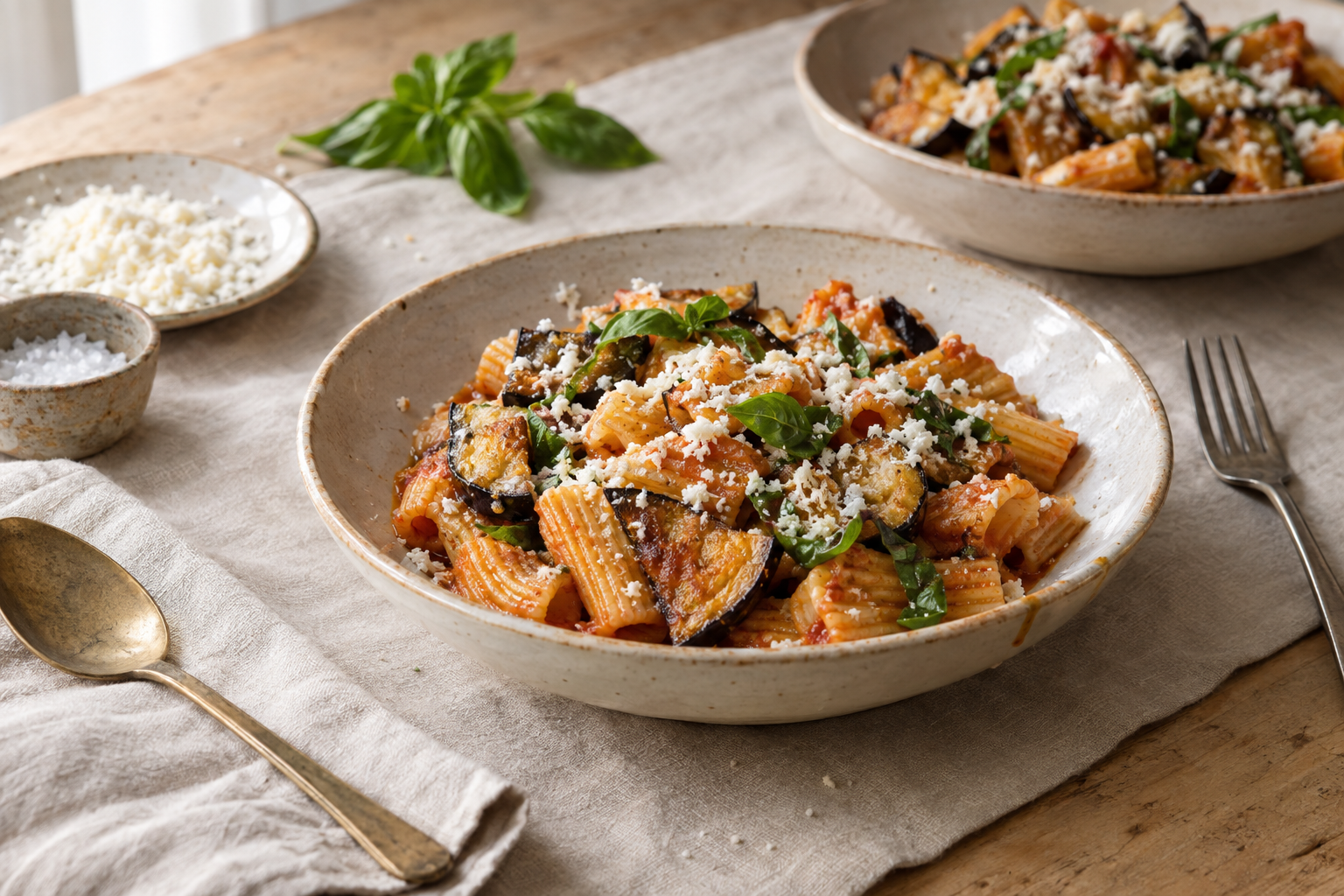
Pasta alla Norma Recipe
This pasta alla Norma recipe pairs tender tomato sauce and basil with crisp fried eggplant and salty ricotta salata for a balanced Sicilian supper.