Authentic Spaghetti Carbonara Recipe
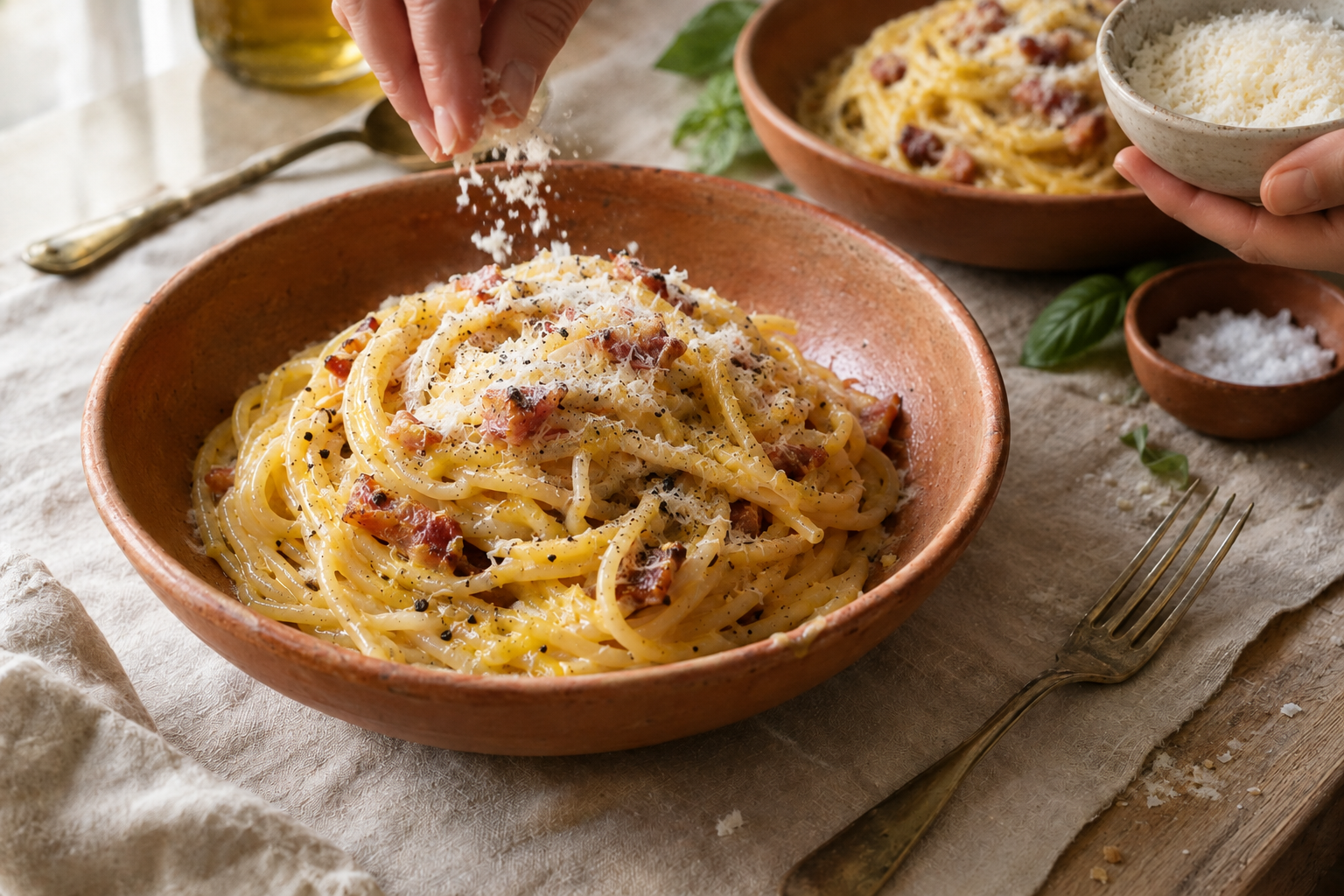
This Roman spaghetti carbonara coats pasta in a silky egg, Pecorino Romano, and guanciale sauce; a gentle water bath cooks the eggs without adding cream.
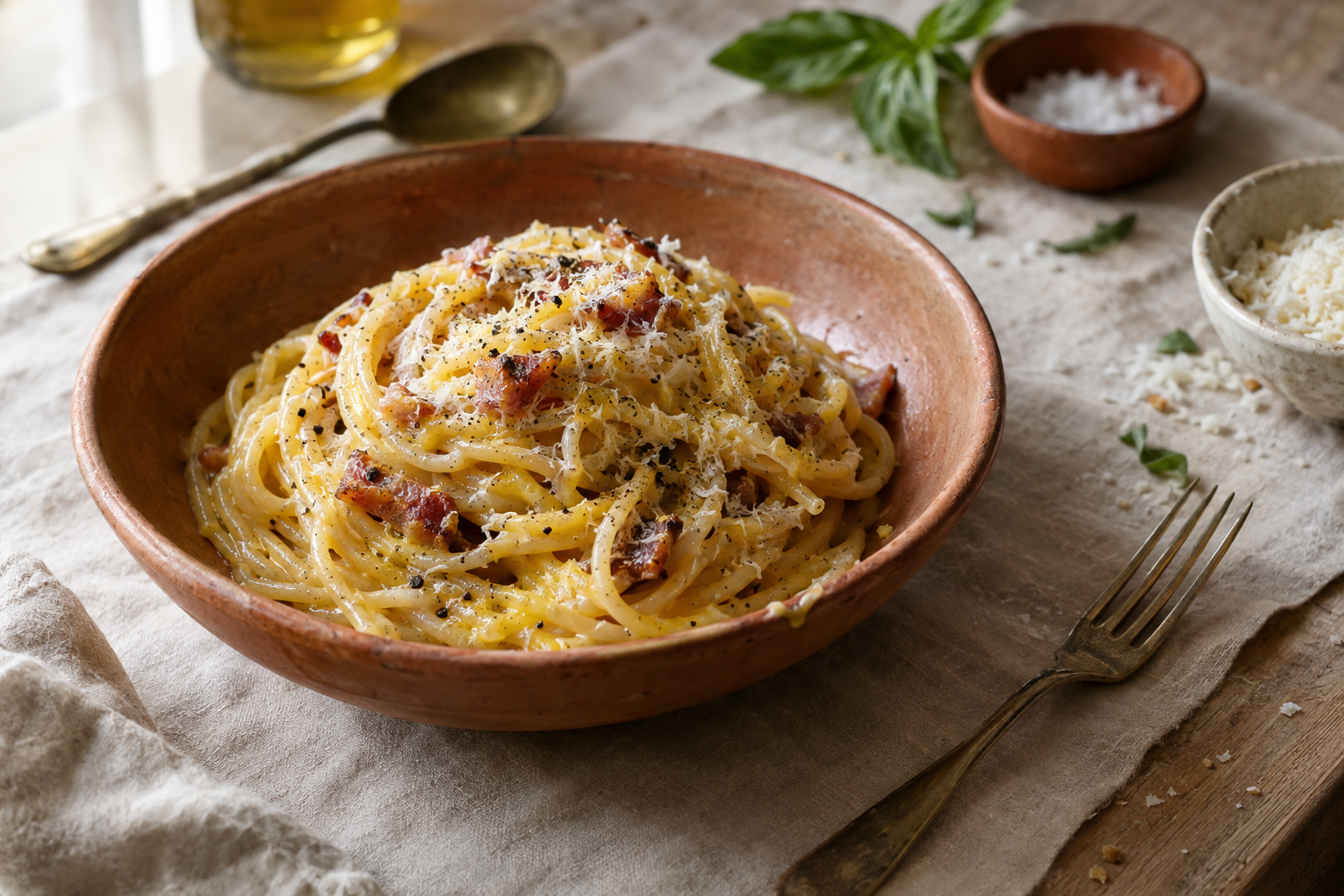
Spaghetti carbonara is a Roman pasta dish with a silky sauce of eggs, Pecorino Romano, black pepper, and guanciale. In Rome, Lazio, guanciale—cured pork jowl—gives the dish its savory backbone, while the cheese brings a sharp, salty bite. There is no cream in this version; the sauce gets its texture from eggs, cheese, and a little starchy pasta water.
The key is to combine the egg mixture with hot pasta without scrambling it. I start the sauce off the burner, then use a gentle water bath as a safety-focused adaptation to bring the eggs to 160°F. Keep the pasta moving and check the sauce itself with an instant-read thermometer. It should look glossy and cling to the strands, not sit in a puddle. Cook the spaghetti al dente (firm to the bite), and save some pasta water before draining; those two details make the sauce easier to control. This version works because careful, constant tossing keeps the sauce silky while the eggs reach a safe temperature.
By Lucia Moretti
More pasta to cook next: Easy Cacio e Pepe Recipe, Easy Risotto alla Milanese, Saltimbocca alla Romana Recipe.
Step by step
These photos follow the method in order, from the first prep step to the plated dish.
Where It Goes Wrong
The eggs form soft lumps. Take the skillet off the heat before adding the eggs, transfer everything to the bowl, and toss constantly over gently simmering water.
| Symptom | Cause | Fix |
|---|---|---|
| The eggs form soft lumps. | The pasta or skillet was too hot, or the sauce was not stirred continuously. | Take the skillet off the heat before adding the eggs, transfer everything to the bowl, and toss constantly over gently simmering water. |
| The sauce is thick and pasty. | The cheese absorbed too much moisture or the sauce cooked too long. | Toss in reserved pasta water 1 tablespoon (15 ml) at a time until the sauce loosens and shines. |
| The sauce is runny and slides off the spaghetti. | The sauce has not thickened enough, or too much pasta water was added. | Keep tossing over the water bath and check the sauce temperature. If it is already at 160°F (71°C), toss briefly off the heat rather than adding more water. |
| The dish tastes overly salty. | Guanciale and Pecorino Romano are both salty, and the pasta water may have been heavily salted. | Use the measured salt amount, avoid adding extra salt to the sauce, and finish with more cheese only after tasting. |
Recipe
Ingredients
Method
- 1
Bring the water to a boil in a large pot, add the salt, then cook the spaghetti until just al dente, following the package time as a guide. Before draining, reserve 1 cup (240 ml) of pasta water.
- 2
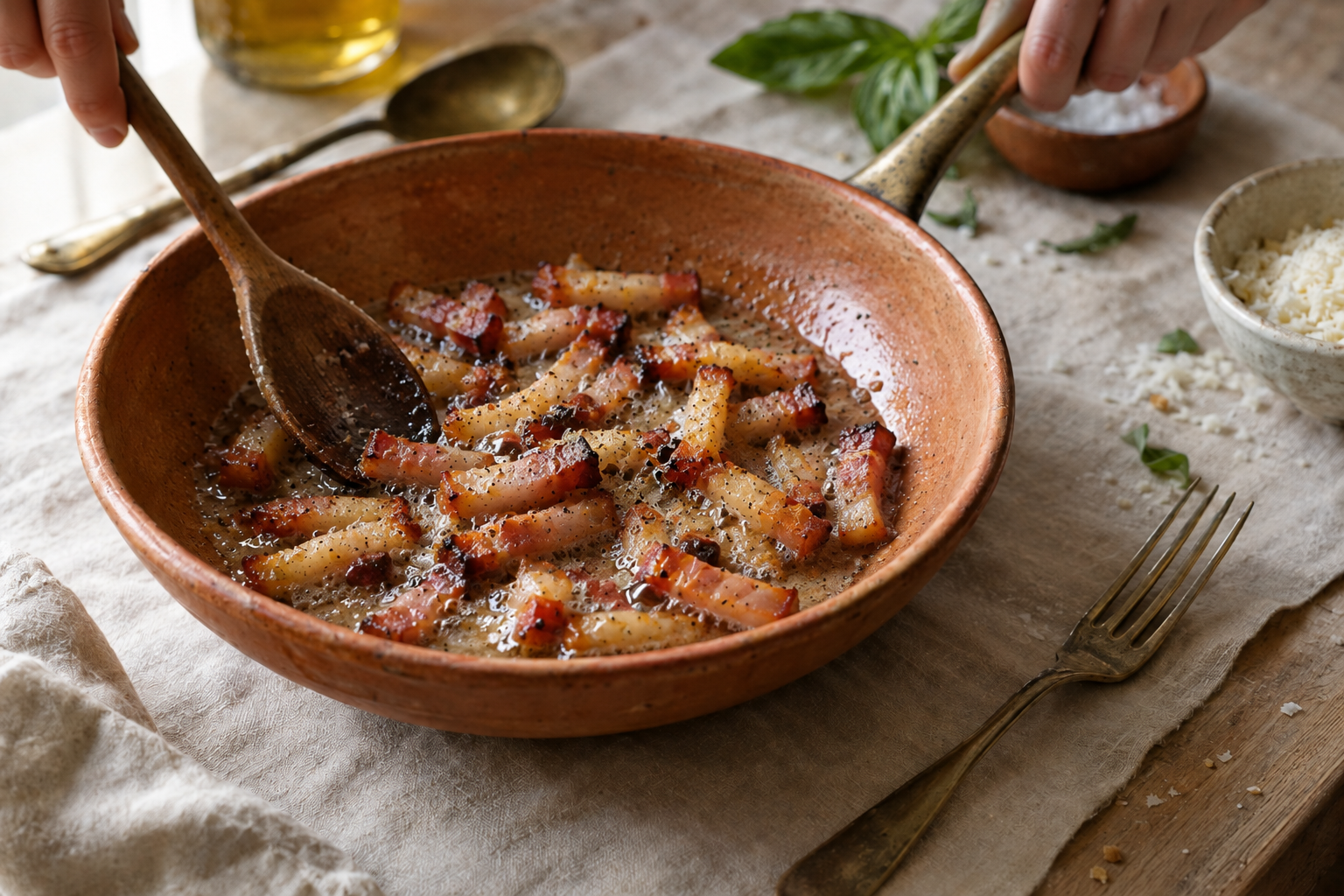
Cook the guanciale in a large skillet over medium-low heat, stirring now and then, until the fat renders and the pieces are golden at the edges, about 7–9 minutes. Take the skillet off the heat.
- 3
Whisk the eggs, yolks, Pecorino Romano, and black pepper in a heatproof bowl until thick and evenly combined. Set the bowl near the stove.
- 4
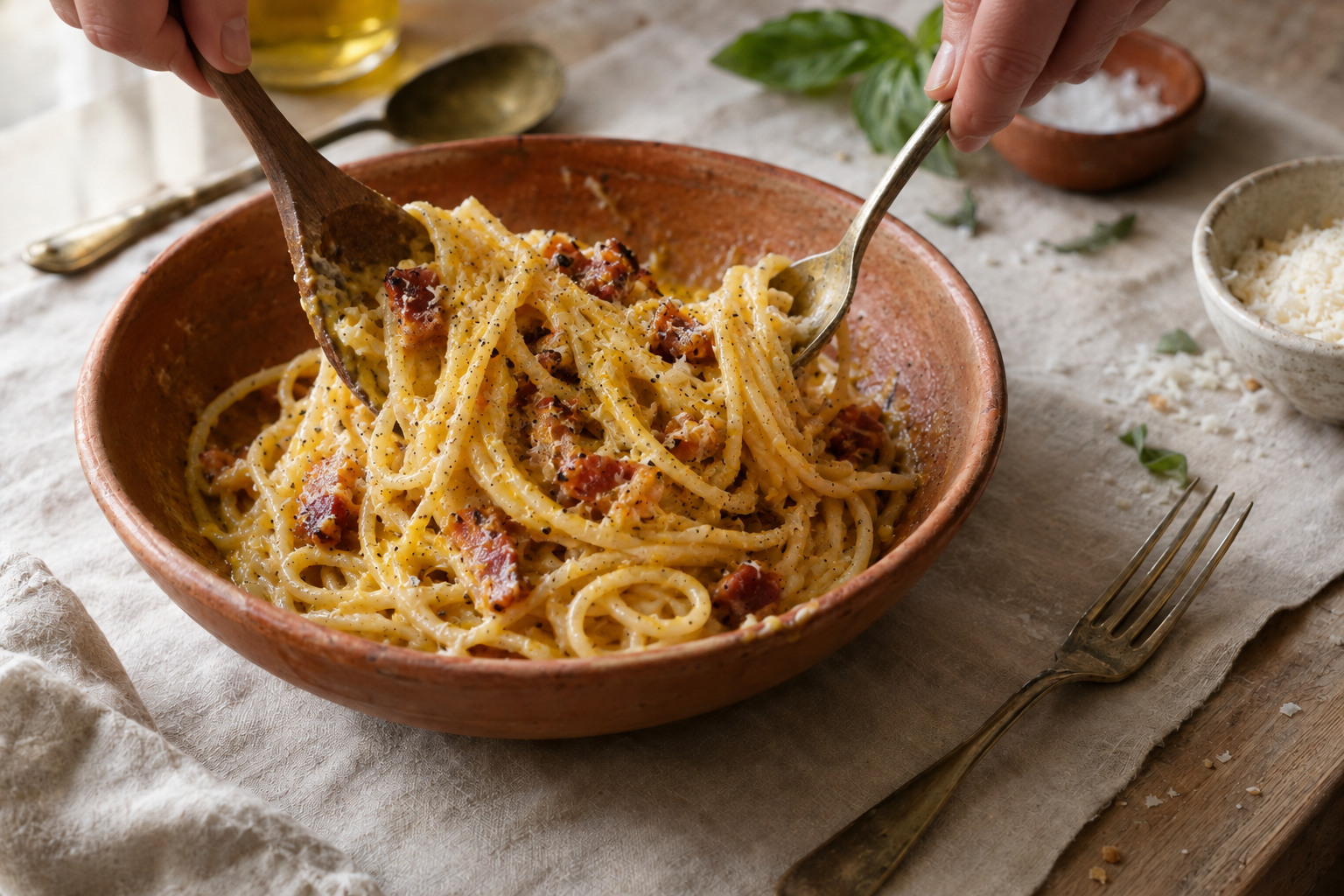
Add the drained spaghetti to the skillet with the guanciale and toss to coat. Let it sit off the heat for about 1 minute so the pan is hot but not scorching, then toss in the egg-and-cheese mixture with 2 tablespoons (30 ml) of pasta water.
- 5
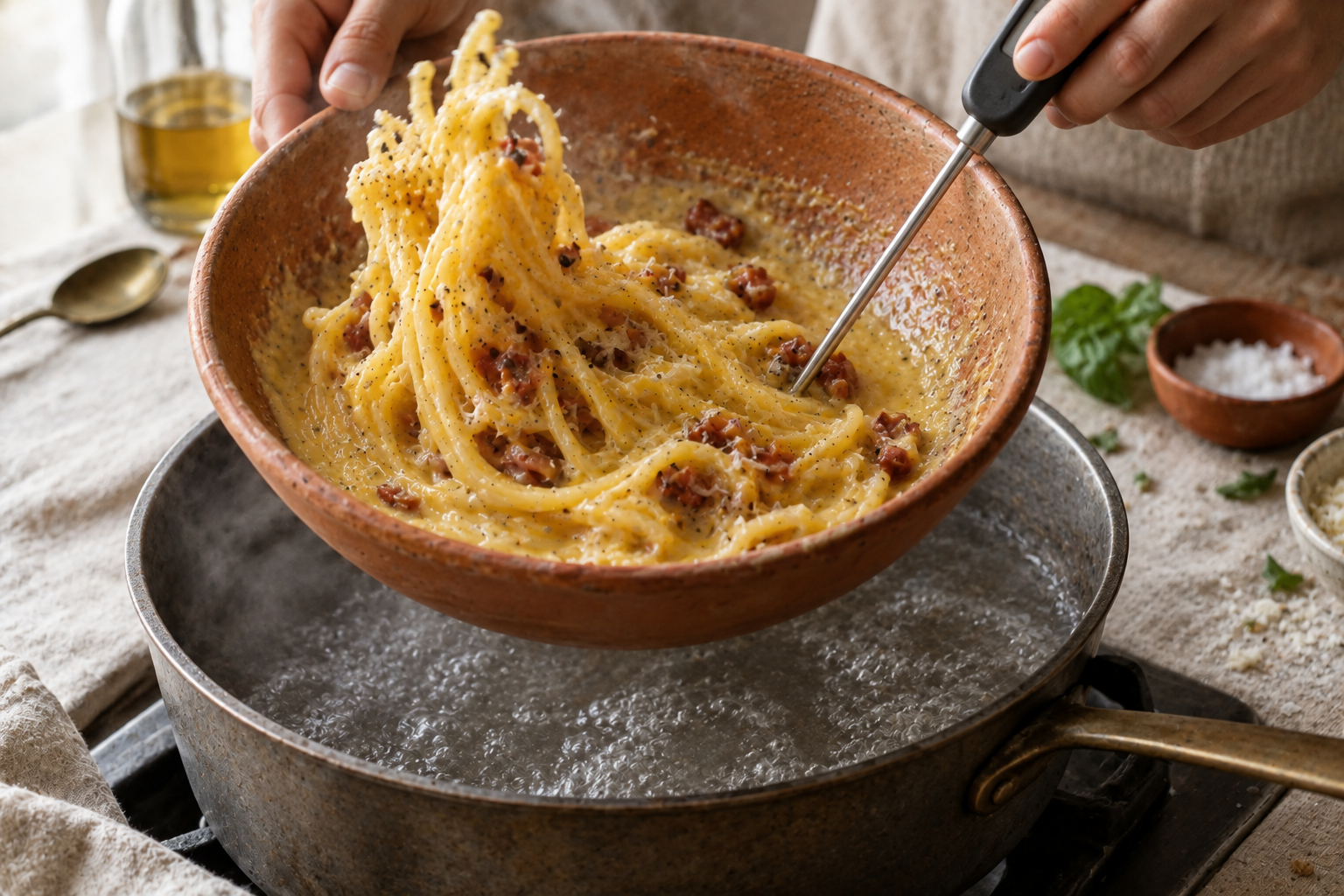
Transfer all the pasta, guanciale, and sauce from the skillet into the heatproof bowl. Set the bowl over a saucepan of gently simmering water, making sure the bowl does not touch the water.
- 6
Toss the pasta constantly over the water bath, scraping the bowl as you go. Add reserved pasta water 1 tablespoon (15 ml) at a time until the sauce looks glossy and clings to the strands. Check the sauce itself with an instant-read thermometer and remove the bowl from the heat as soon as it reaches 160°F (71°C), about 2–5 minutes. Do not stop stirring; the sauce thickens quickly.
- 7
Divide among warm bowls and serve immediately with extra Pecorino Romano and black pepper, if desired.
FAQ
Does authentic spaghetti carbonara have cream? No, Roman-style carbonara does not need cream. Eggs, Pecorino Romano, rendered guanciale fat, and starchy pasta water make the sauce silky.
Does authentic spaghetti carbonara have cream?
No, Roman-style carbonara does not need cream. Eggs, Pecorino Romano, rendered guanciale fat, and starchy pasta water make the sauce silky.
Can I use bacon instead of guanciale?
Yes, but the flavor will be different. Guanciale is cured pork jowl; pancetta is a closer substitute than smoky bacon.
How do I keep carbonara eggs from scrambling?
Take the skillet off the heat before adding the egg mixture, then toss continuously in a gentle water bath. Check the sauce with a thermometer and stop heating at 160°F (71°C).
Can I reheat leftover carbonara?
Yes, though the sauce is best freshly made. Reheat leftovers gently in a skillet with a splash of water, stirring often, until steaming hot.
Comments
No approved comments yet.
Sign in to leave a comment. Comments stay hidden until they are approved.
Related recipes
Easy Cacio e Pepe Recipe
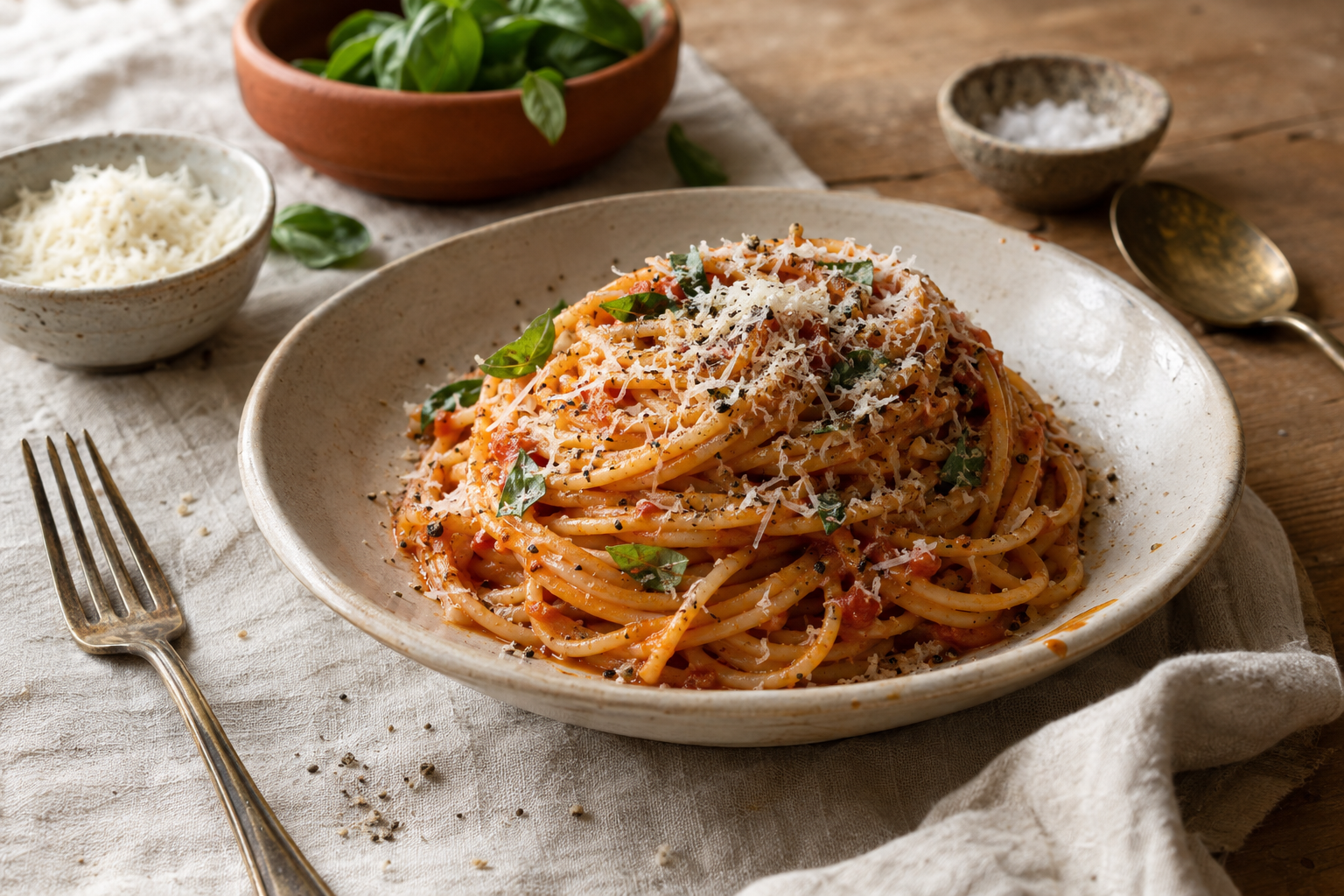
This easy cacio e pepe recipe uses finely grated Pecorino Romano, toasted black pepper, and starchy pasta water for a smooth, clingy Roman sauce without cream.
Easy Risotto alla Milanese
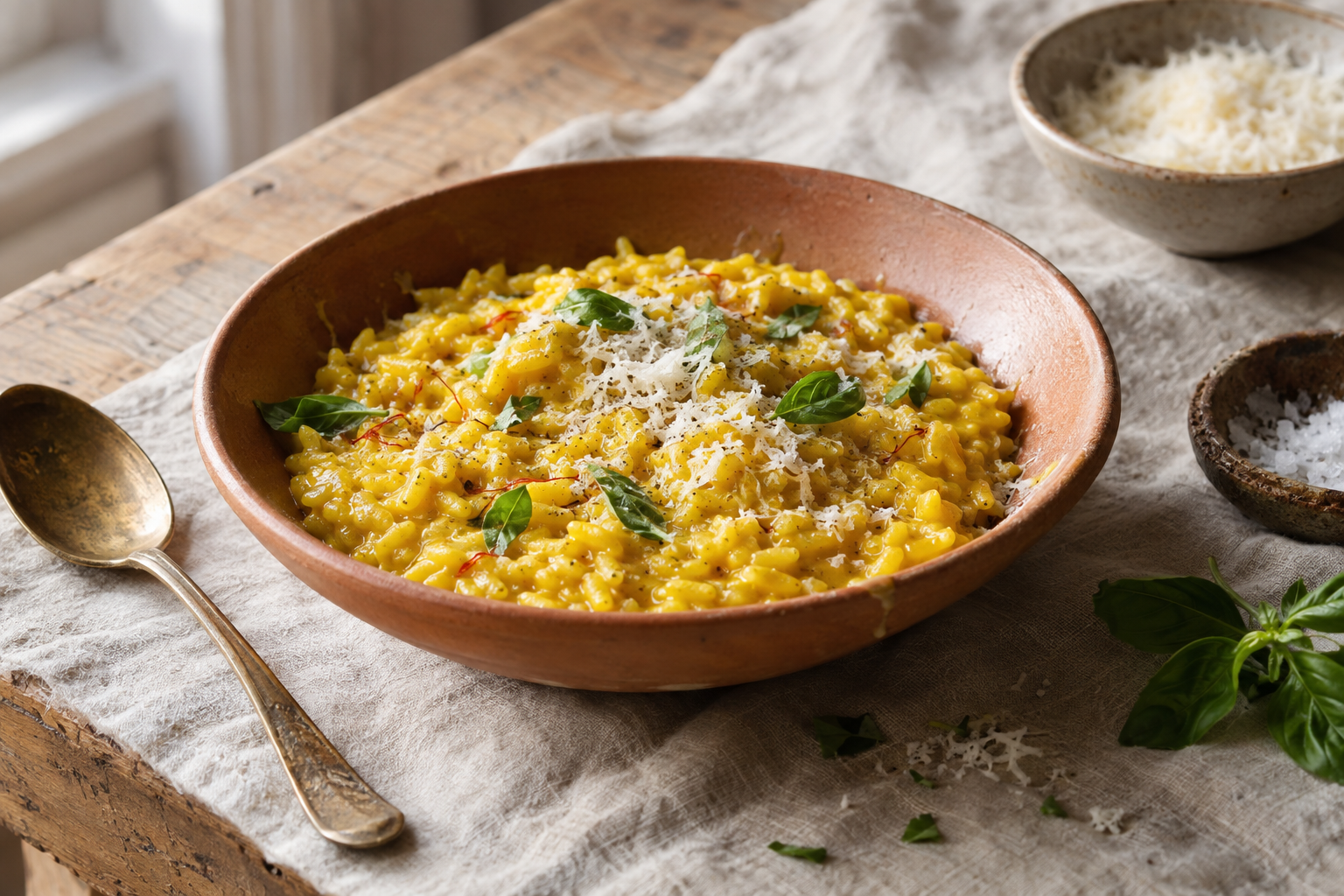
This easy Risotto alla Milanese gets its golden color from bloomed saffron and its silky finish from warm broth, steady stirring, butter, and Parmesan.
Saltimbocca alla Romana Recipe
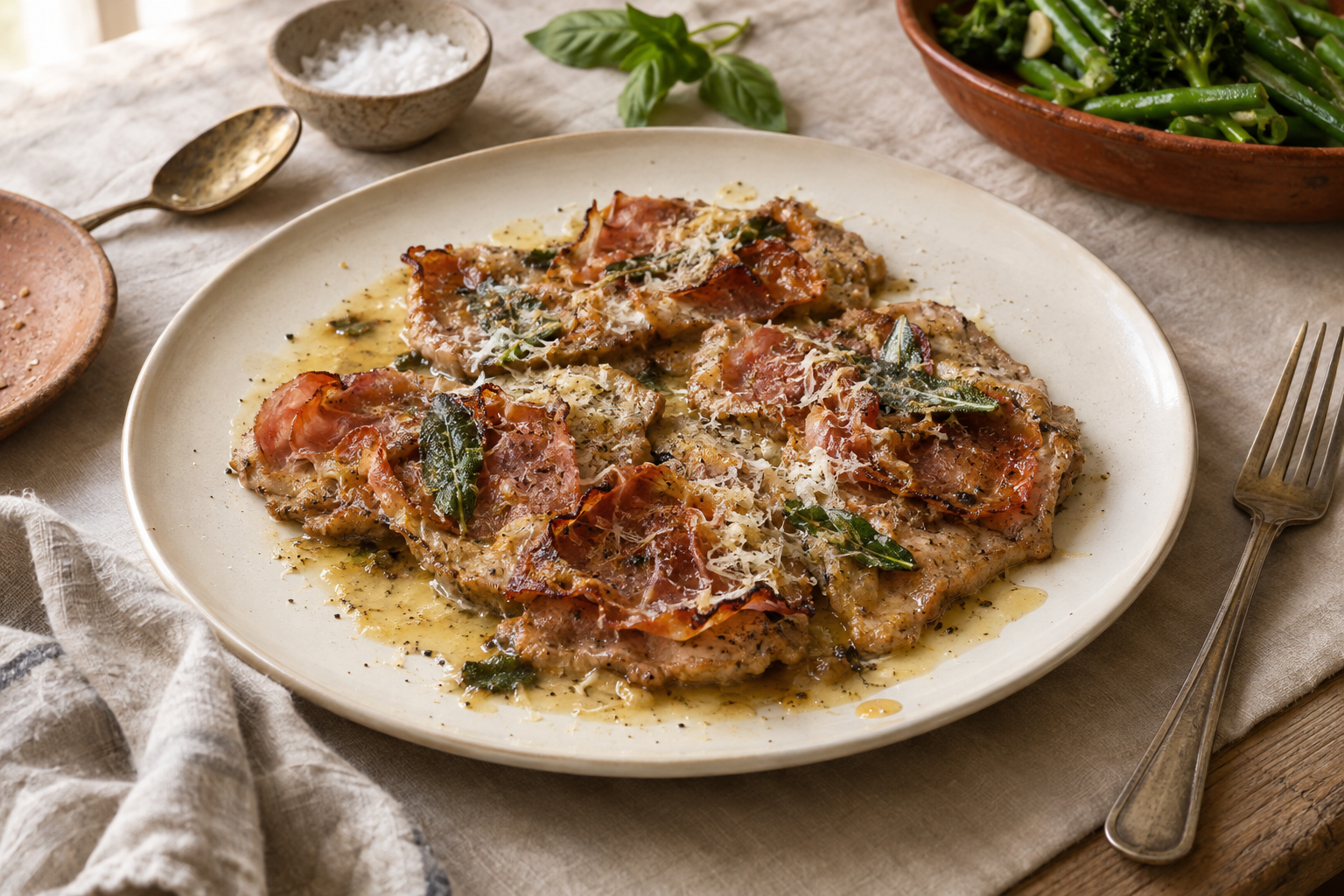
This saltimbocca alla romana recipe pairs thin veal with prosciutto and sage, then finishes in a quick white-wine butter sauce for a fast, polished main.
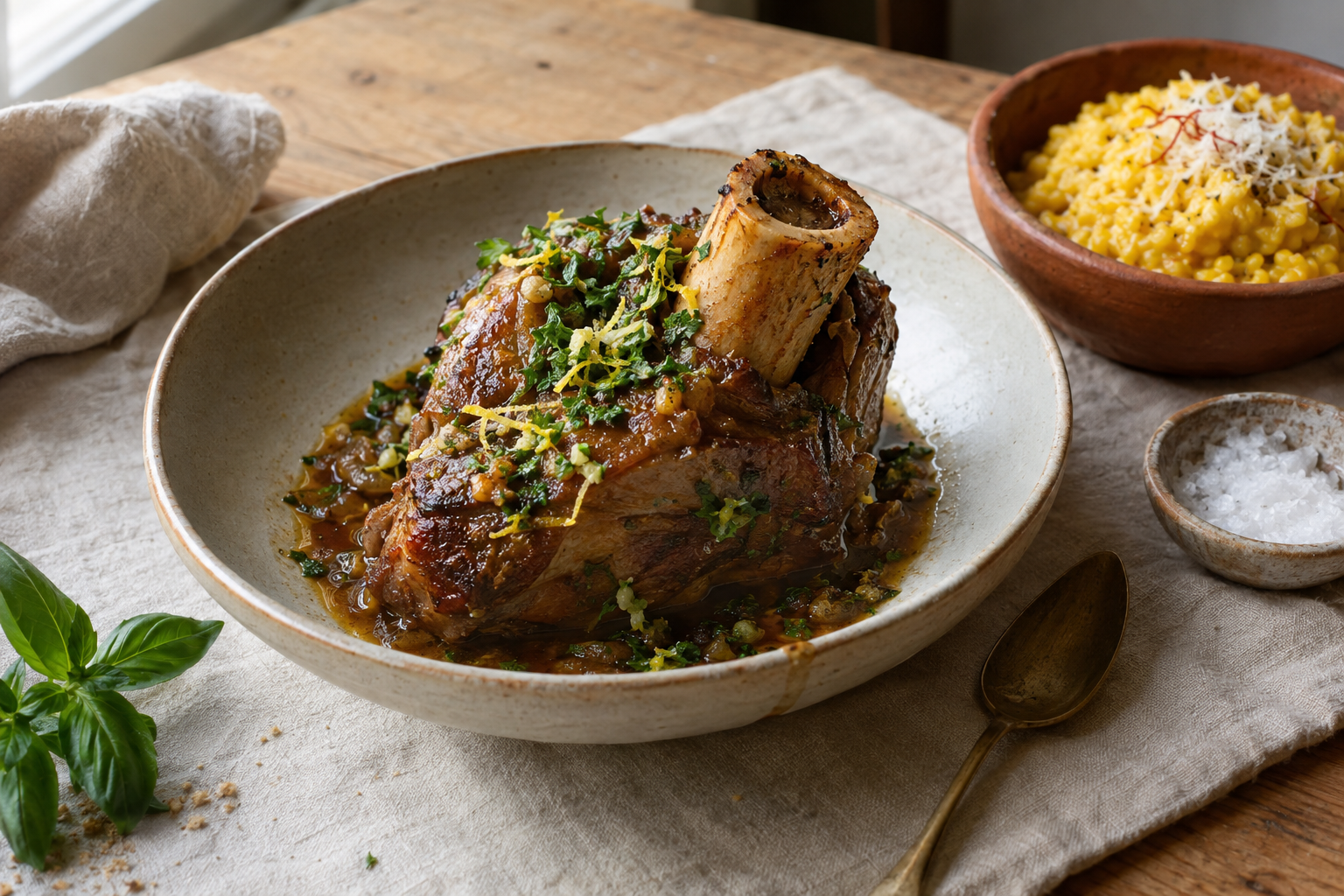
Ossobuco alla Milanese Recipe
This ossobuco alla Milanese recipe braises veal shanks gently in a Dutch oven until tender, then adds lemon-parsley gremolata for a fresh, balanced finish.