Authentic Bucatini all’Amatriciana Recipe
This authentic bucatini all’amatriciana recipe pairs crisp guanciale, bright tomato, chile, and pecorino; pasta water brings the savory sauce into balance.
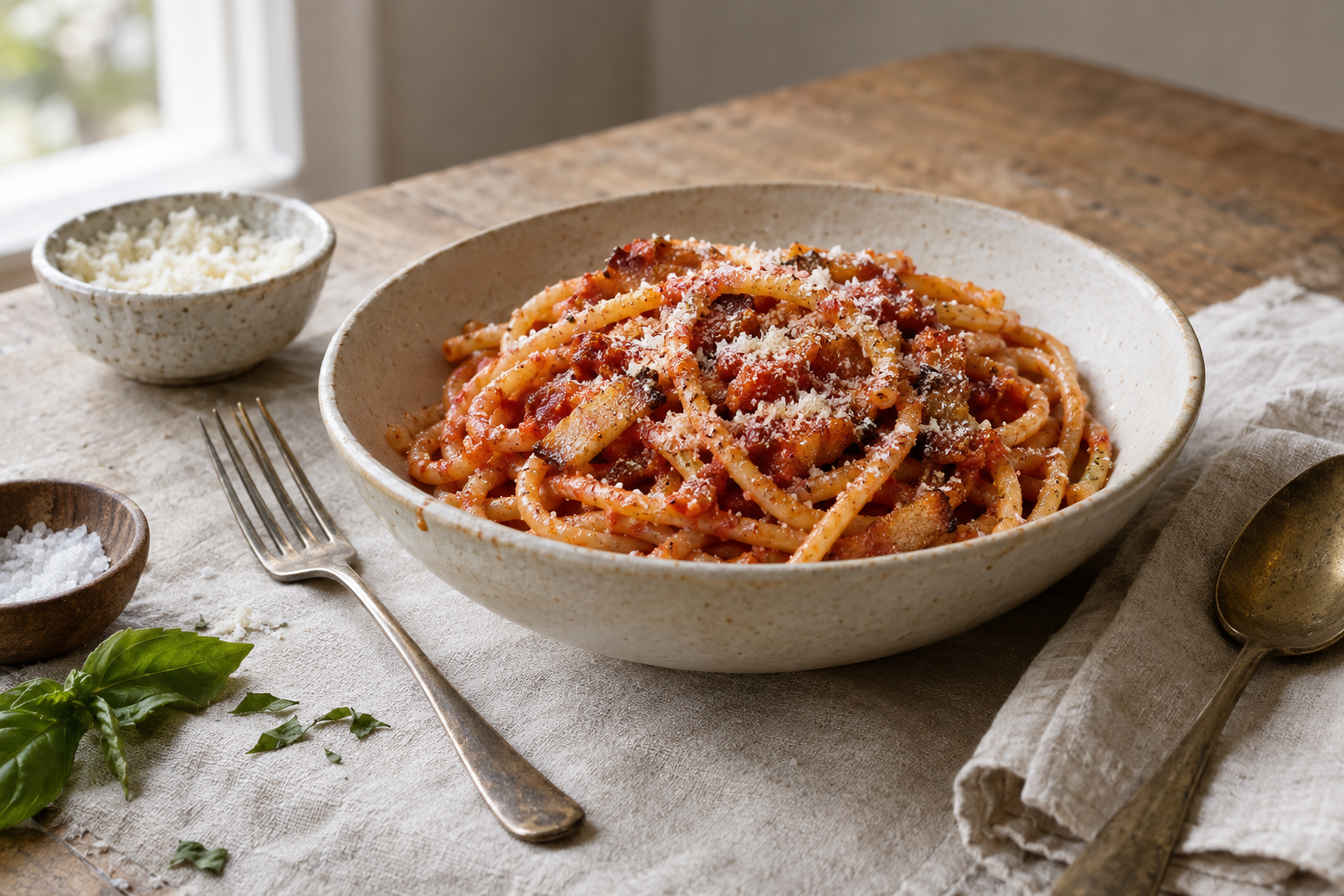
Bucatini all’Amatriciana is a Lazio pasta dish made with guanciale, tomato, chile, and Pecorino Romano. Its name comes from Amatrice, a town in the Apennines, while bucatini all’amatriciana is also a familiar sight on Roman menus. Bucatini’s hollow center catches a little sauce, but the real trick is keeping the sauce savory without letting the guanciale or cheese overwhelm the tomato.
I render the guanciale slowly so its fat seasons the sauce, then simmer the tomatoes until their sharp edge softens. I leave salt out of the sauce at first; guanciale and pecorino bring plenty, and pasta water can add more. Finish the pasta in the pan, just shy of fully tender, so it turns al dente (firm to the bite) while picking up the sauce. For another pasta night, try Tajarin with Porcini Mushrooms, or serve Focaccia Barese Recipe with Tomatoes alongside a meal. This version works because the rendered pork fat, bright tomato, and starchy water balance each other before the cheese goes in.
By Lucia Moretti
Step by step
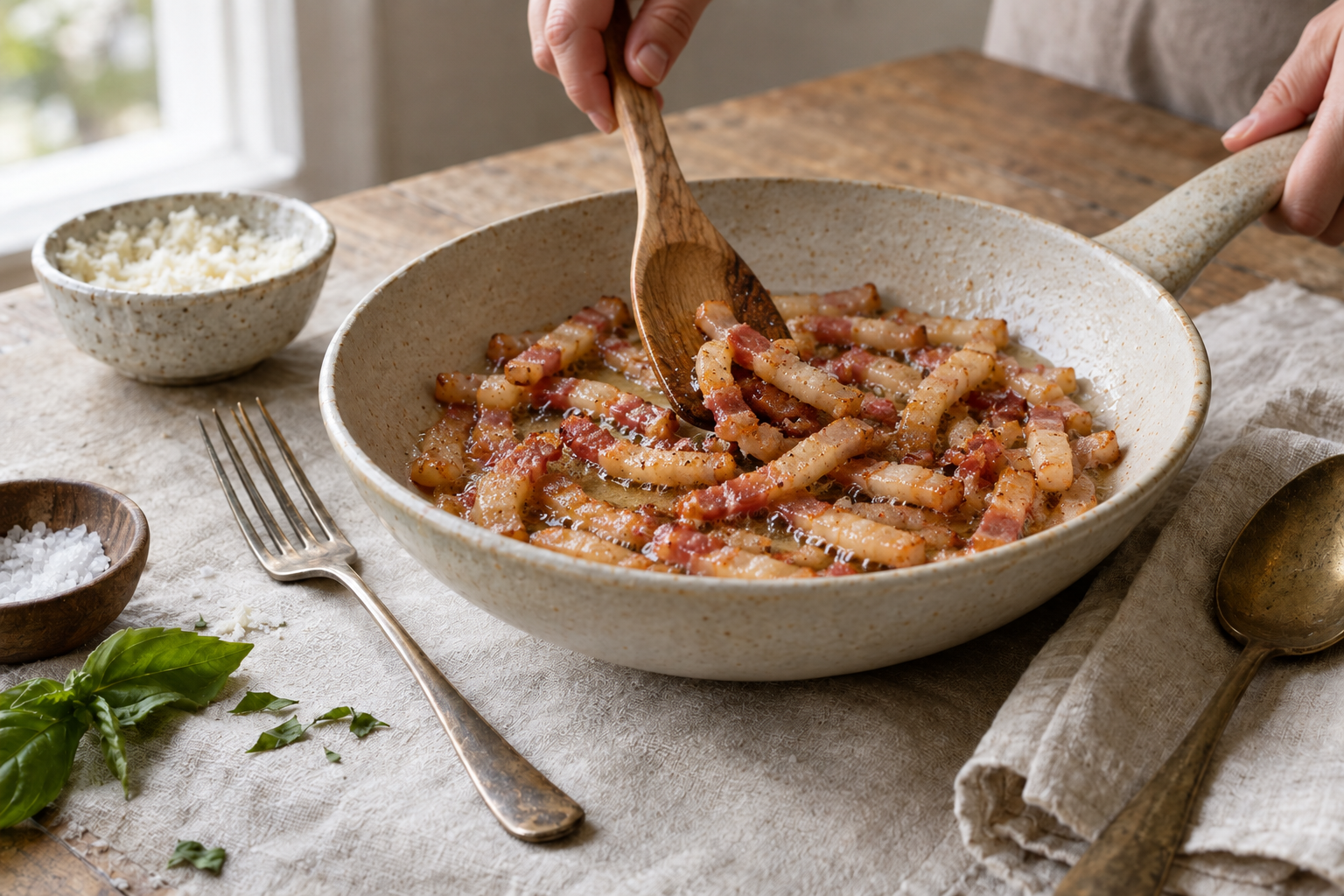
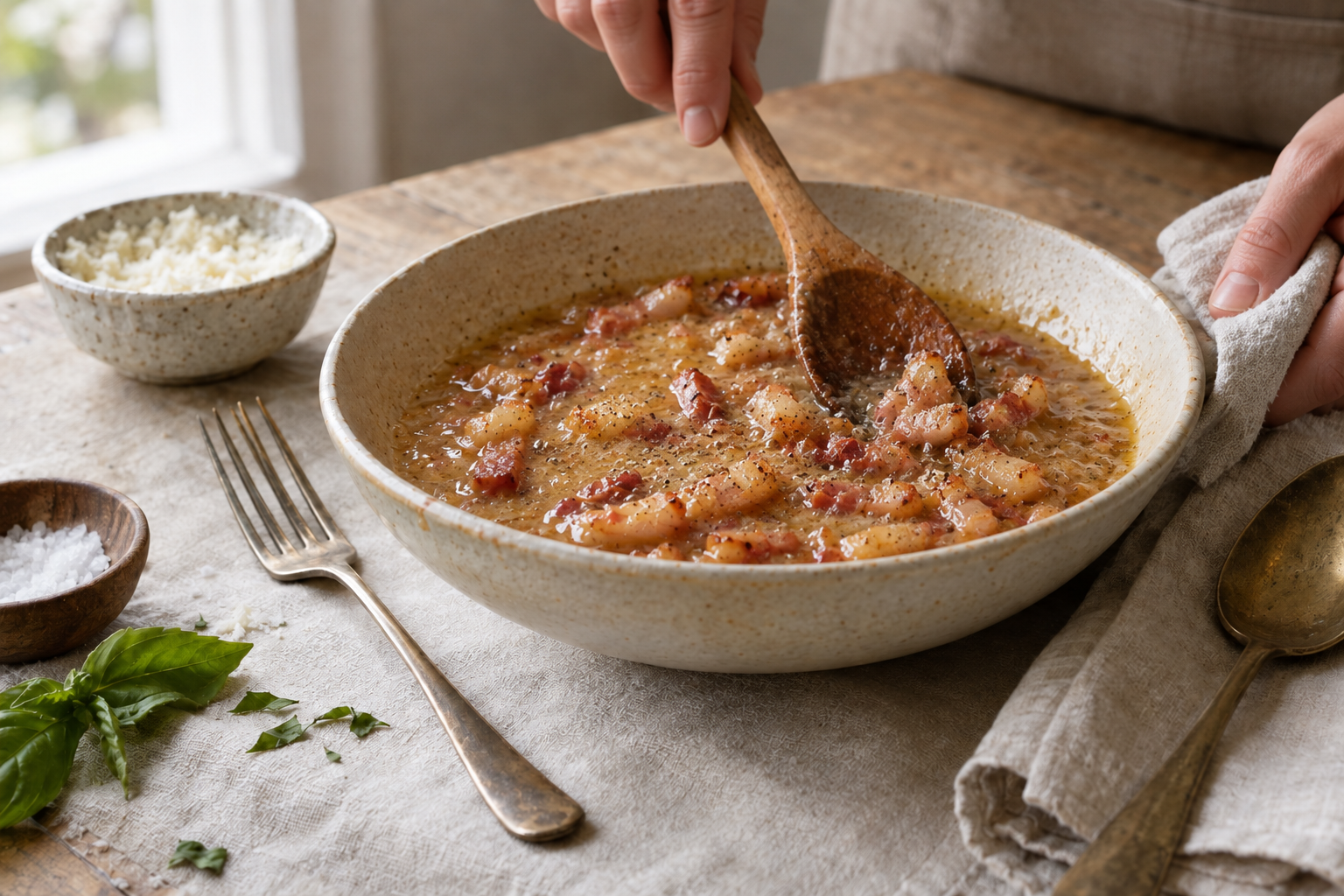
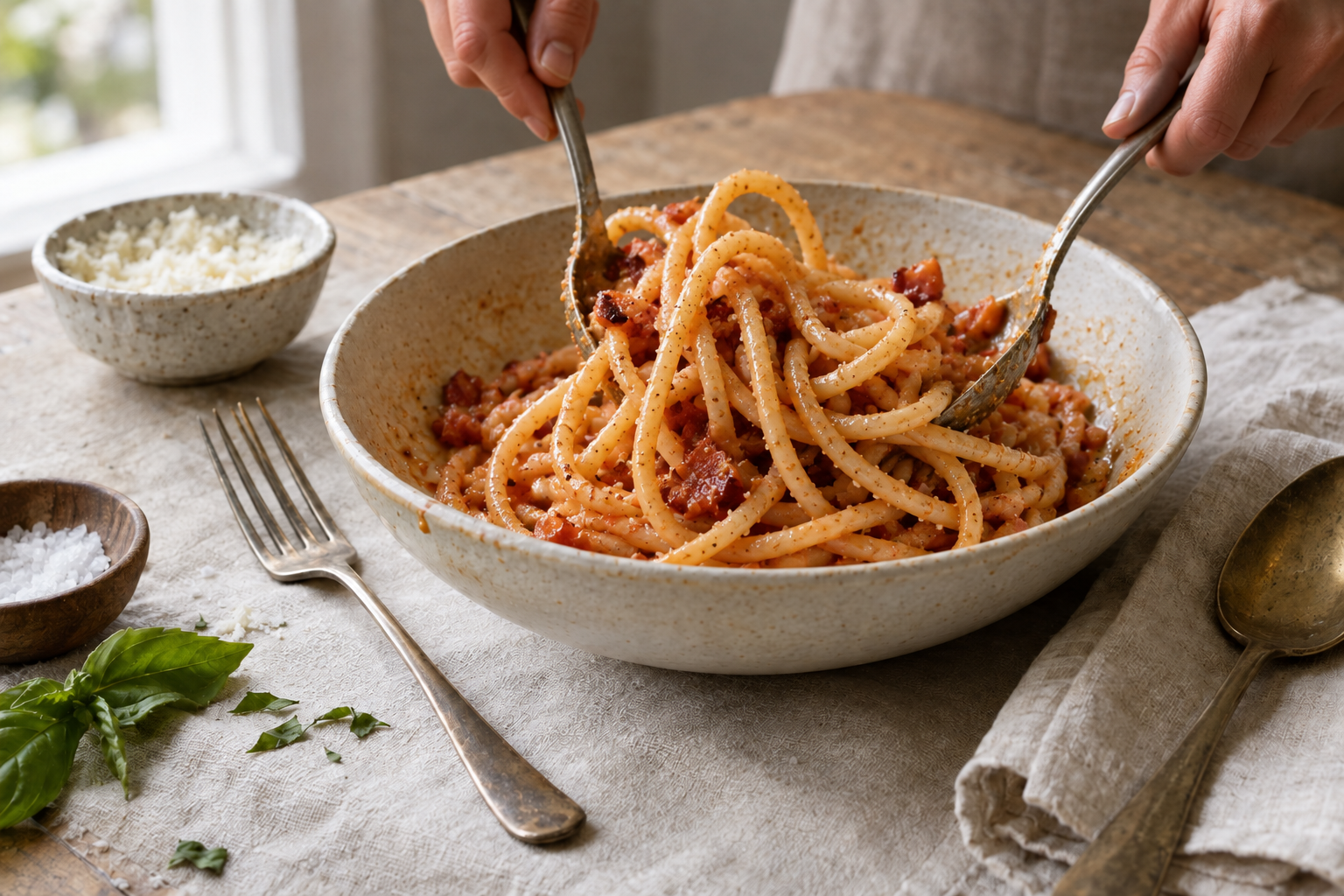
These photos follow the method in order, from the first prep step to the plated dish.
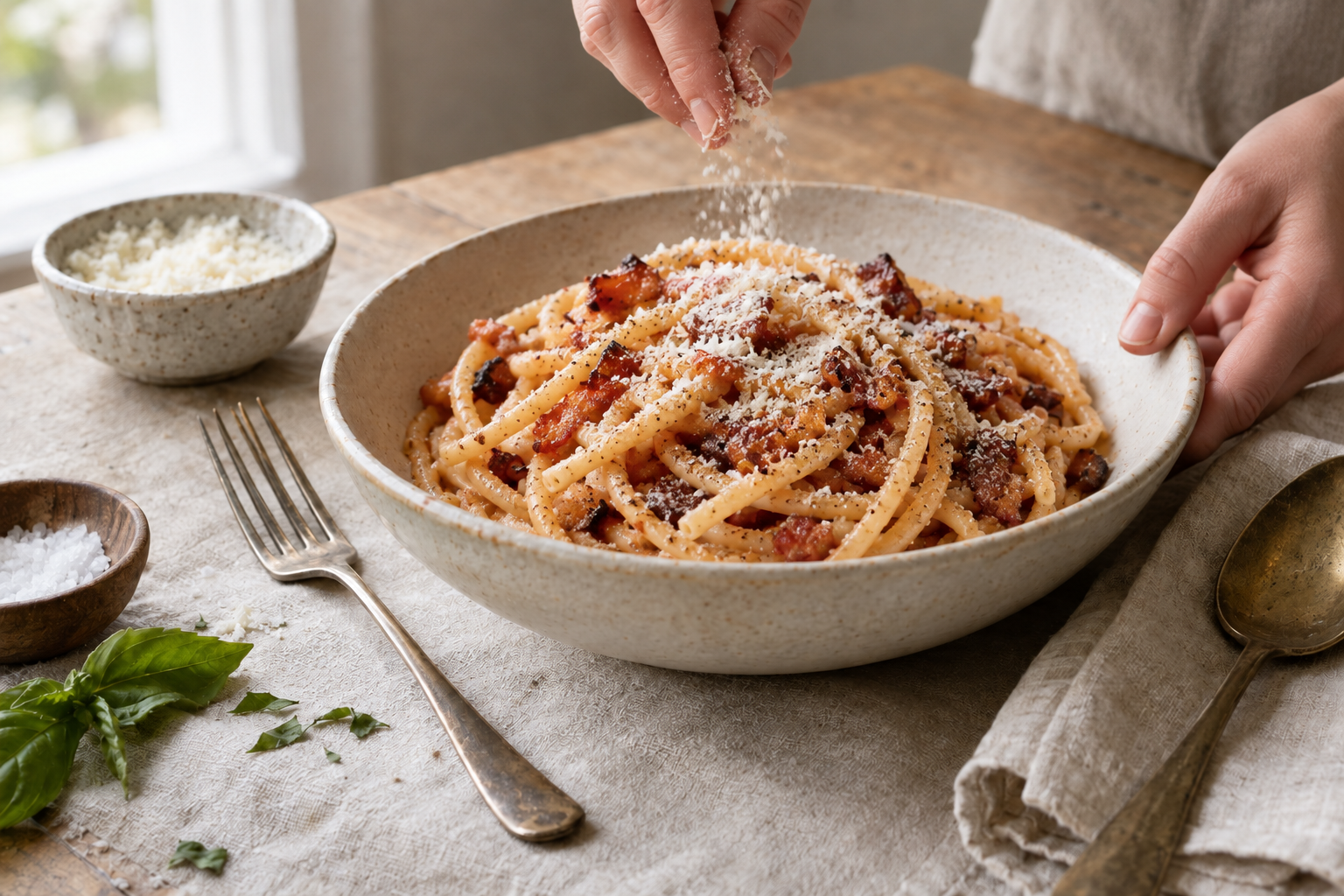
Where It Goes Wrong
The guanciale is tough and very dark. Start over medium-low and give the fat time to melt; remove the pan from the heat if the edges brown before the fat renders.
| Symptom | Cause | Fix |
|---|---|---|
| The guanciale is tough and very dark. | It rendered too quickly over high heat. | Start over medium-low and give the fat time to melt; remove the pan from the heat if the edges brown before the fat renders. |
| The sauce tastes greasy. | The guanciale released more fat than the sauce needs, or the pasta was not tossed thoroughly with it. | Spoon off a little excess fat before adding the tomatoes, then toss the pasta vigorously with the sauce and a splash of pasta water. |
| The sauce is too salty. | Guanciale, pecorino, and salted pasta water all add salt. | Do not salt the sauce before tasting. If it is already too salty, loosen it with a little hot, unsalted water and add a spoonful of tomato if needed. |
| The pecorino turns stringy or clumps. | The pan was too hot when the cheese went in. | Take the pan off the heat before adding the cheese, and toss it in gradually with a splash of pasta water. |
| The pasta looks dry before serving. | The sauce reduced too far or the pasta absorbed the liquid while finishing. | Toss in reserved pasta water a tablespoon at a time until the sauce clings smoothly to the bucatini. |
Recipe
Ingredients
Method
- 1
Bring the water to a boil in a large pot. Stir in the salt, then keep the water at a steady boil while you make the sauce.
- 2
Render the guanciale in a large skillet over medium-low heat, stirring occasionally, for 8–10 minutes. It is ready when the fat has pooled in the pan and the strips have golden edges but are not hard or deeply browned.
- 3
Add the crushed red pepper and stir for about 15 seconds, then add the tomatoes carefully to avoid splashes. Simmer uncovered for 15–18 minutes, stirring now and then, until the sauce thickens slightly and no longer tastes sharply raw. Do not add salt yet.
- 4
Cook the bucatini in the boiling water according to the package timing, stopping 2 minutes before the listed time. Before draining, scoop out at least 1 cup (240 mL) of pasta water.
- 5
Transfer the drained bucatini to the skillet and toss over medium heat for 1–2 minutes, adding pasta water a splash at a time. Stop when the pasta is just shy of tender and the sauce clings to it in a glossy coat.
- 6
Take the skillet off the heat. Add the grated pecorino in two additions, tossing between each, and loosen with another splash of pasta water if the sauce looks tight. Taste before adding any salt; the guanciale, cheese, and pasta water may be enough.
- 7
Divide among warm bowls and serve at once, with extra pecorino if desired. The sauce should coat the strands rather than pool at the bottom.
FAQ
Can I use pancetta instead of guanciale? Yes, pancetta works, though the flavor will be less rich and distinctive than guanciale. Choose unsmoked pancetta and render it slowly; avoid adding salt until the finished sauce is tasted.
Can I use pancetta instead of guanciale?
Yes, pancetta works, though the flavor will be less rich and distinctive than guanciale. Choose unsmoked pancetta and render it slowly; avoid adding salt until the finished sauce is tasted.
Is bucatini all’amatriciana spicy?
It is usually mildly spicy, but you can adjust the heat. Start with ¼ teaspoon of crushed red pepper flakes, or use less for a gentler sauce.
Why is my amatriciana sauce too salty?
The guanciale, Pecorino Romano, and salted pasta water can add up. Hold back the salt in the sauce, taste before serving, and use a little hot unsalted water to soften an overly salty sauce.
Can I make the sauce ahead?
Yes, you can make the tomato and guanciale sauce a day ahead and refrigerate it in a covered container. Reheat it gently, then cook and finish the bucatini just before serving.
Comments
No approved comments yet.
Sign in to leave a comment. Comments stay hidden until they are approved.
Related recipes
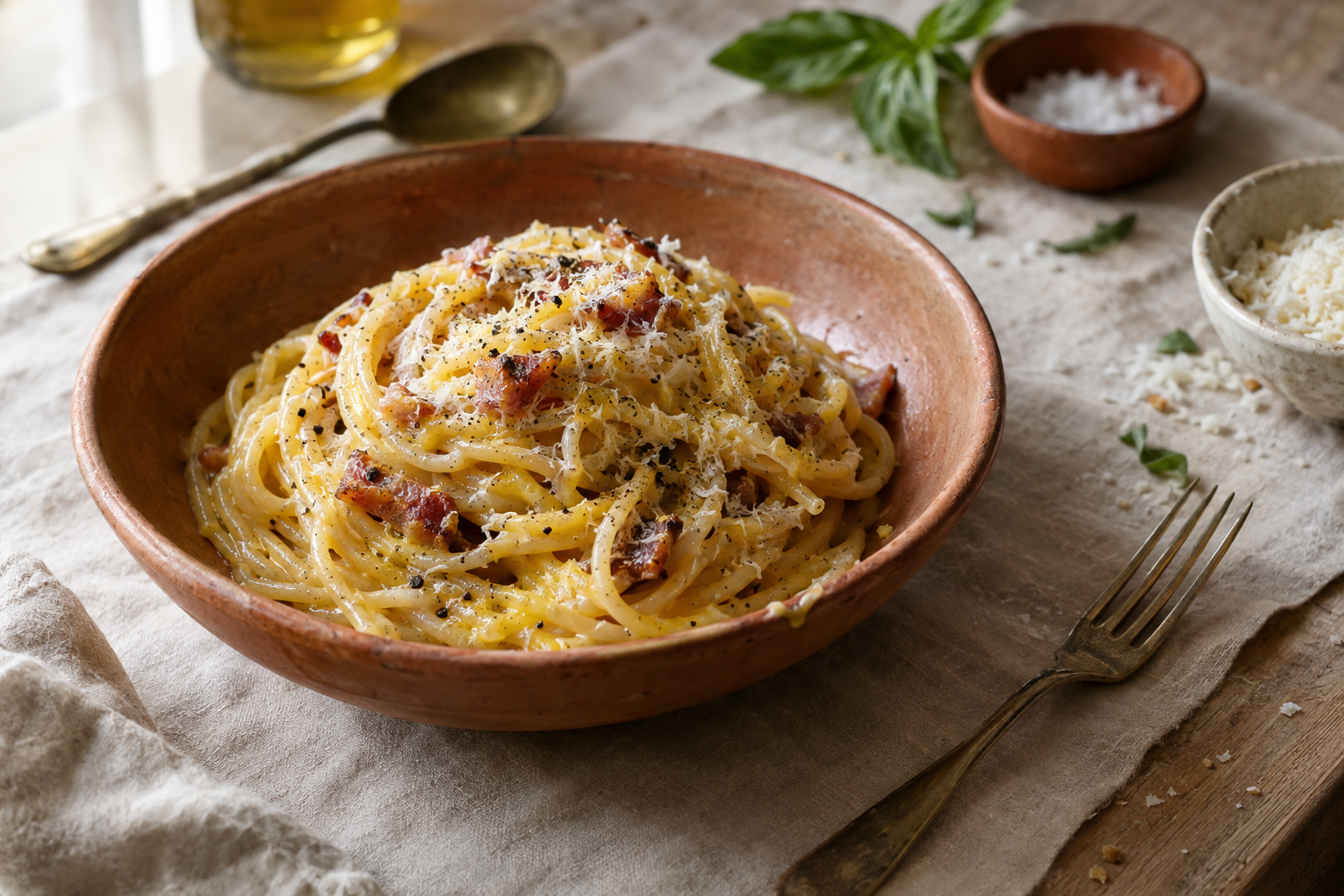
Authentic Spaghetti Carbonara Recipe
This Roman spaghetti carbonara coats pasta in a silky egg, Pecorino Romano, and guanciale sauce; a gentle water bath cooks the eggs without adding cream.
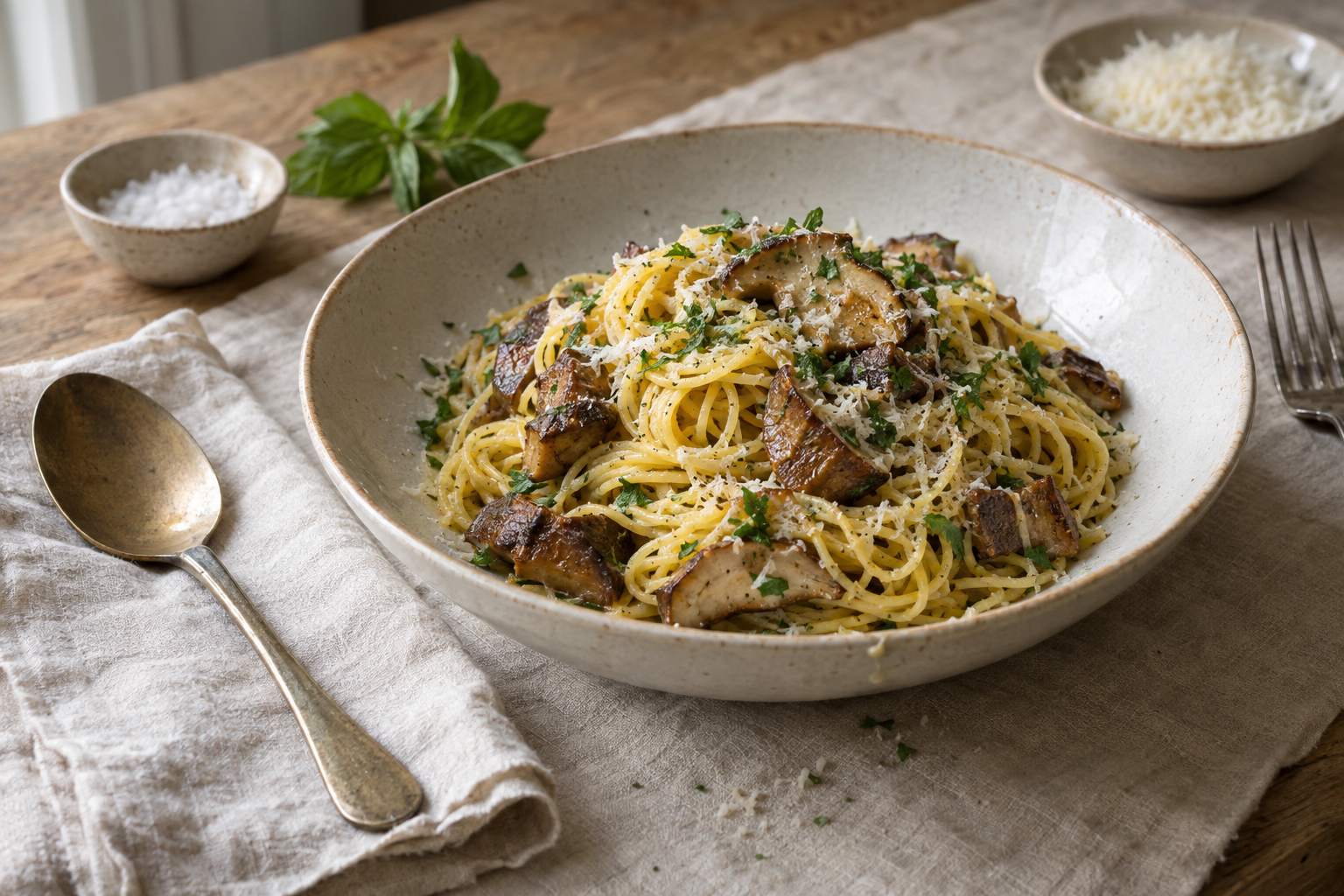
Tajarin with Porcini Mushrooms
Tajarin with porcini mushrooms combines fine Piedmontese egg noodles and earthy mushrooms, with clear directions for fresh or dried porcini.
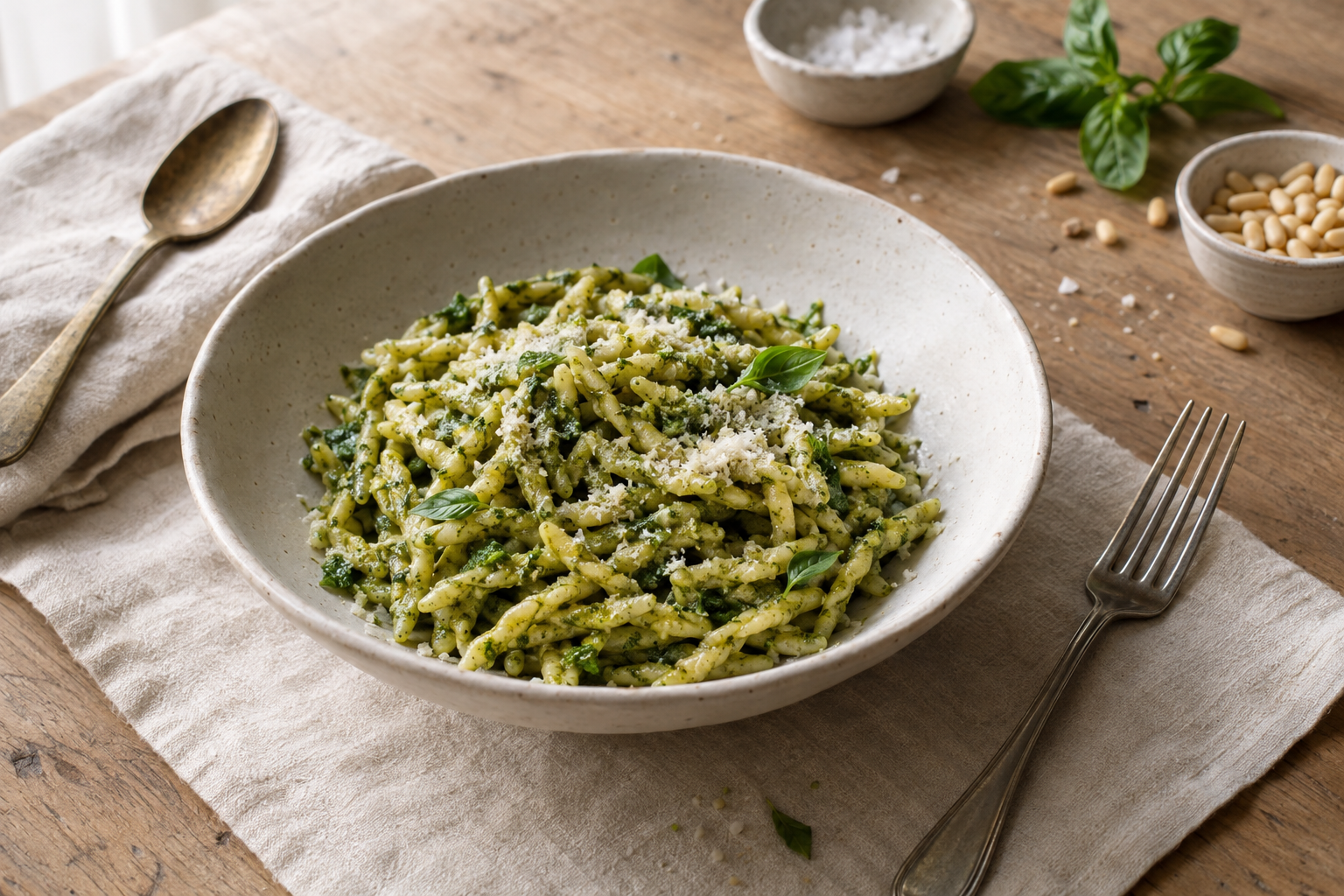
Homemade Pesto Genovese Recipe
This homemade pesto Genovese recipe pairs fragrant Ligurian basil with pine nuts and cheese, then keeps the sauce vivid by grinding gently and never cooking it.
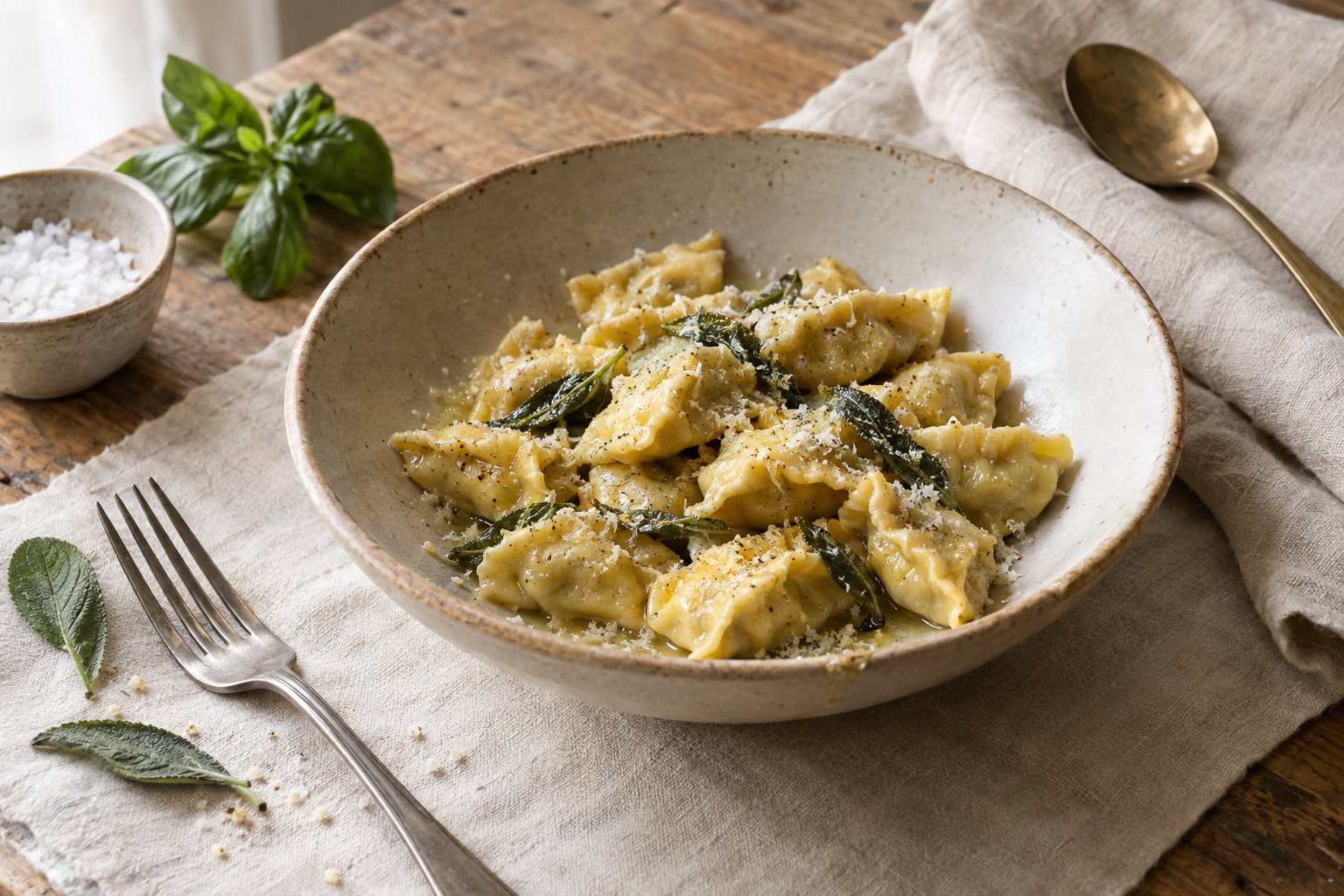
Agnolotti del Plin Recipe with Roast Meat
Agnolotti del plin are tiny Piedmontese pasta parcels filled with roast meat; a pinch-and-fold method keeps shaping manageable and the filling tender.