Homemade Pesto Genovese Recipe
This homemade pesto Genovese recipe pairs fragrant Ligurian basil with pine nuts and cheese, then keeps the sauce vivid by grinding gently and never cooking it.
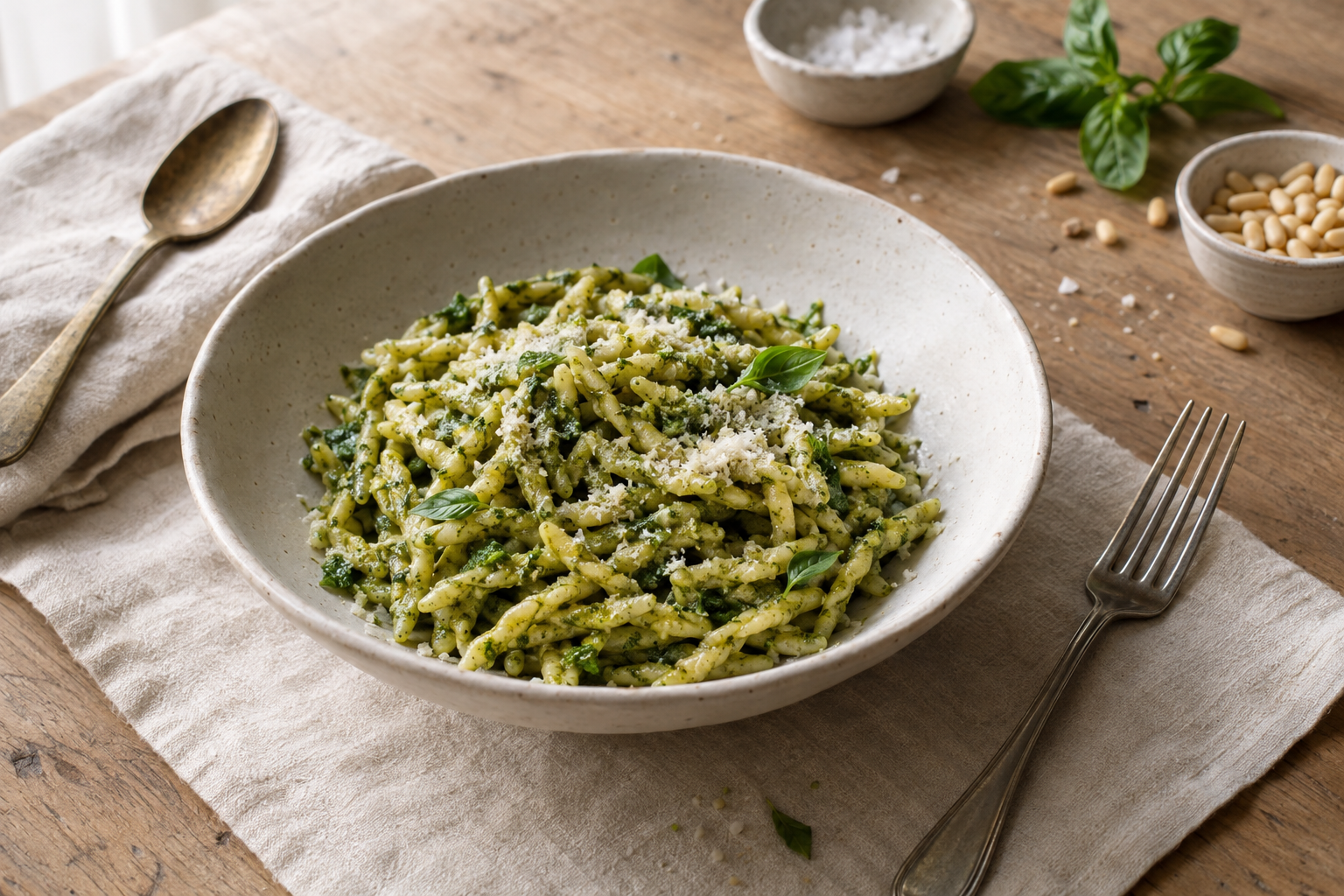
Pesto Genovese is Ligurian basil sauce made by pounding fresh leaves with garlic, pine nuts, cheese, and olive oil. In Genoa, where narrow streets climb steep hills above the port, it is traditionally made in a marble mortar with a wooden pestle. The slow crushing releases the basil’s aroma without whipping air into it or warming it as a food processor can. That’s the technique I use here, with a processor option if you need it.
For bright green pesto, dry the basil completely after washing, work in small batches, and keep the finished sauce off direct heat. Stir it into hot pasta with a splash of pasta water instead of cooking the pesto in a pan. The Italian word pestare means “to pound,” which is exactly what the mortar does. For another pasta dinner, try Spaghetti alle Vongole Recipe. This version works because gentle grinding and starchy pasta water keep the basil fresh-tasting and the sauce silky.
By Lucia Moretti
Step by step
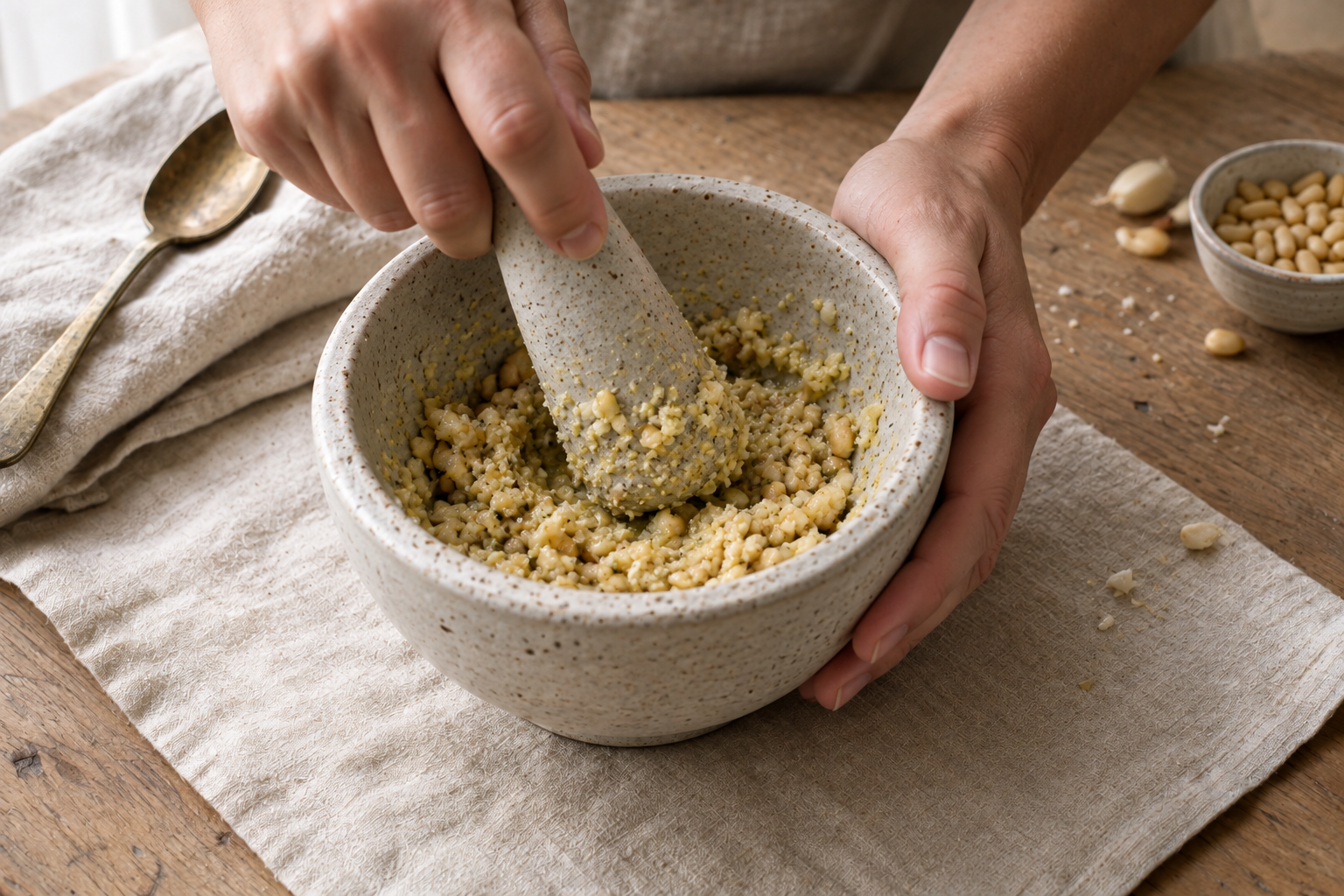
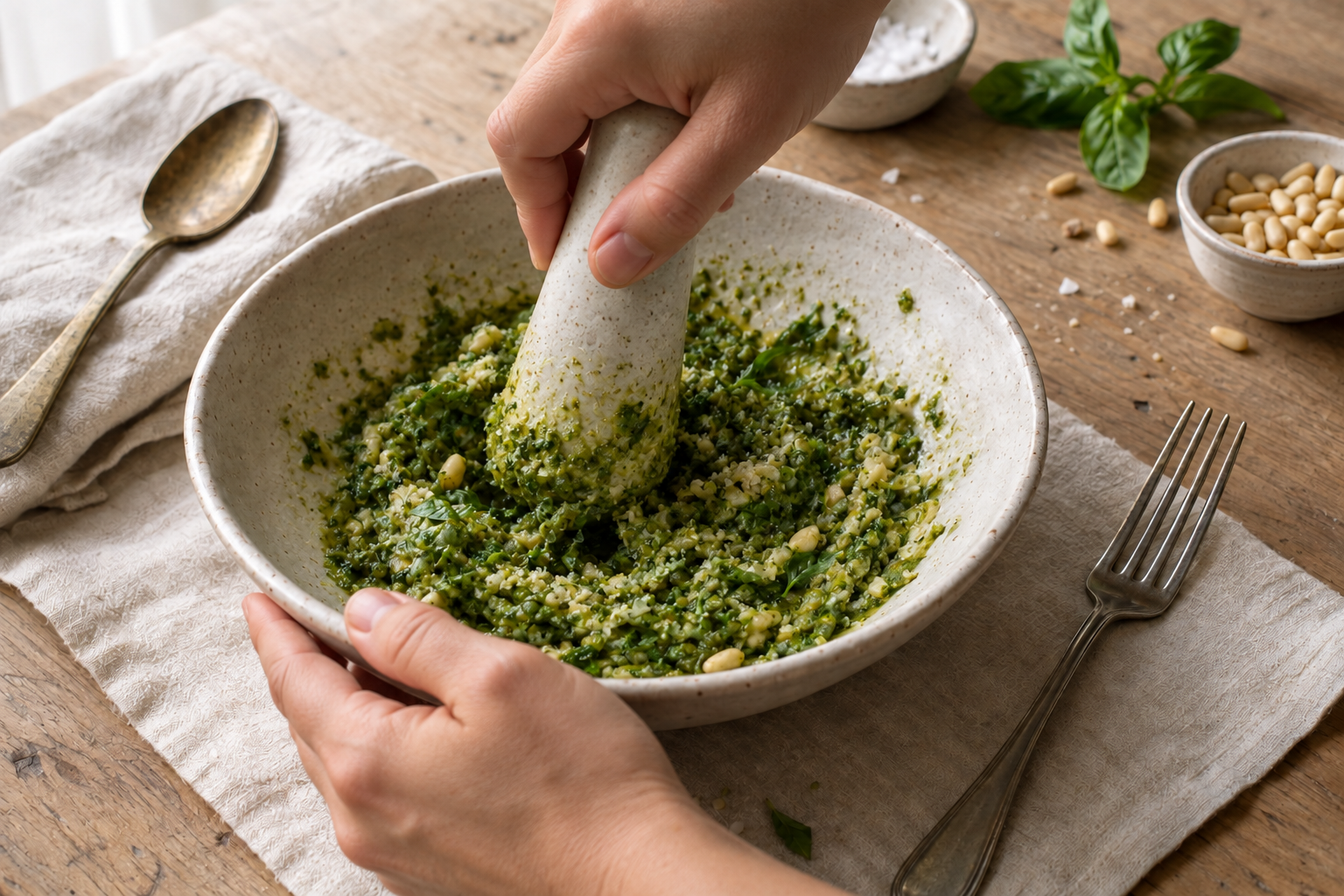
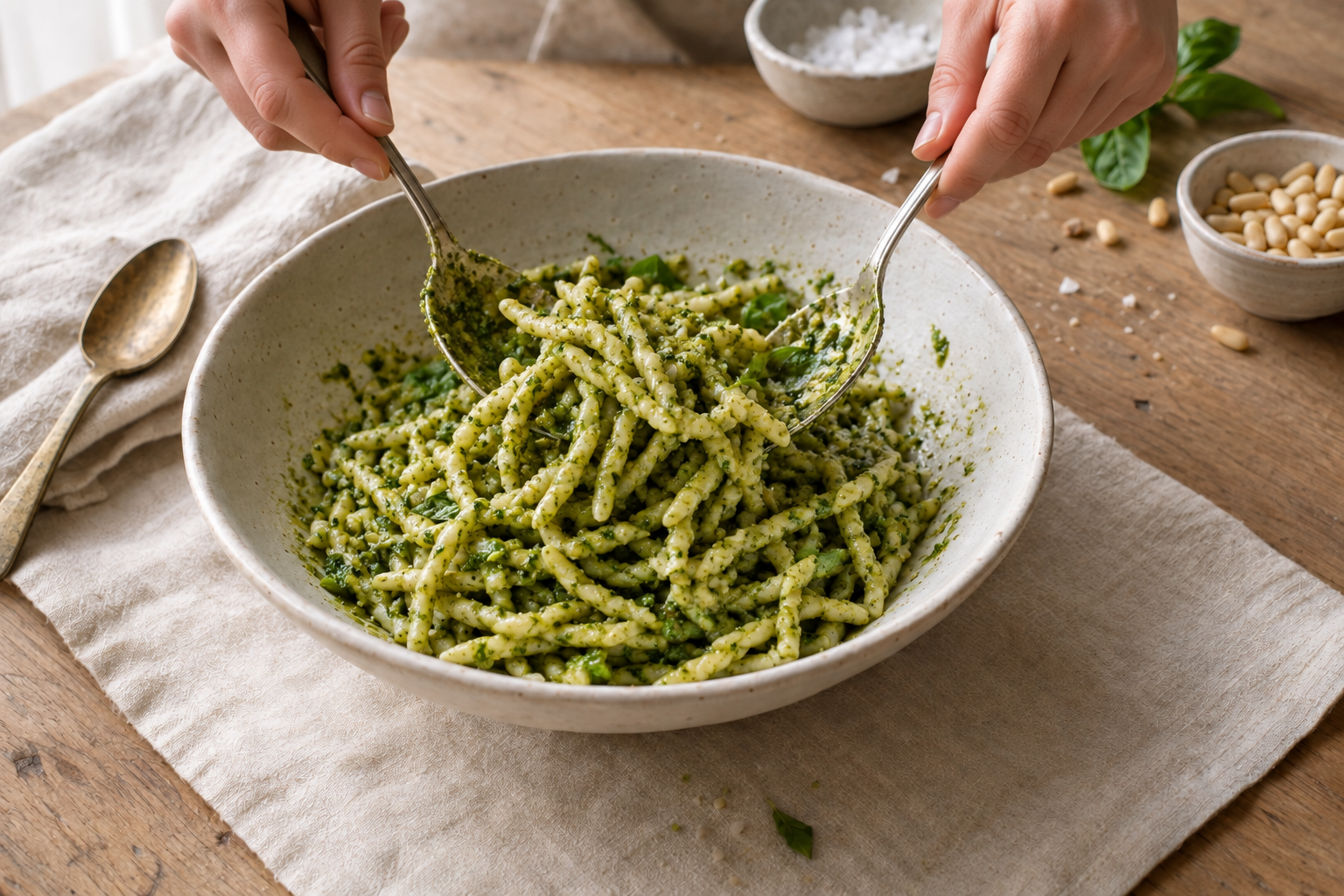
These photos follow the method in order, from the first prep step to the plated dish.
Where It Goes Wrong
The pesto looks dull or brown. Dry the leaves completely, crush them gently, and keep the pesto away from direct heat.
| Symptom | Cause | Fix |
|---|---|---|
| The pesto looks dull or brown. | Wet basil, extended processing, or heat can oxidize and darken the leaves. | Dry the leaves completely, crush them gently, and keep the pesto away from direct heat. |
| The pesto tastes bitter. | The basil was bruised aggressively, the oil was unusually peppery, or the nuts were stale. | Use fresh basil and fresh pine nuts, and pound or pulse only until the mixture is coarse and fragrant. |
| The sauce is thick and clumpy on the pasta. | Pesto is too concentrated to coat pasta evenly without a little liquid. | Loosen it with hot pasta water a tablespoon at a time while tossing. |
| The pesto tastes harshly garlicky. | The garlic clove was large or strongly flavored. | Use a small clove and remove its green germ; for a milder sauce, start with half a clove. |
| The pesto separates into oil and solids. | The oil was added too quickly or the sauce was not stirred with pasta water. | Stir the pesto with a splash of pasta water, then toss with the pasta until it turns cohesive and glossy. |
Recipe
Ingredients
Method
- 1
Start heating the 4 qt (3.8 L) water in a large pot while you make the pesto. Wash the basil if needed, then dry it thoroughly between clean towels; the leaves should feel dry, not damp.
- 2
Pound the garlic in a mortar with a small pinch of the listed pasta salt until it becomes a paste. Add the pine nuts and pound until finely crushed. If using a food processor, pulse the garlic and pine nuts just until chopped, scraping the bowl once.
- 3
Add the basil a handful at a time and press, twist, and pound it against the mortar until it breaks down into a coarse, bright green paste. With a processor, add the basil in batches and pulse briefly; stop before it turns into a warm, smooth puree.
- 4
Work in the Parmigiano-Reggiano and pecorino. Pour in the olive oil gradually, stirring or pounding gently until the pesto looks glossy and spoonable, with a little texture remaining. Set it aside at room temperature; do not cook it.
- 5
Add the Morton salt to the boiling water, then cook the trofie according to the package directions until tender with a slight bite. Before draining, scoop out 1/2 cup (120 ml) of the cloudy pasta water.
- 6
Put the pesto in a large serving bowl. Add 2 tbsp (30 ml) of hot pasta water and stir to loosen it. Add the drained pasta and toss well, adding more pasta water a tablespoon at a time until the sauce clings to the twists. Serve right away.
FAQ
Can I make pesto Genovese in a food processor? Yes, a food processor works if you use short pulses. Stop while the pesto is still slightly coarse so friction does not warm the basil.
Can I make pesto Genovese in a food processor?
Yes, a food processor works if you use short pulses. Stop while the pesto is still slightly coarse so friction does not warm the basil.
How do I keep homemade pesto bright green?
Dry the basil thoroughly and avoid heating the finished pesto. Toss it with hot pasta and a little pasta water just before serving.
Can I make pesto Genovese ahead?
Yes, make it up to 2 days ahead and refrigerate it in an airtight container. Press a thin layer of olive oil over the surface and stir it in before serving.
Can I freeze pesto Genovese?
Yes, freeze it in small airtight portions for up to 3 months. For the freshest flavor, add the cheese after thawing.
Comments
No approved comments yet.
Sign in to leave a comment. Comments stay hidden until they are approved.
Related recipes
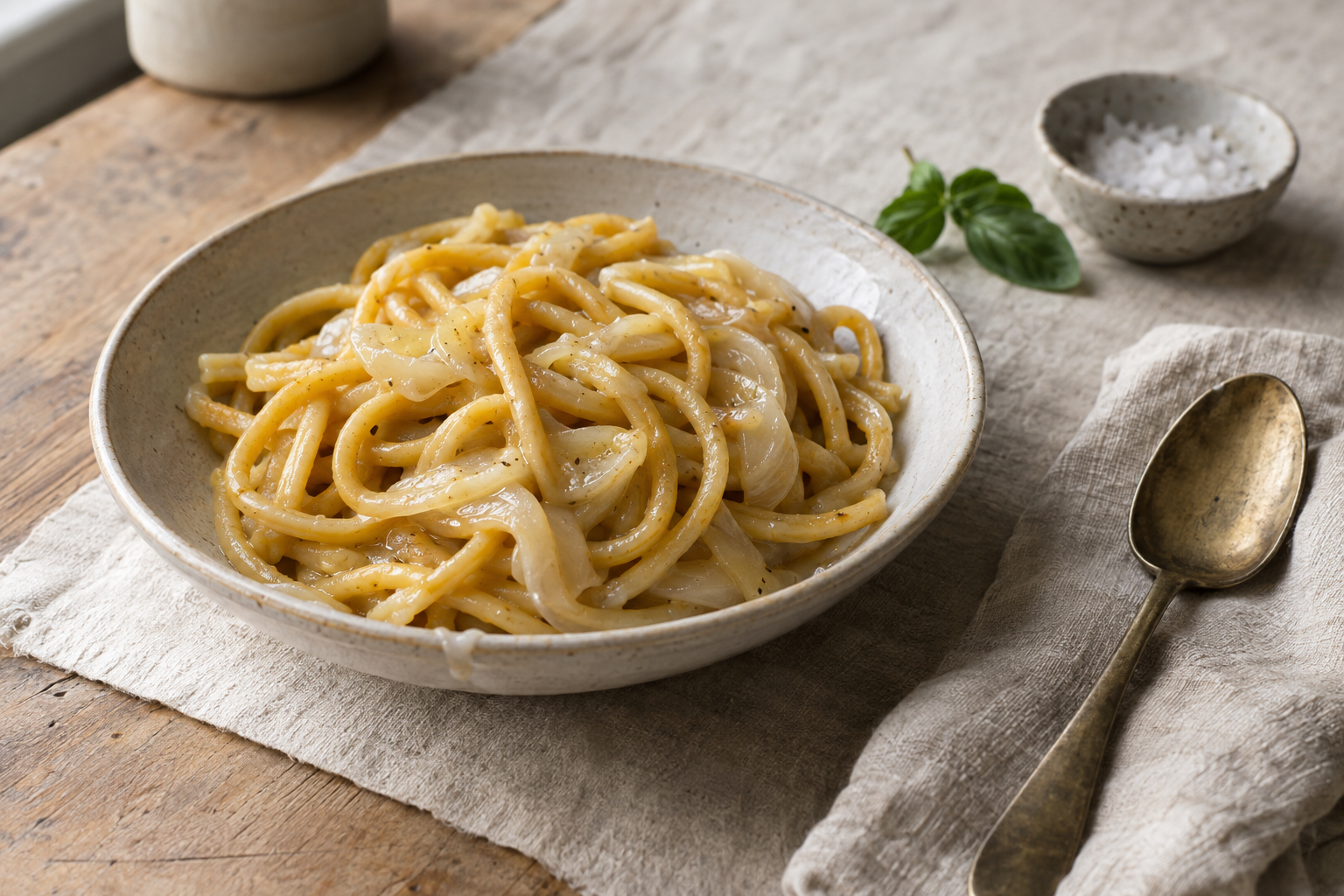
Bigoli in Salsa Recipe (Venetian Pasta)
This bigoli in salsa recipe coats thick Venetian pasta in soft onions and anchovies; a slow, gentle cook builds savory flavor from pantry staples.
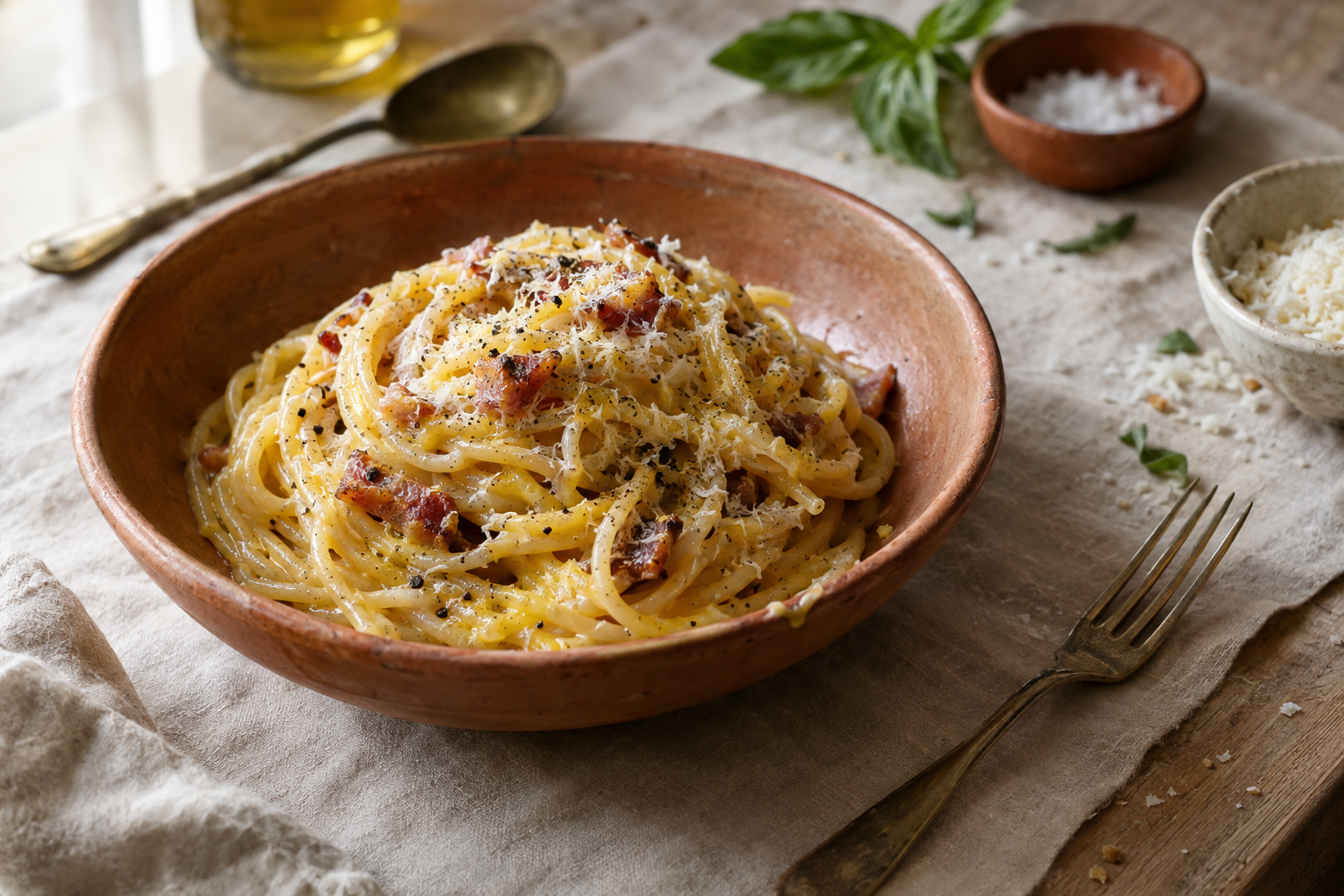
Authentic Spaghetti Carbonara Recipe
This Roman spaghetti carbonara coats pasta in a silky egg, Pecorino Romano, and guanciale sauce; a gentle water bath cooks the eggs without adding cream.
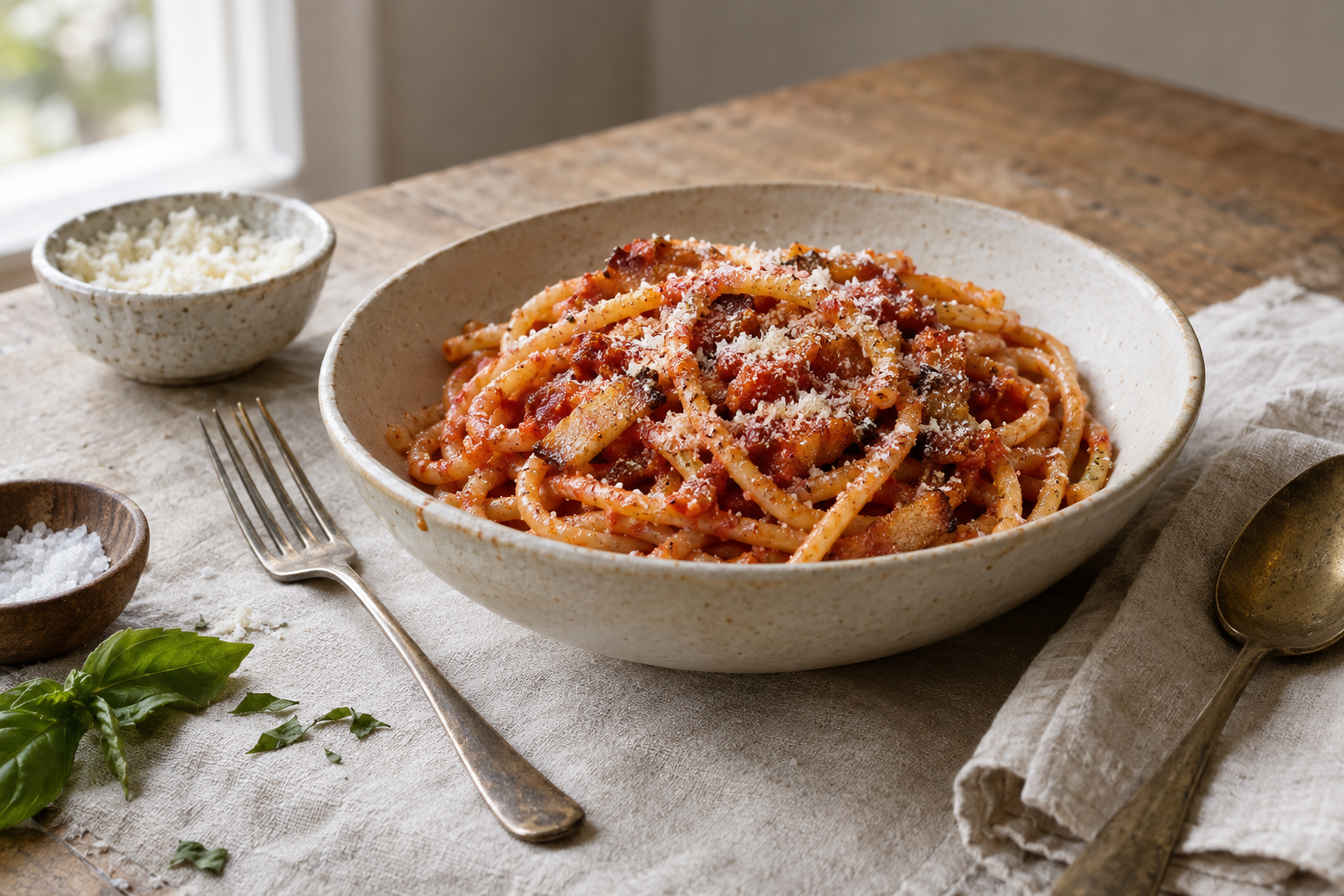
Authentic Bucatini all’Amatriciana Recipe
This authentic bucatini all’amatriciana recipe pairs crisp guanciale, bright tomato, chile, and pecorino; pasta water brings the savory sauce into balance.
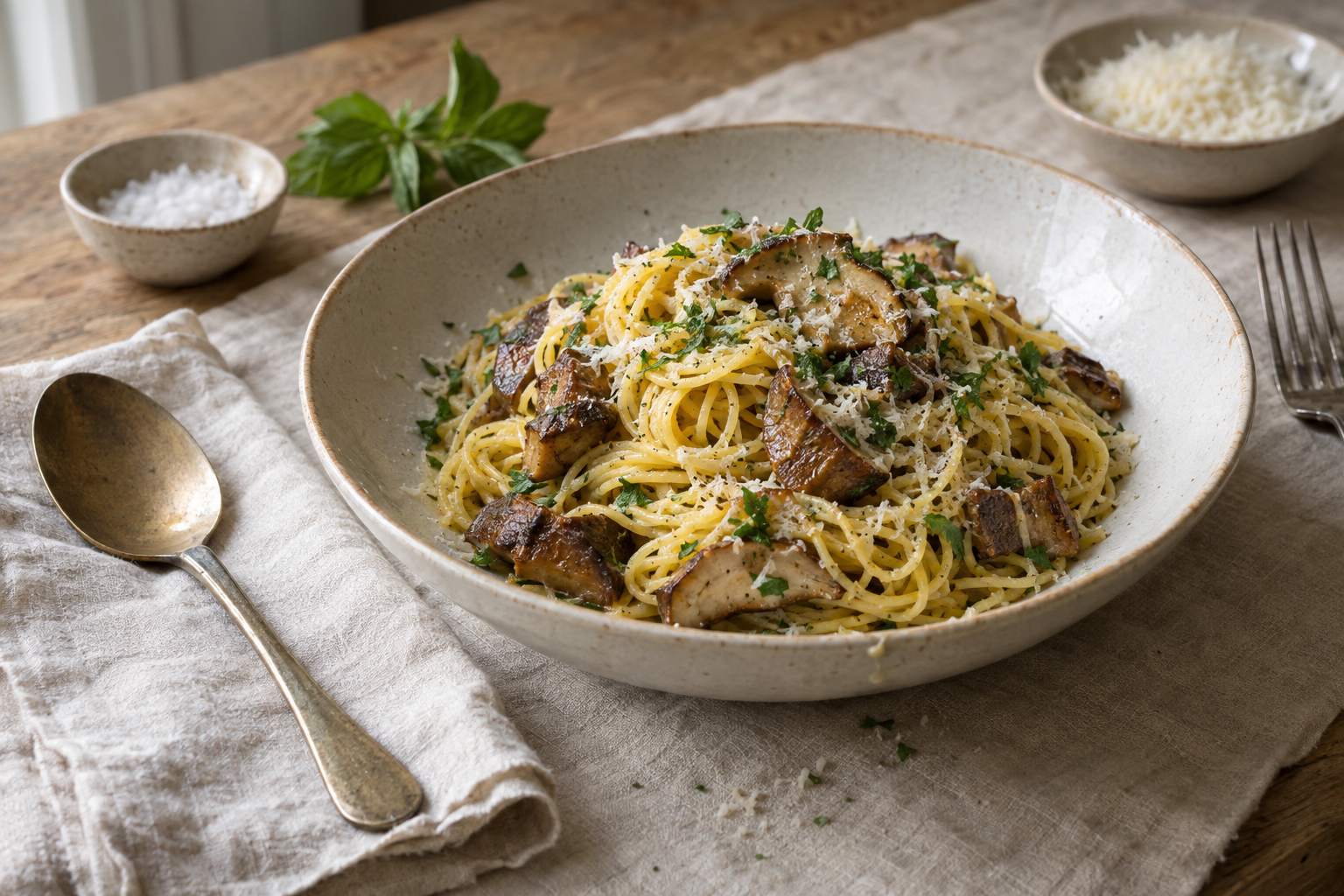
Tajarin with Porcini Mushrooms
Tajarin with porcini mushrooms combines fine Piedmontese egg noodles and earthy mushrooms, with clear directions for fresh or dried porcini.