Traditional Cassoeula Recipe (Milanese Pork Stew)
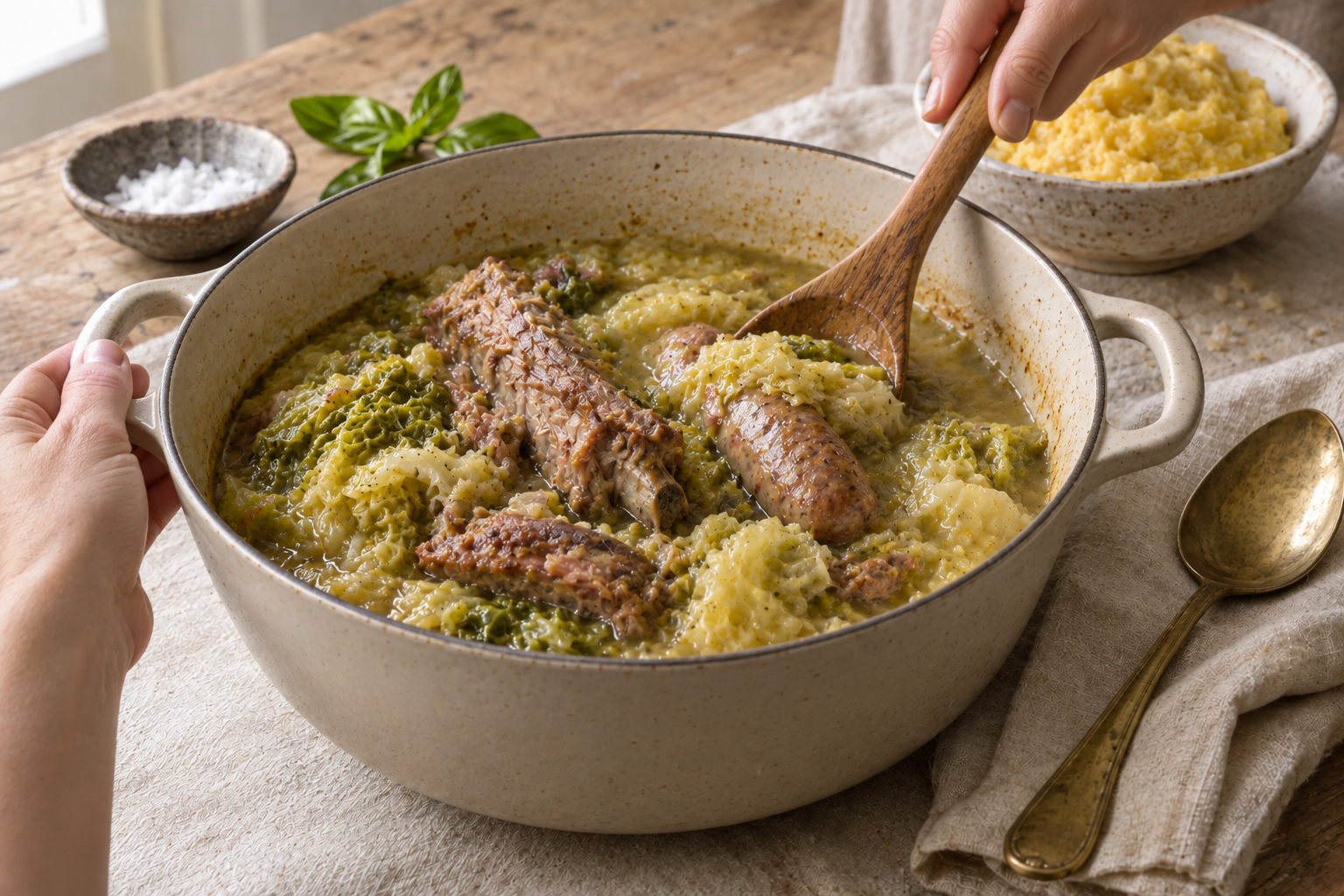
This Milanese pork and cabbage stew braises ribs and sausage with Savoy cabbage until tender in a Dutch oven for a savory, comforting winter supper.
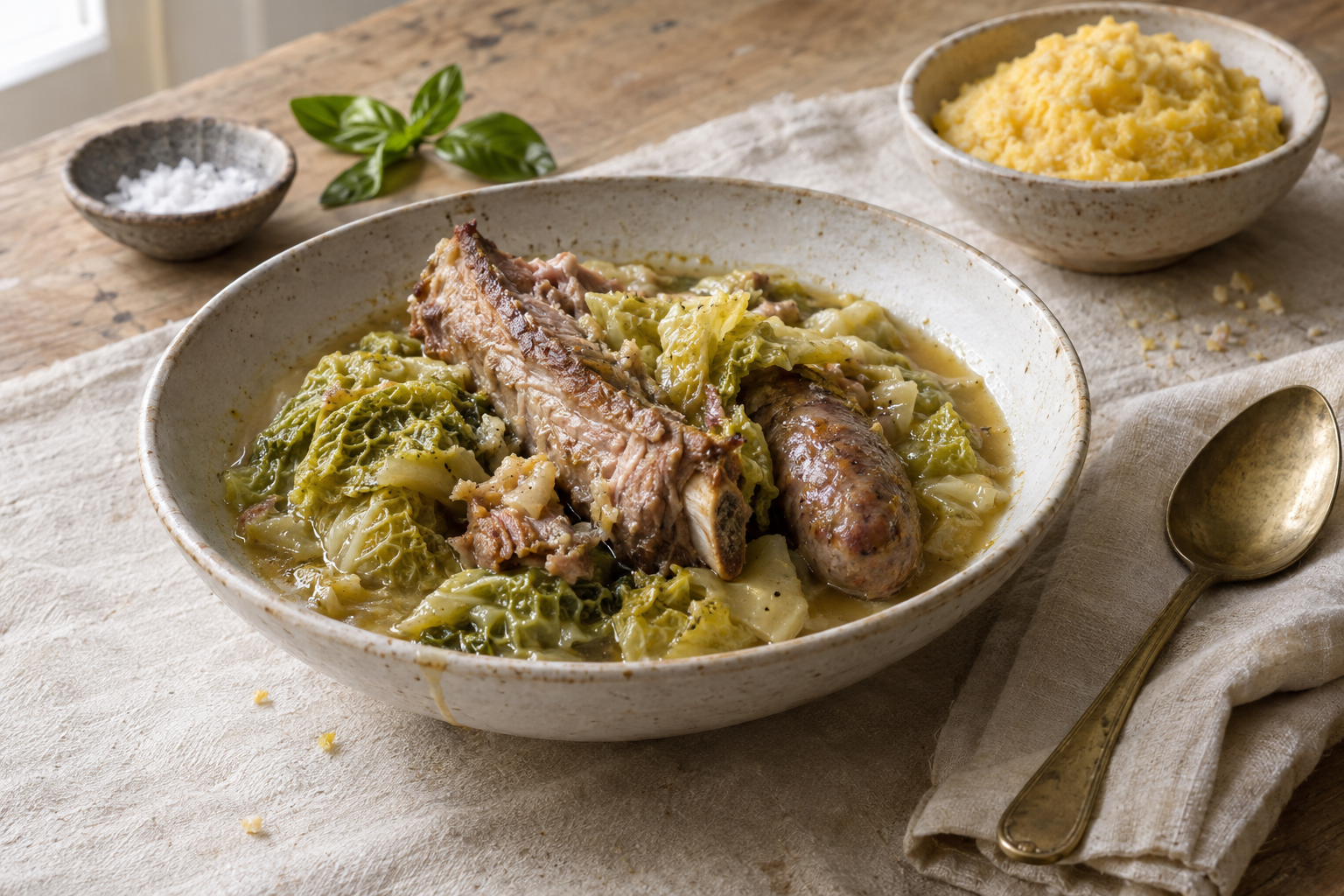
Traditional cassoeula is a Milanese pork-and-cabbage stew from Lombardy, slowly braised until the ribs are tender and the cabbage turns silky. In Milan and its surrounding towns, cooks traditionally use several pork cuts, including fresh little sausages called verzini; this approachable pot uses meaty ribs and mild Italian sausage you can find at an American supermarket. I brown the pork first, then build a soffritto (slow-cooked onion, carrot, and celery base) in the same Dutch oven so the browned bits season the broth. The cabbage goes in near the end, which lets it soften without vanishing into the pot. Keep the simmer gentle and give the ribs time; cassoeula should be rich and spoonable, not watery or aggressively tomatoey. For another Milanese meal, cook Cotoletta alla Milanese Recipe next; it brings the same region to the table in a crisp, quick format. This version works because browning adds depth while a covered braise keeps everyday cuts moist and tender.
By Lucia Moretti
Step by step
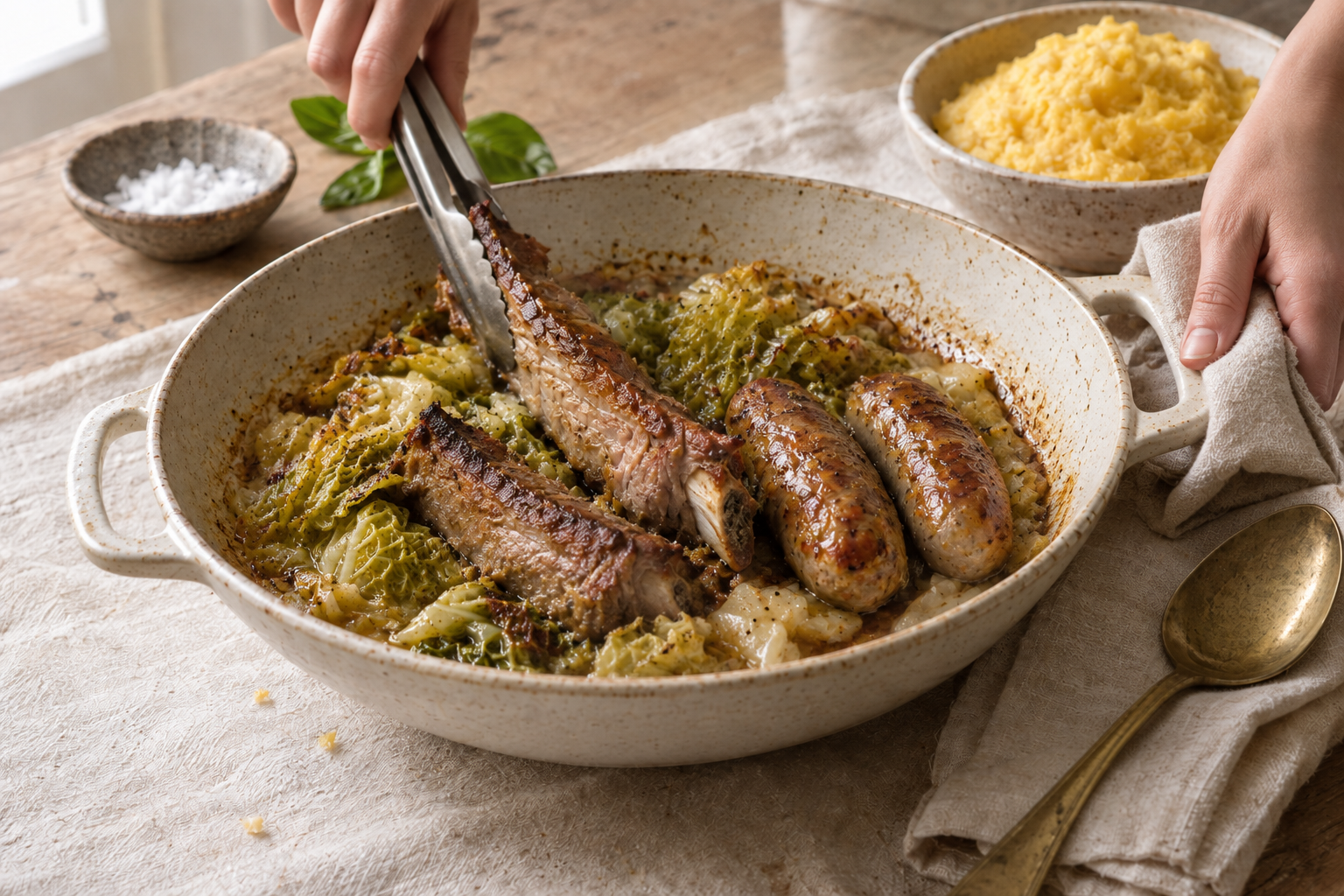
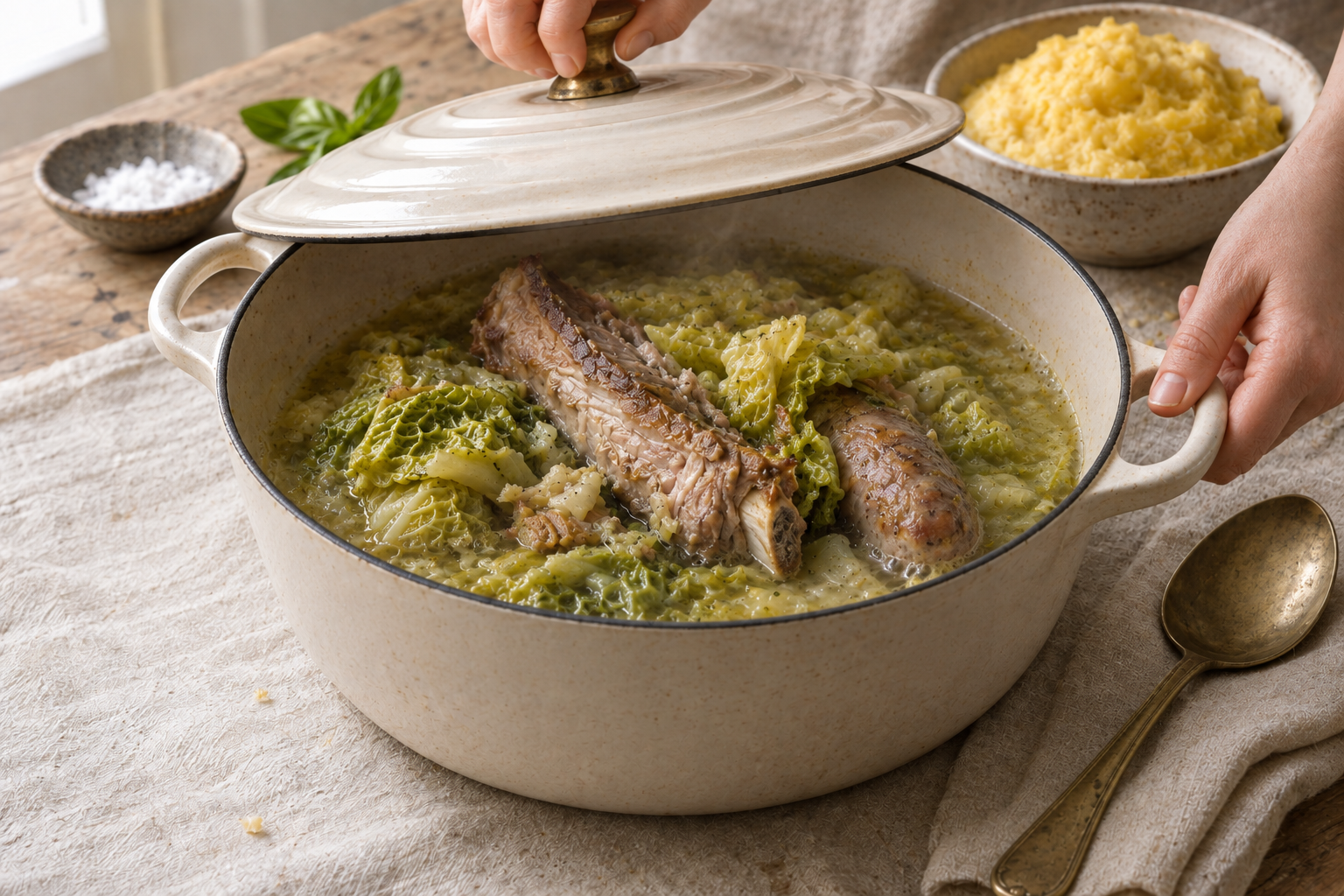
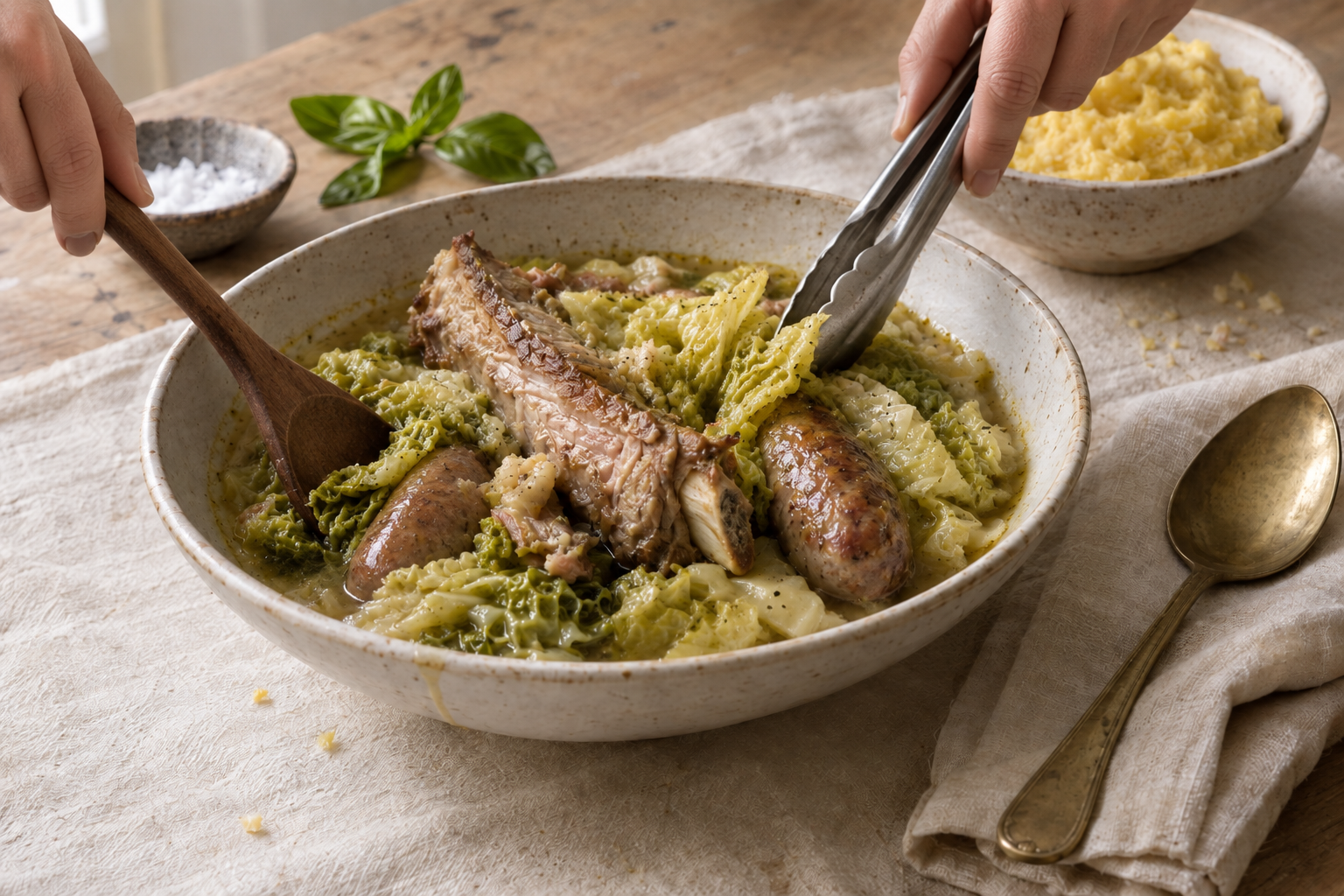
These photos follow the method in order, from the first prep step to the plated dish.
Where It Goes Wrong
The pork looks gray instead of browned. Pat the ribs dry and brown them in batches, leaving space between pieces.
| Symptom | Cause | Fix |
|---|---|---|
| The pork looks gray instead of browned. | The meat was wet, crowded in the pot, or turned too soon. | Pat the ribs dry and brown them in batches, leaving space between pieces. |
| The ribs are still chewy when the cabbage is ready. | The ribs need more braising time, or the simmer was too low to cook them through. | Lift out the cabbage and sausage if needed, then keep the ribs covered at a gentle simmer until fork-tender. Return the other ingredients to warm through. |
| The stew tastes watery. | The cabbage released liquid and the pot was not reduced at the end. | Simmer uncovered for 5 to 10 minutes, stirring gently so the cabbage does not catch. |
| The sausage casings split. | The broth boiled vigorously or the sausages were pierced. | Keep the pot at a gentle simmer and leave the sausage links whole and unpierced. |
| The cabbage has turned mushy. | It was added too early or cooked at a rolling boil. | Add the cabbage only after the ribs have had their first braise, and keep the heat low. |
Recipe
Ingredients
Method
- 1
Pat the ribs dry and season them with the salt and pepper. Patting them dry helps them brown instead of steam. Keep the cabbage ready nearby, but don’t add it yet.
- 2
Brown the pork in a 6- to 7-quart Dutch oven over medium-high heat. Add the oil, then brown the ribs in batches for about 8 minutes per batch, turning until several sides are deeply golden. Brown the sausage links for 3 to 4 minutes, turning them, then transfer everything to a plate. The sausage will finish cooking in the stew.
- 3
Soften the onion, carrot, and celery in the same pot over medium heat for 6 to 8 minutes, stirring and scraping up browned bits. Add the garlic and tomato paste; cook for 1 minute, until the garlic smells fragrant and the paste darkens slightly.
- 4
Pour in the wine and simmer for 2 to 3 minutes, scraping the bottom of the pot until the sharp smell of alcohol fades. Add the broth and bay leaf, then return the ribs and any juices to the pot. The liquid should come about halfway up the meat.
- 5
Cover the pot and bring the broth to a gentle simmer over medium heat. Reduce the heat to low and cook for 75 to 90 minutes, turning the ribs once, until the meat is starting to soften but is not yet falling off the bone. Keep the simmer calm; a hard boil can toughen the meat.
- 6
Tuck the cabbage into the pot in batches, turning it through the broth as it wilts. Nestle the sausage links among the cabbage, cover, and simmer gently for 35 to 45 minutes. The cabbage should be very soft, the ribs fork-tender, and the sausages cooked through. If the pot looks dry, add a splash of hot broth or water.
- 7
Uncover and simmer for 5 to 10 minutes if you want a thicker broth. Remove the bay leaf, taste, and adjust the salt. Rest the stew for 10 minutes before serving; the broth settles and the pork is easier to portion.
FAQ
What cut of pork is best for cassoeula? Meaty pork spare ribs work well for this accessible version. Traditional versions may use several pork cuts, but ribs and fresh pork sausage give the stew plenty of flavor.
What cut of pork is best for cassoeula?
Meaty pork spare ribs work well for this accessible version. Traditional versions may use several pork cuts, but ribs and fresh pork sausage give the stew plenty of flavor.
Can I make cassoeula ahead of time?
Yes, cassoeula can be made a day ahead. Cool it promptly, refrigerate it covered, then reheat it gently until steaming hot throughout.
Can I freeze cassoeula?
Yes, you can freeze cassoeula in airtight portions for up to 3 months. Thaw it in the refrigerator and reheat gently; the cabbage may be softer after freezing.
What should I serve with cassoeula?
Soft polenta is a classic, comforting partner for cassoeula. Crusty bread also works well for the savory broth.
Comments
No approved comments yet.
Sign in to leave a comment. Comments stay hidden until they are approved.
Related recipes
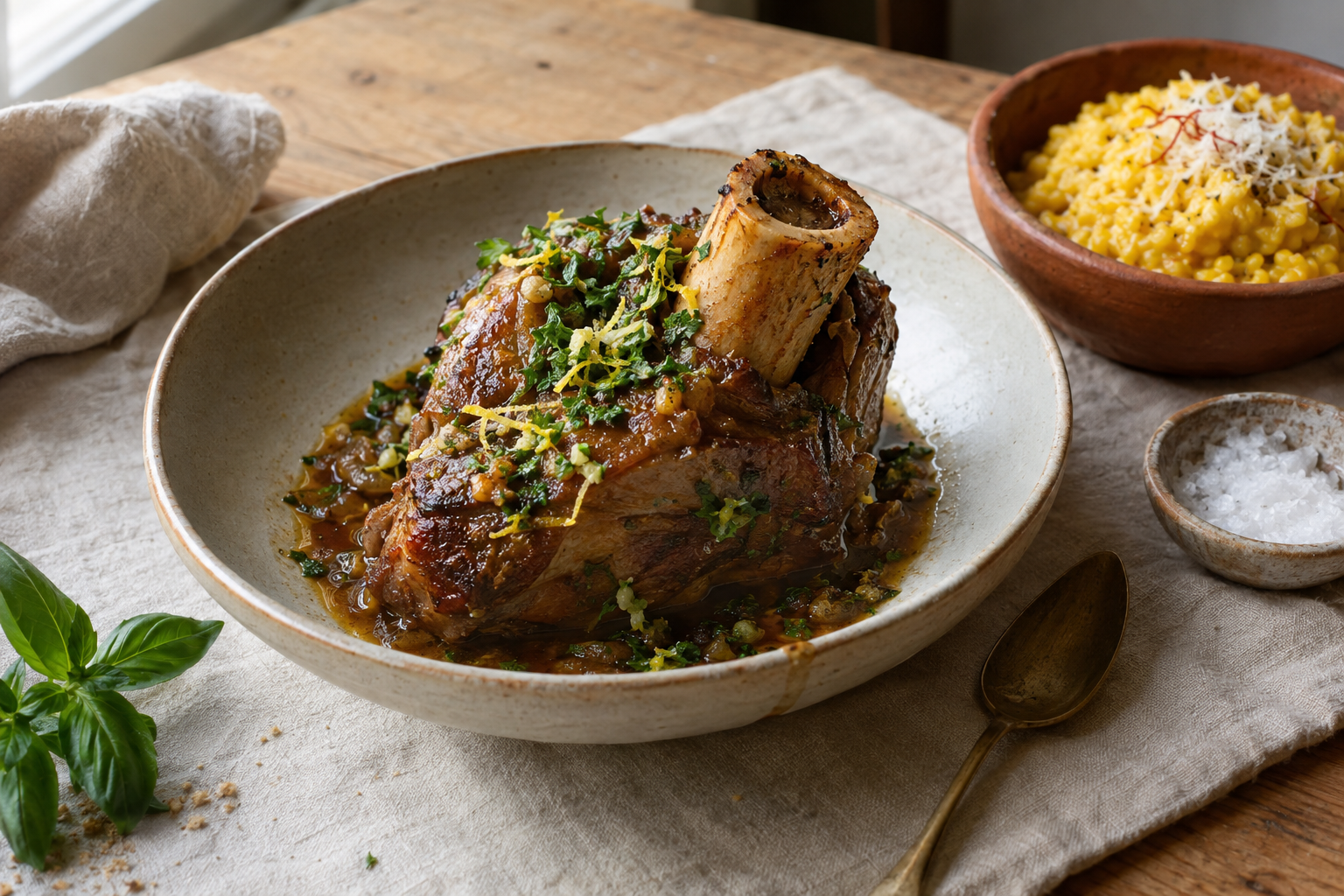
Ossobuco alla Milanese Recipe
This ossobuco alla Milanese recipe braises veal shanks gently in a Dutch oven until tender, then adds lemon-parsley gremolata for a fresh, balanced finish.
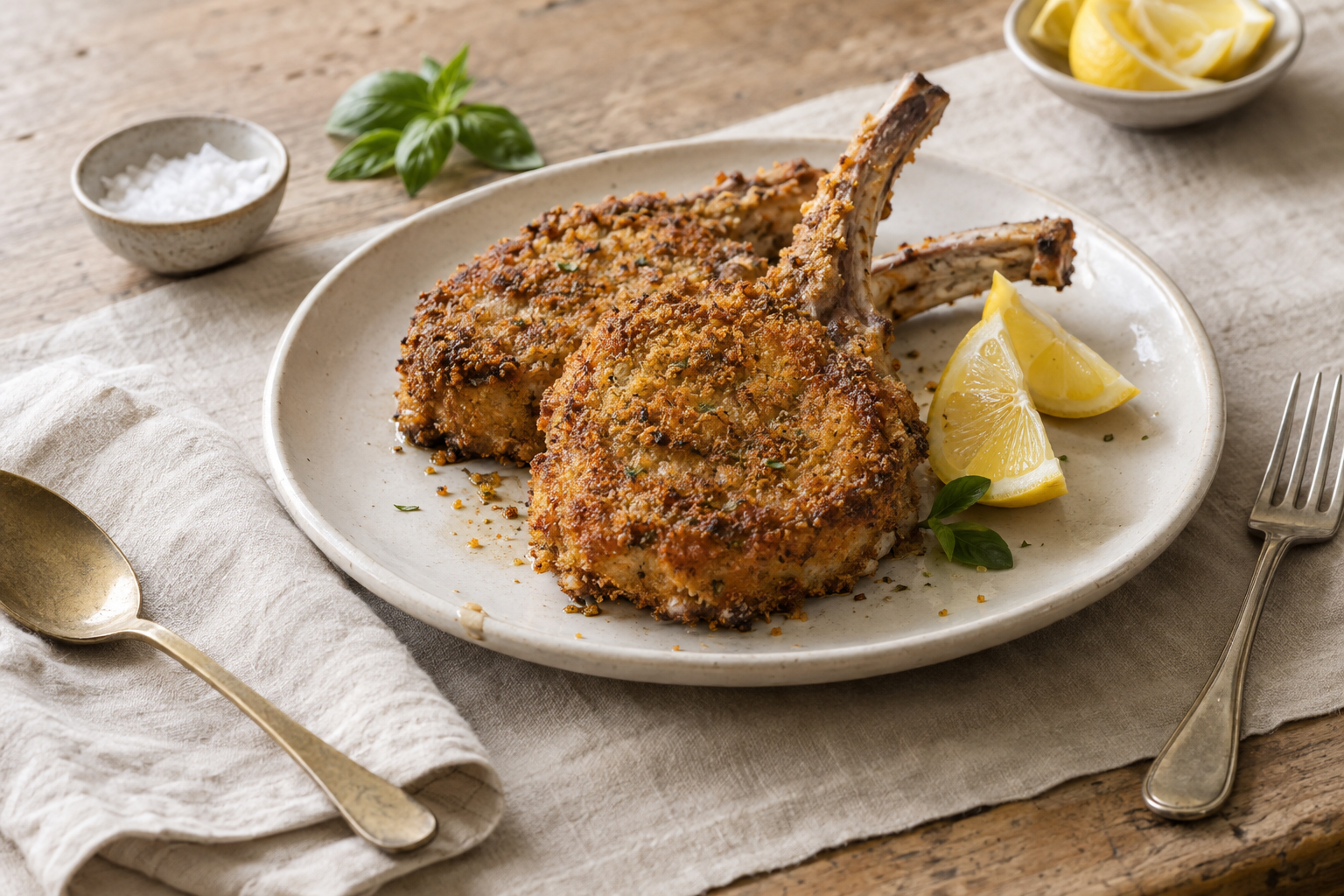
Cotoletta alla Milanese Recipe
A bone-in Milanese veal chop gets a crisp, even breadcrumb crust from careful breading, shallow-frying in clarified butter, and a brief oven finish.
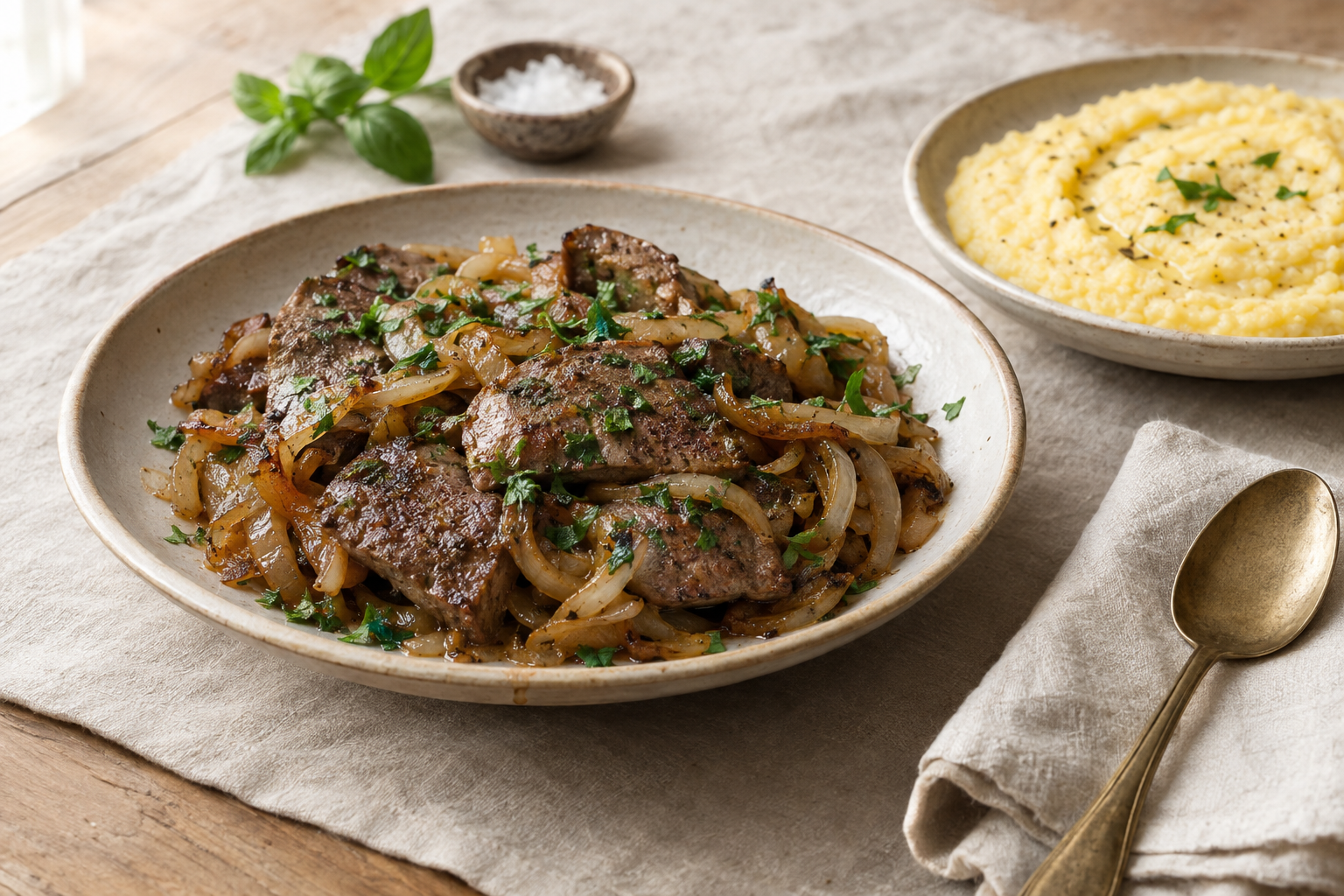
Fegato alla Veneziana Recipe
This Venetian liver and onions pairs tender veal liver with sweet, slowly softened onions; thin slices and a quick, hot finish make it manageable at home.
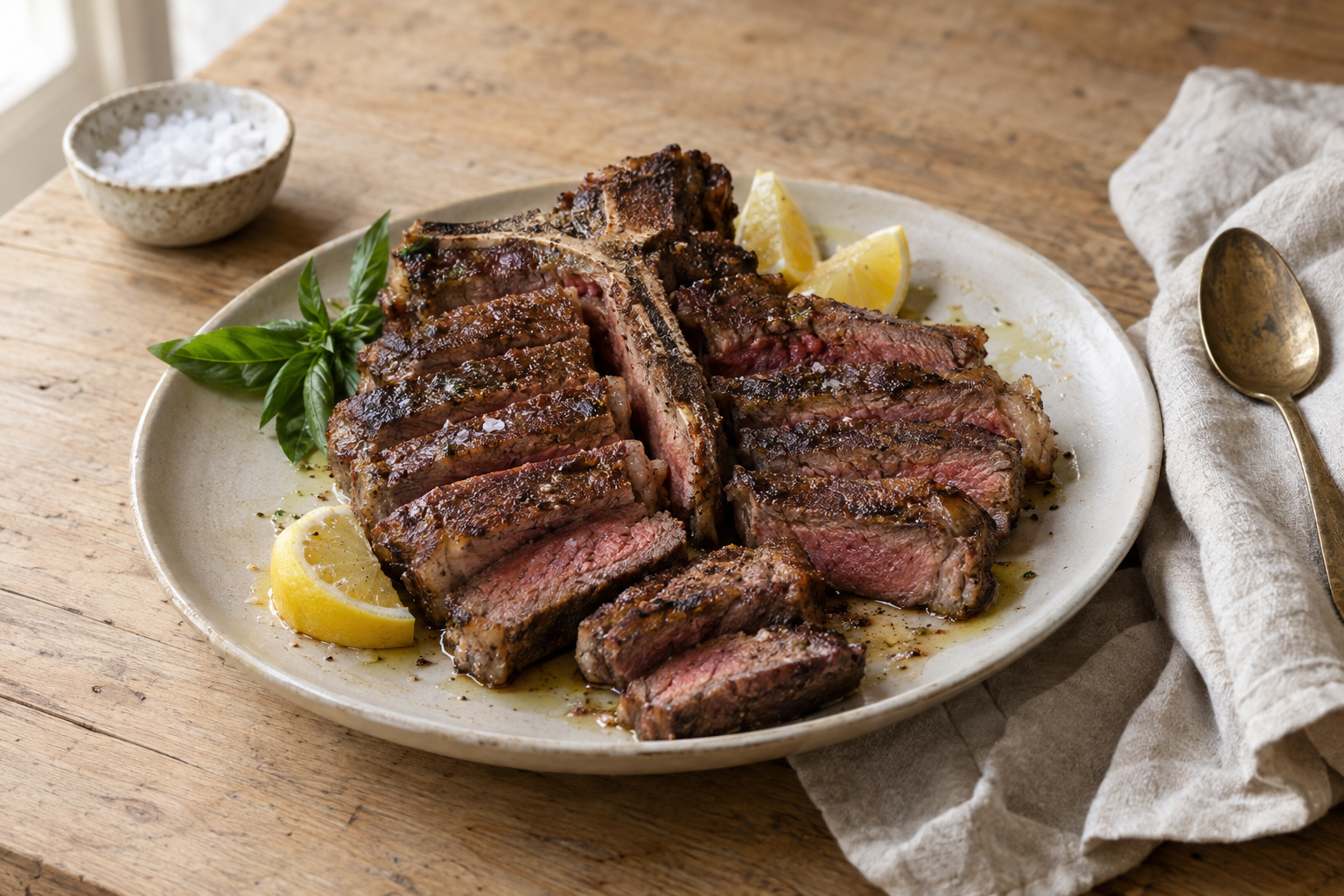
Bistecca alla Fiorentina Recipe (Pan-Seared)
This bistecca alla fiorentina recipe seasons a thick T-bone simply, then sears it hard and finishes it in the oven for a deeply browned crust at home.