Fegato alla Veneziana Recipe
This Venetian liver and onions pairs tender veal liver with sweet, slowly softened onions; thin slices and a quick, hot finish make it manageable at home.
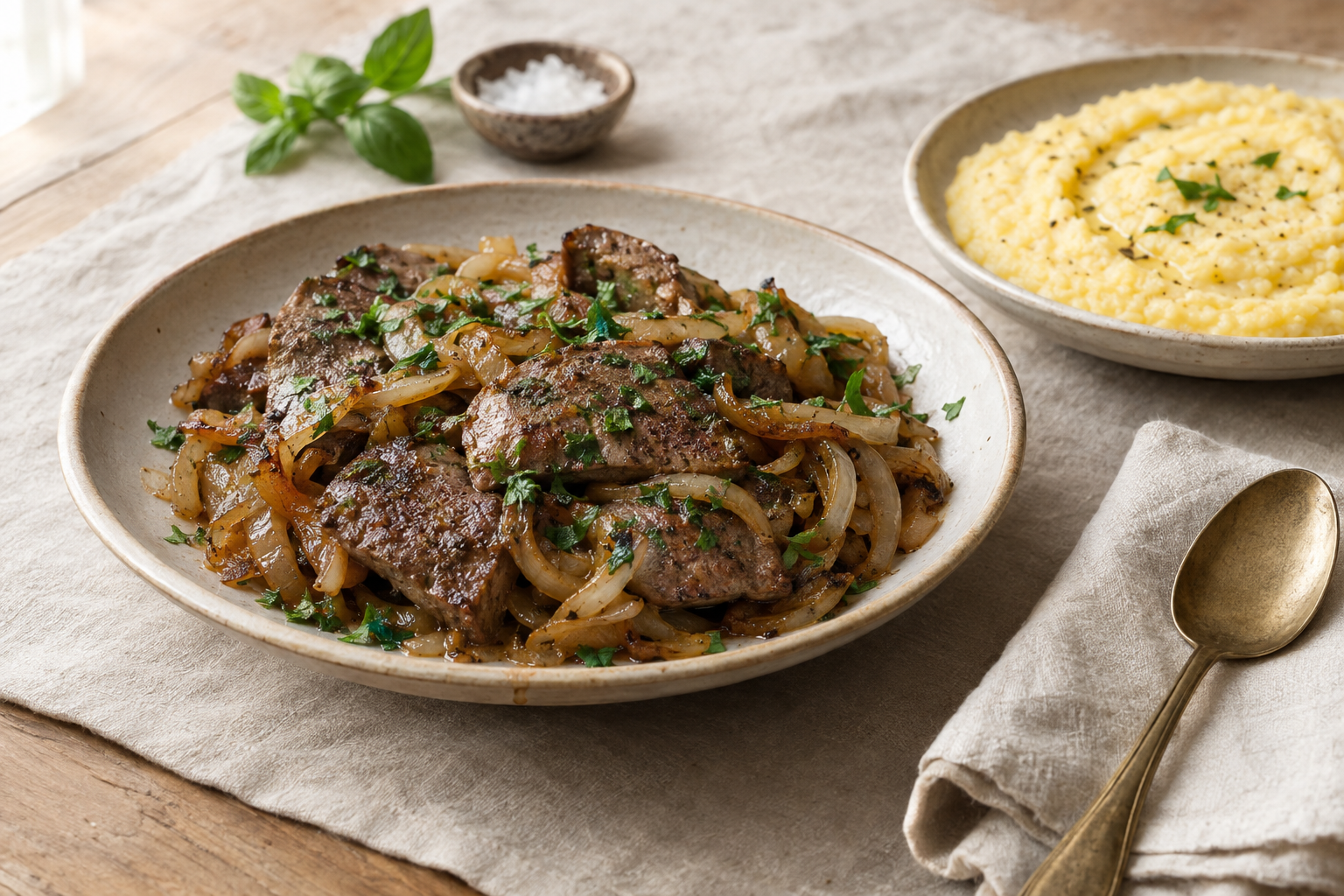
Fegato alla Veneziana is Venetian liver and onions, made with veal liver cooked with soft, sweet onions. In Venice and across the Veneto, it is often served with polenta, which catches the buttery onion juices. Fegato means liver; it is a straightforward dish, but timing matters because liver turns firm if it stays in the pan too long.
I cook the onions slowly until soft and golden before searing the liver in batches. That gives them time to sweeten without asking the liver to wait in the skillet. Ask the butcher for even slices about ½ inch (1.3 cm) thick, and use an instant-read thermometer on the thickest piece: the safe temperature for veal liver is 160°F (71°C). Cook just to that point, then return the onions briefly to warm through.
For another Venetian meal, cook Bigoli in Salsa Recipe (Venetian Pasta) next. This version works because the onions soften first and the liver gets a brief, separate turn in a hot pan.
By Lucia Moretti
Step by step
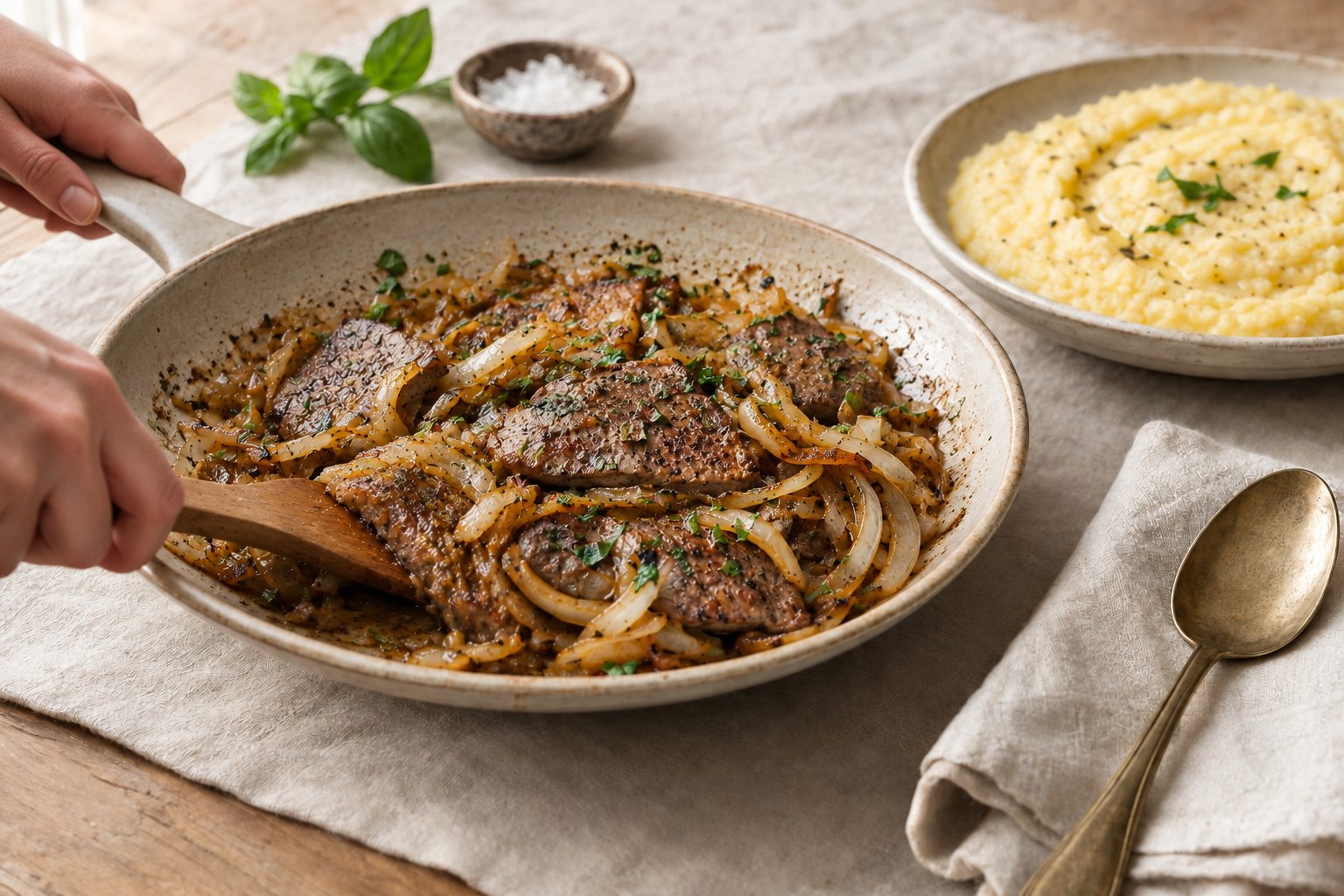
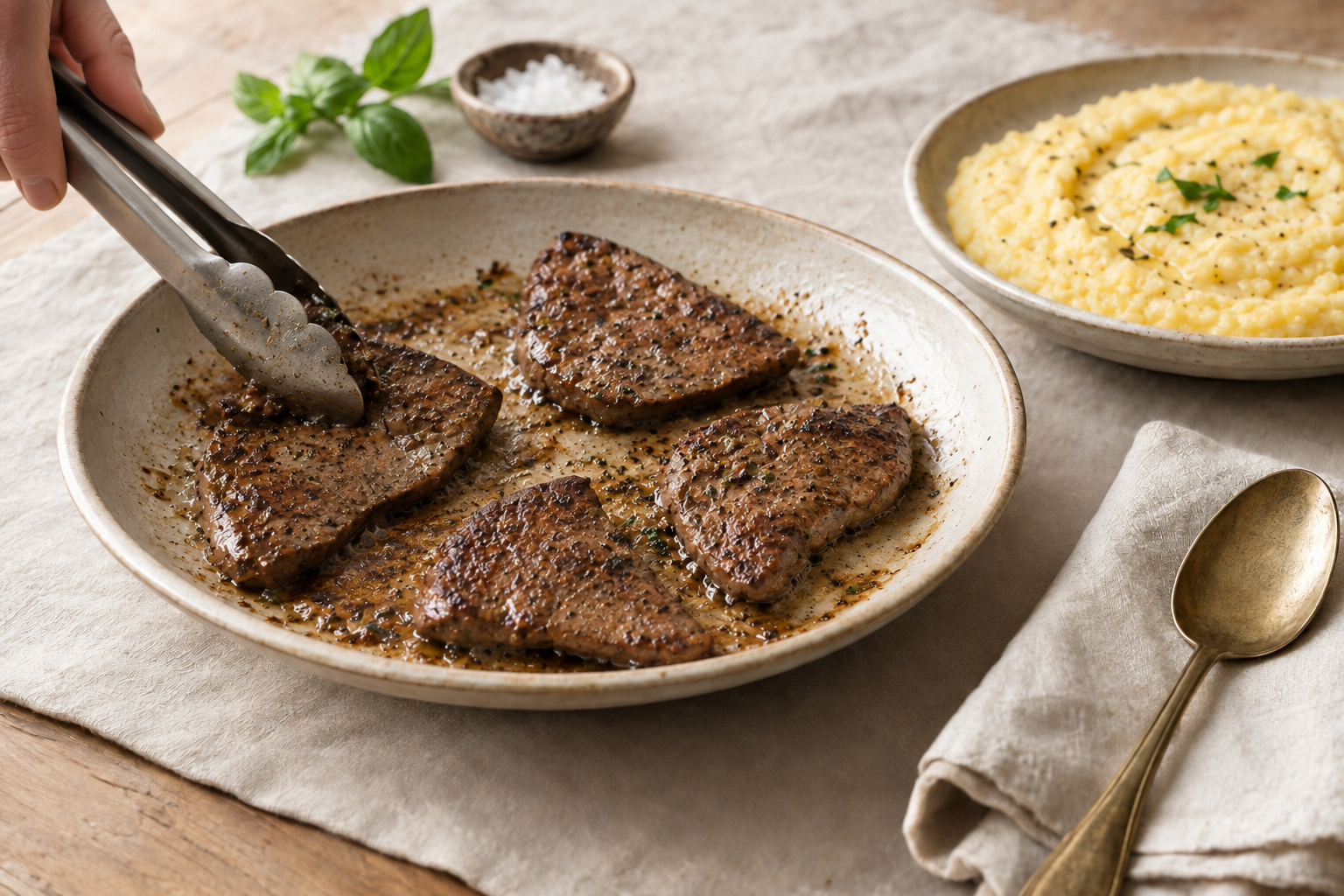
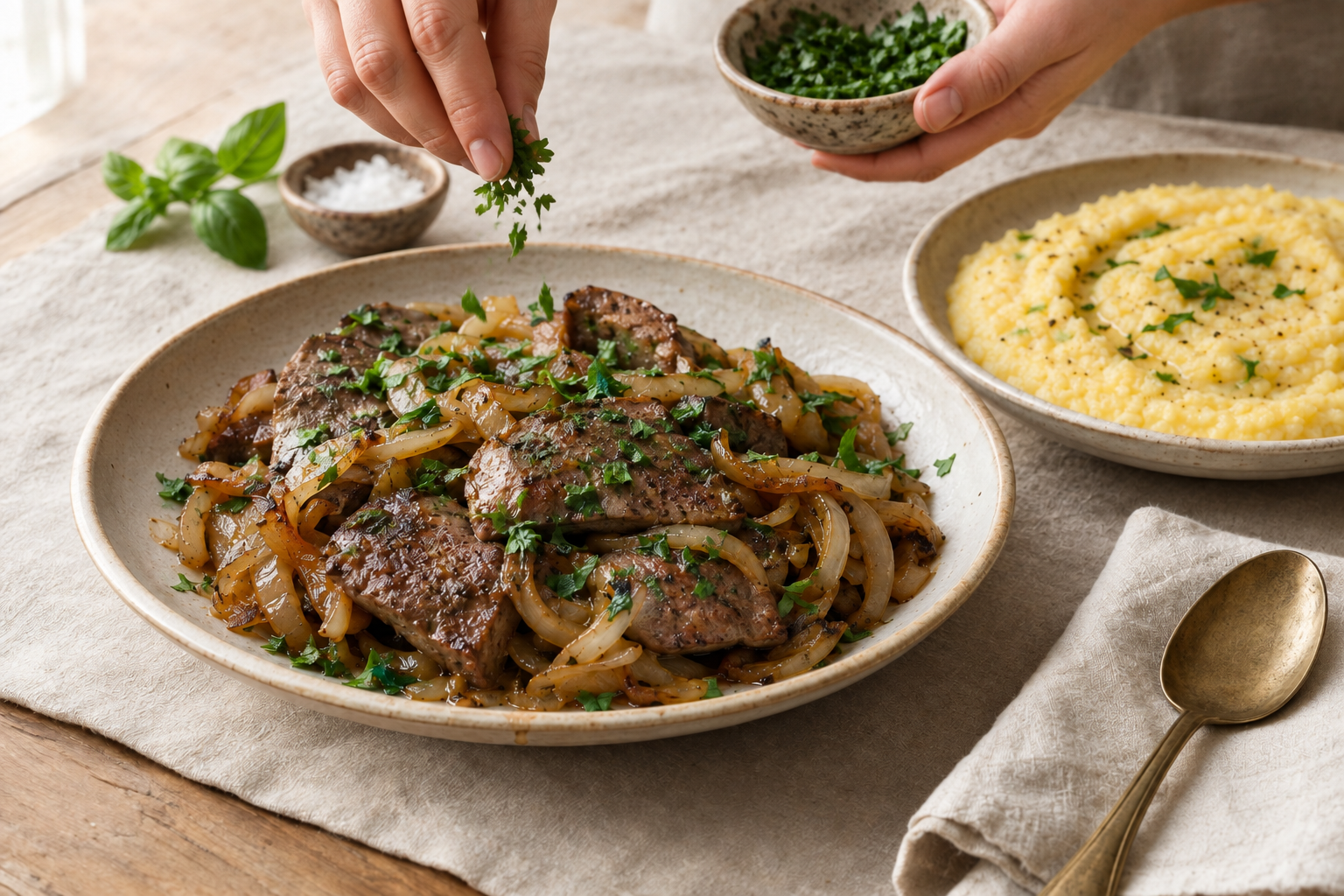
These photos follow the method in order, from the first prep step to the plated dish.
Where It Goes Wrong
The liver turns firm or grainy. Use even slices, cook in batches, and check the thickest piece with an instant-read thermometer. Remove each batch once it reaches 160°F (71°C).
| Symptom | Cause | Fix |
|---|---|---|
| The liver turns firm or grainy. | It stayed in the pan after reaching a safe temperature, or the slices were uneven. | Use even slices, cook in batches, and check the thickest piece with an instant-read thermometer. Remove each batch once it reaches 160°F (71°C). |
| The liver steams instead of browning. | The pan is crowded or the liver is wet. | Pat the liver dry and leave space between pieces. Cook in more batches if needed. |
| The onions taste scorched. | The heat was too high during their long cooking time. | Keep the skillet at medium-low and stir every few minutes. If the edges darken before the onions soften, lower the heat. |
| The sauce tastes harsh or watery. | The wine did not reduce enough before the onions were removed. | Simmer the wine until nearly evaporated and its sharp smell mellows, scraping up the browned bits as it reduces. |
| The final dish seems greasy. | Too much oil or butter collected in the skillet, especially after cooking liver in batches. | Use the measured amounts and spoon off excess fat before returning the onions. |
Recipe
Ingredients
Method
- 1
Pat the liver dry with paper towels. Trim any tough membrane and cut large slices into pieces that will fit flat in your skillet. Season both sides with about half the salt and all the pepper.
- 2
Set a large skillet over medium-low heat. Add the butter and 1 tablespoon (15 ml) of the oil. When the butter melts, add the onions and remaining salt. Cook, stirring every few minutes, until the onions are very soft and golden at the edges, about 20–25 minutes. Lower the heat if they start to brown quickly.
- 3
Pour in the wine and scrape up any browned bits from the pan. Simmer until the liquid is nearly gone and the sharp wine smell has mellowed, about 2 minutes. Transfer the onions to a bowl.
- 4
Wipe out any burnt bits from the skillet and set it over medium-high heat. Add the remaining 1 tablespoon (15 ml) of oil. When the oil shimmers, arrange enough liver in the pan to leave space between pieces; cook in batches rather than crowding the skillet.
- 5
Sear the liver until browned underneath, about 1–2 minutes, then turn and cook the other side. Check the thickest piece by inserting an instant-read thermometer horizontally from the side. Continue cooking in short 30-second turns until the liver reaches 160°F (71°C); transfer each batch to a clean plate.
- 6
Return the onions and any juices on the plate to the skillet. Toss gently for about 30 seconds, just until hot. Take the pan off the heat as soon as the onions are warmed through so the liver does not keep cooking.
- 7
Scatter the parsley over the liver and onions. Serve right away, with polenta or crusty bread to catch the pan juices.
FAQ
What kind of liver is best for fegato alla Veneziana? Veal liver is the traditional mild choice and cooks quickly. Beef liver works too, but its flavor is stronger and the slices may need slightly more time to reach 160°F (71°C).
What kind of liver is best for fegato alla Veneziana?
Veal liver is the traditional mild choice and cooks quickly. Beef liver works too, but its flavor is stronger and the slices may need slightly more time to reach 160°F (71°C).
How do you keep liver tender?
Cook evenly cut slices in a hot pan without crowding, and take them off the heat as soon as they reach 160°F (71°C). Letting them sit in the skillet with the onions can make them tough.
Can I make fegato alla Veneziana ahead?
You can cook the onions ahead, but cook the liver just before serving. Reheated liver tends to become firm and dry.
What do you serve with Venetian liver and onions?
Serve it with soft polenta or crusty bread. Both go well with the sweet onions and buttery pan juices.
Comments
No approved comments yet.
Sign in to leave a comment. Comments stay hidden until they are approved.
Related recipes
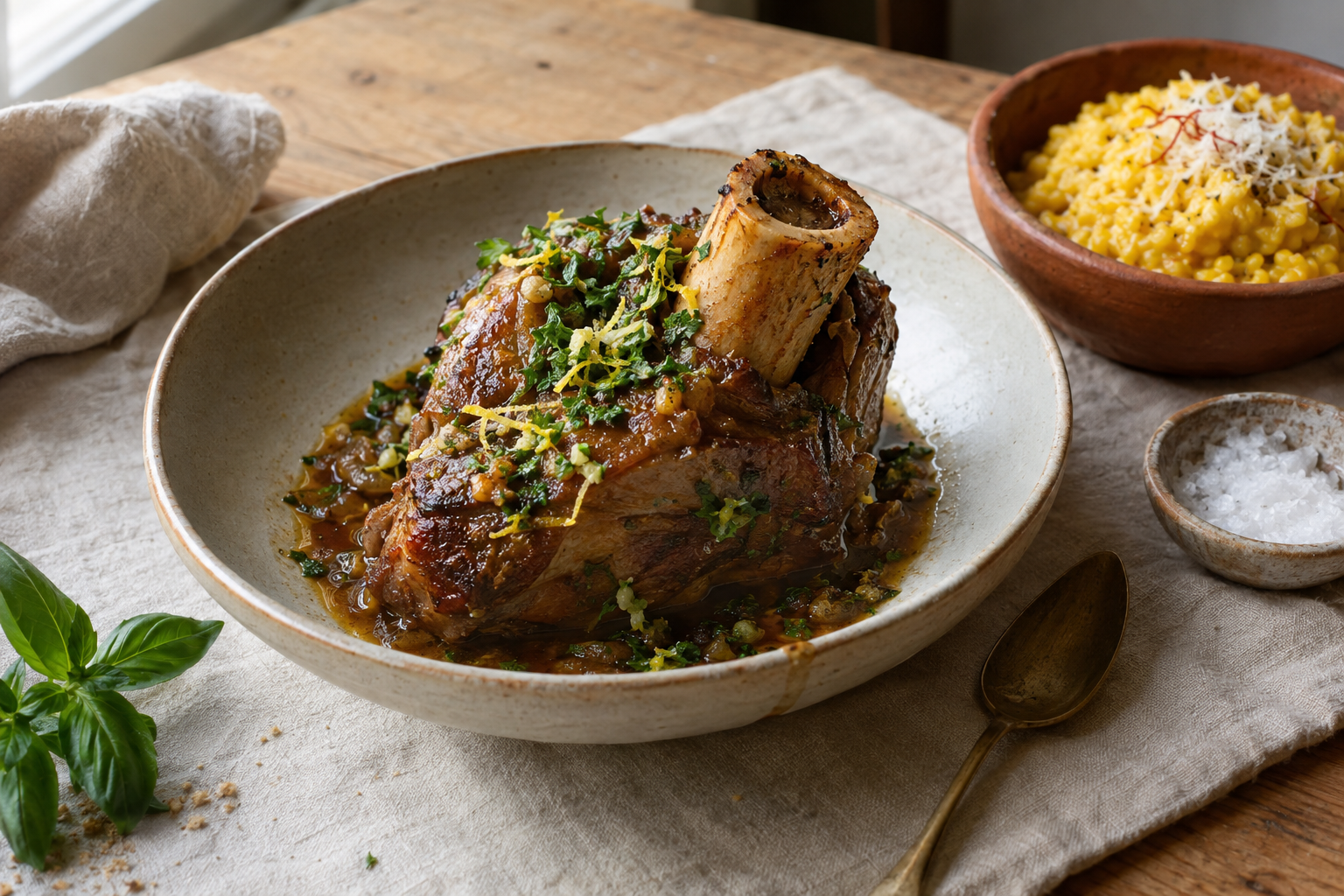
Ossobuco alla Milanese Recipe
This ossobuco alla Milanese recipe braises veal shanks gently in a Dutch oven until tender, then adds lemon-parsley gremolata for a fresh, balanced finish.
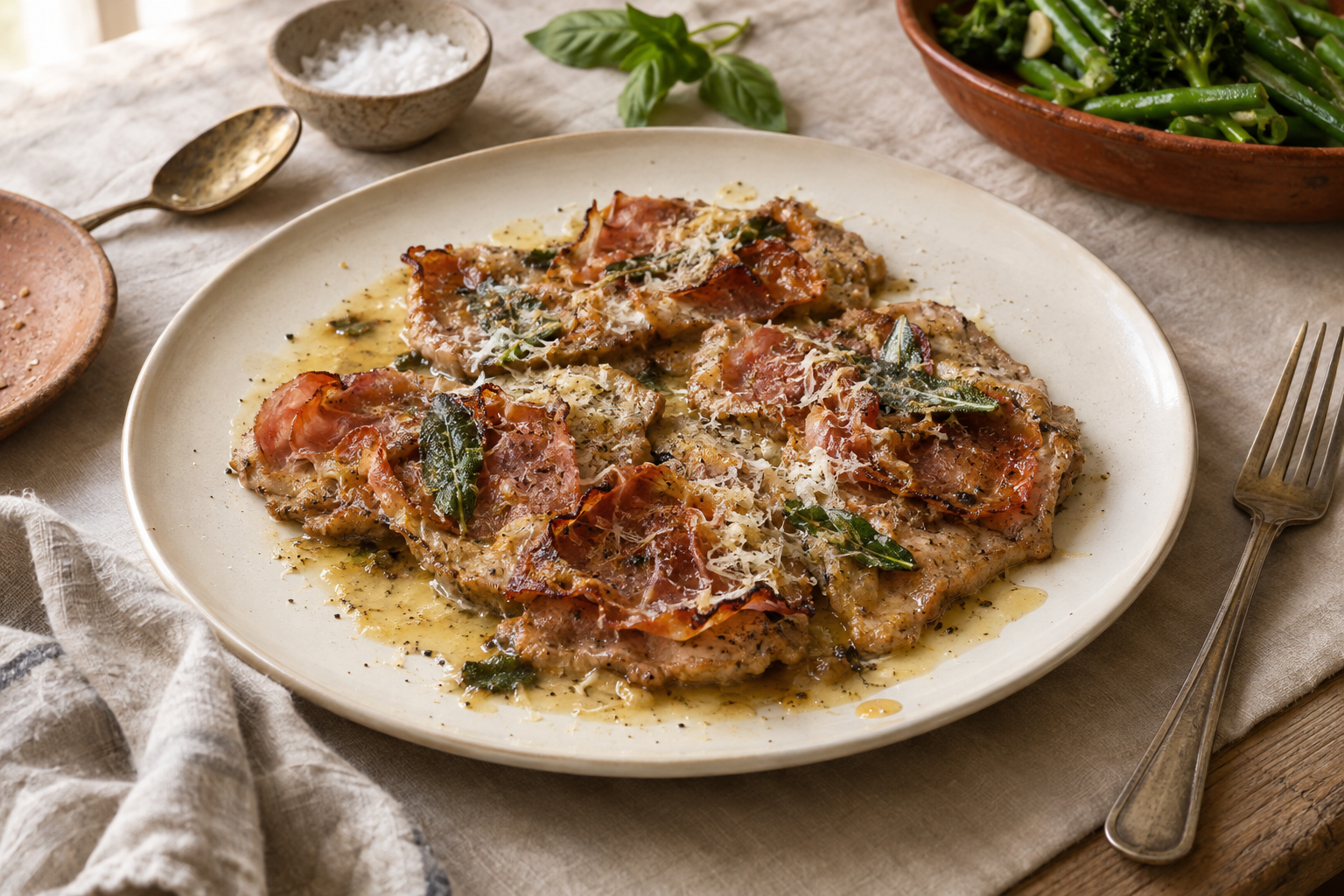
Saltimbocca alla Romana Recipe
This saltimbocca alla romana recipe pairs thin veal with prosciutto and sage, then finishes in a quick white-wine butter sauce for a fast, polished main.
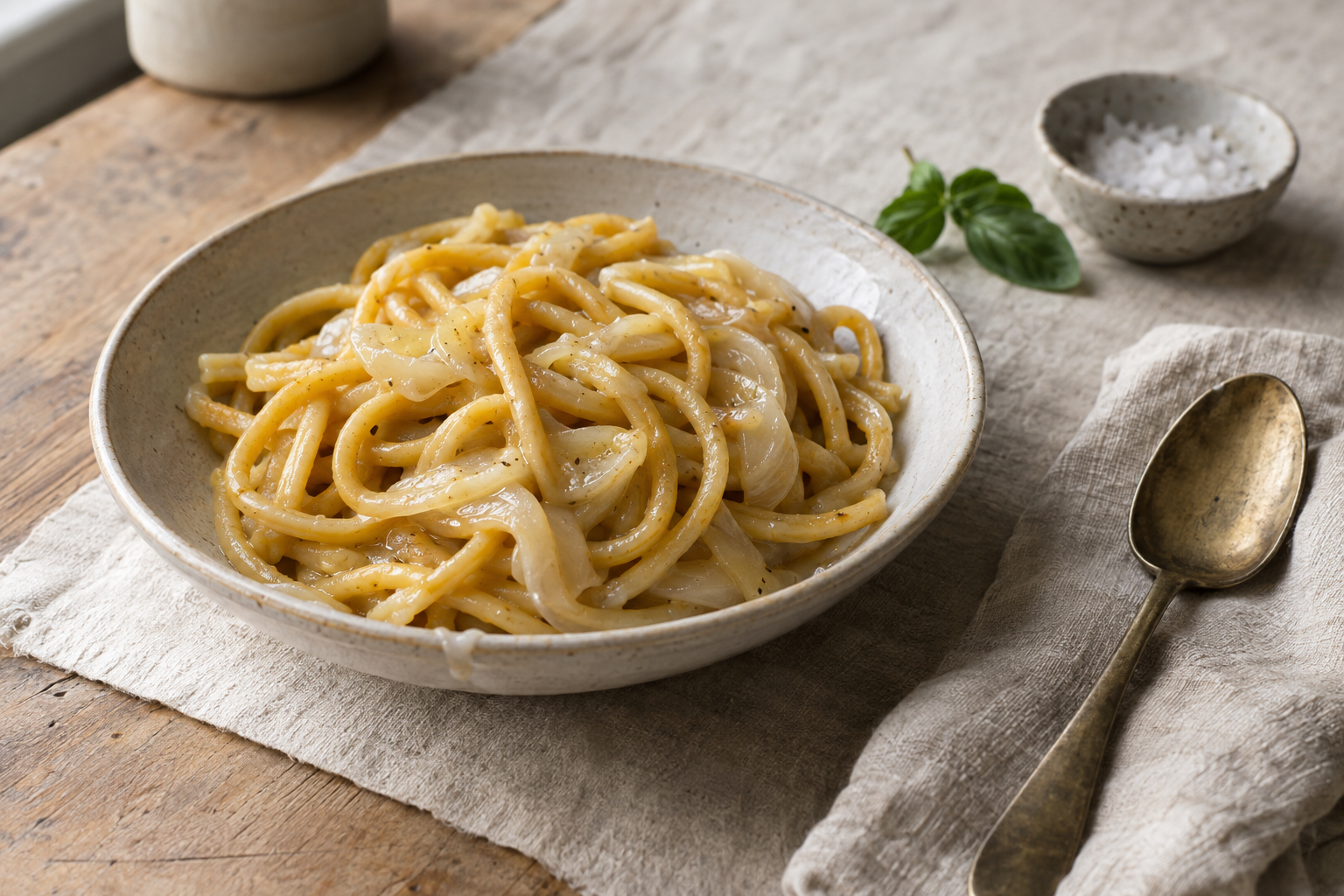
Bigoli in Salsa Recipe (Venetian Pasta)
This bigoli in salsa recipe coats thick Venetian pasta in soft onions and anchovies; a slow, gentle cook builds savory flavor from pantry staples.
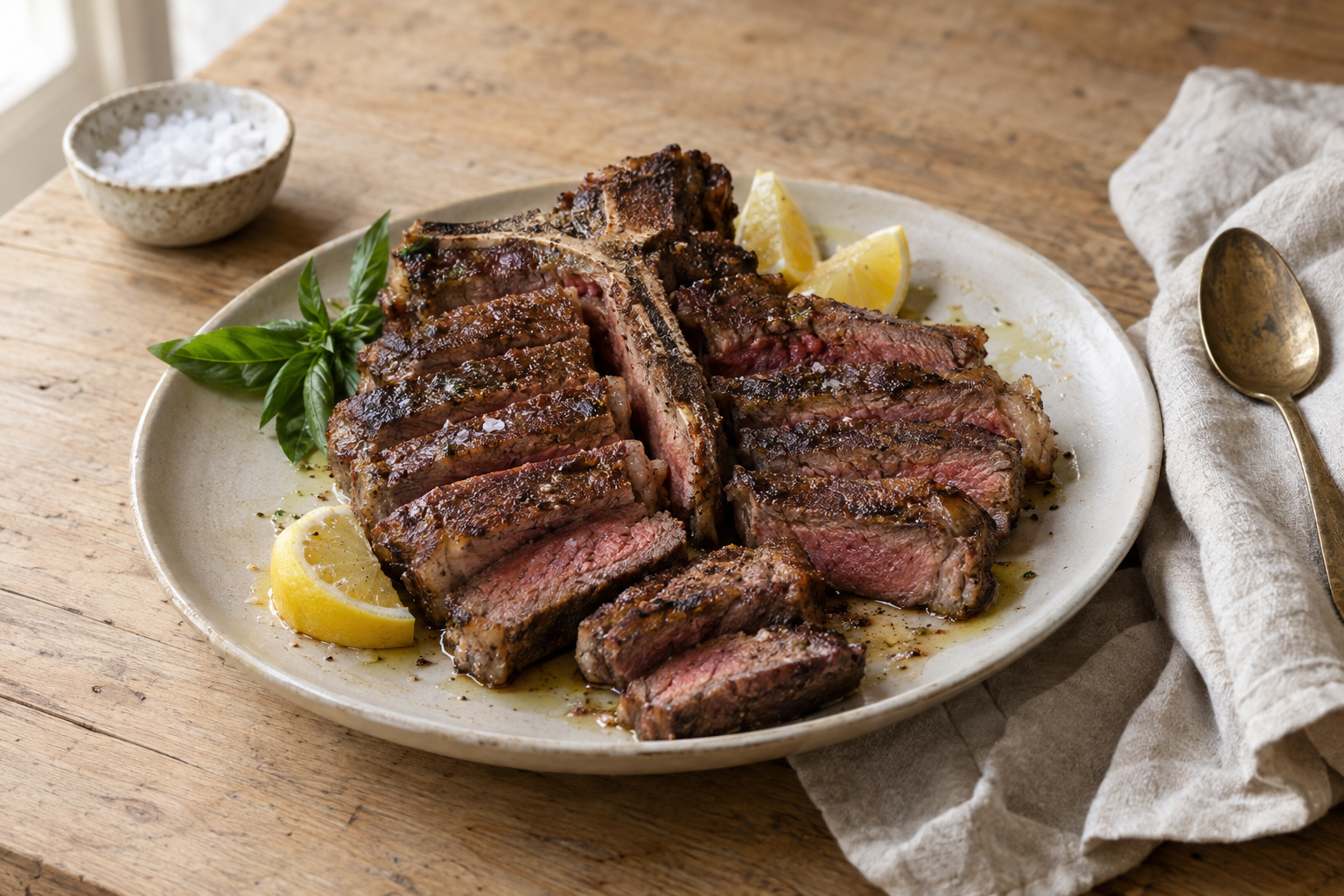
Bistecca alla Fiorentina Recipe (Pan-Seared)
This bistecca alla fiorentina recipe seasons a thick T-bone simply, then sears it hard and finishes it in the oven for a deeply browned crust at home.