Traditional Sicilian Caponata Recipe
Sicilian caponata pairs fried eggplant, celery, olives, and capers in sweet-sour tomato-vinegar sauce. Serve it as an antipasto or make-ahead lunch.
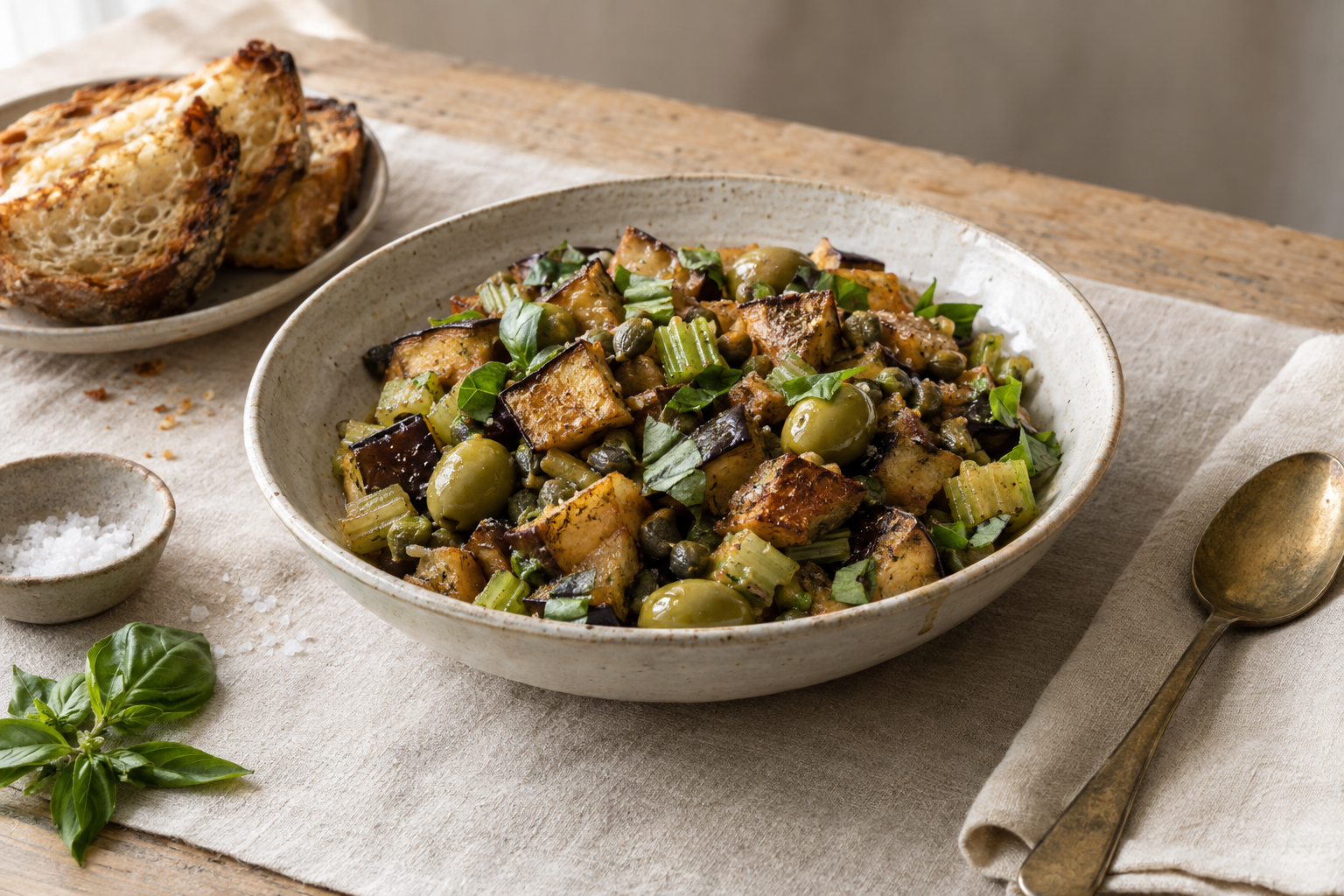
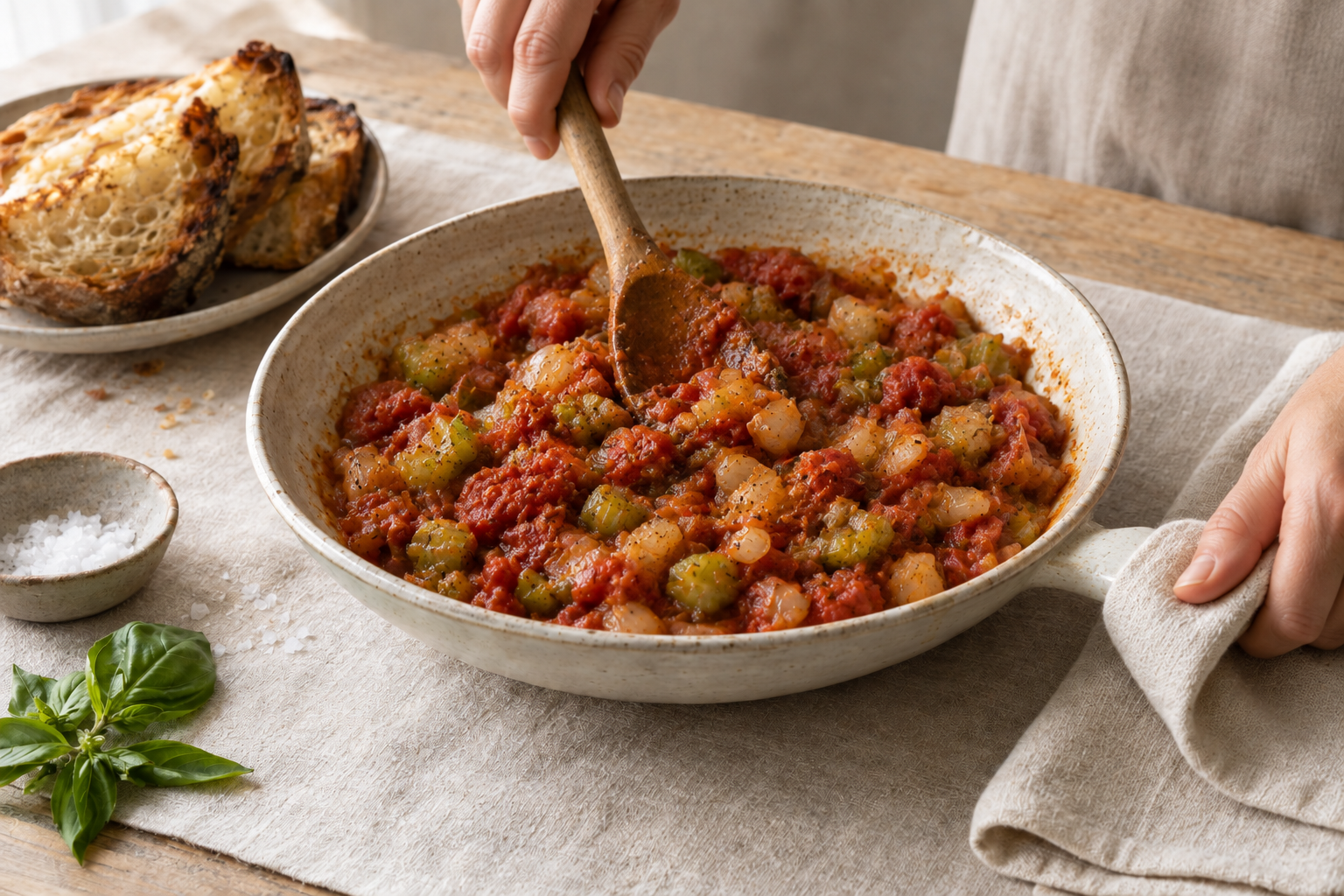
Traditional Sicilian caponata is a sweet-and-sour eggplant relish with celery, olives, capers, and tomato. In Palermo, it is often served at room temperature as part of an antipasto spread, and the balance of vinegar and sugar shifts from kitchen to kitchen. I fry the eggplant separately until its edges brown and its center turns soft, then fold it into the celery-tomato base. That keeps the pieces distinct instead of letting them collapse into sauce. The agrodolce (sweet-and-sour) seasoning should taste bright, not candy-sweet, because the olives and capers bring plenty of salt. Give the finished caponata at least 30 minutes to rest. It is good warm, but even better after the vinegar has settled into the vegetables. Serve it with toasted bread, beside grilled fish, or pack it for lunch. If you want to make that eggplant into dinner next, try Pasta alla Norma Recipe; for a heartier vegetable meal, cook Traditional Tuscan Ribollita Recipe. This version works because separately fried eggplant holds its shape while the sharp-sweet dressing soaks in.
By Lucia Moretti
Step by step
These photos follow the method in order, from the first prep step to the plated dish.
Where It Goes Wrong
The eggplant turns greasy instead of browning. Fry in small batches and let the oil return to 350°F (175°C) between batches.
| Symptom | Cause | Fix |
|---|---|---|
| The eggplant turns greasy instead of browning. | The oil was too cool or the pan was crowded, so the eggplant soaked up oil before its surface browned. | Fry in small batches and let the oil return to 350°F (175°C) between batches. |
| The eggplant falls apart in the finished caponata. | The cubes were cut small or stirred too roughly after frying. | Cut ¾-inch (2 cm) cubes and fold them into the sauce gently at the end. |
| The caponata tastes watery. | The tomato mixture was not reduced enough before the eggplant went back in. | Simmer the tomatoes until thick, with no liquid pooling around the vegetables. |
| The dish tastes too sharp or too sweet. | The vinegar and sugar balance has not had time to settle, or the tomatoes vary in sweetness. | Rest the caponata for at least 30 minutes, then taste and adjust with a small pinch of sugar or a splash of vinegar. |
| The caponata is too salty. | Olives and capers vary in saltiness, and extra salt was added before tasting the finished dish. | Rinse the capers, season lightly during cooking, and add more salt only after combining everything. |
Recipe
Ingredients
Method
- 1
Cut the eggplant into ¾-inch (2 cm) cubes. Chop the onion and celery, and set out the tomatoes, vinegar, sugar, olives, and capers so they are ready to add.
- 2
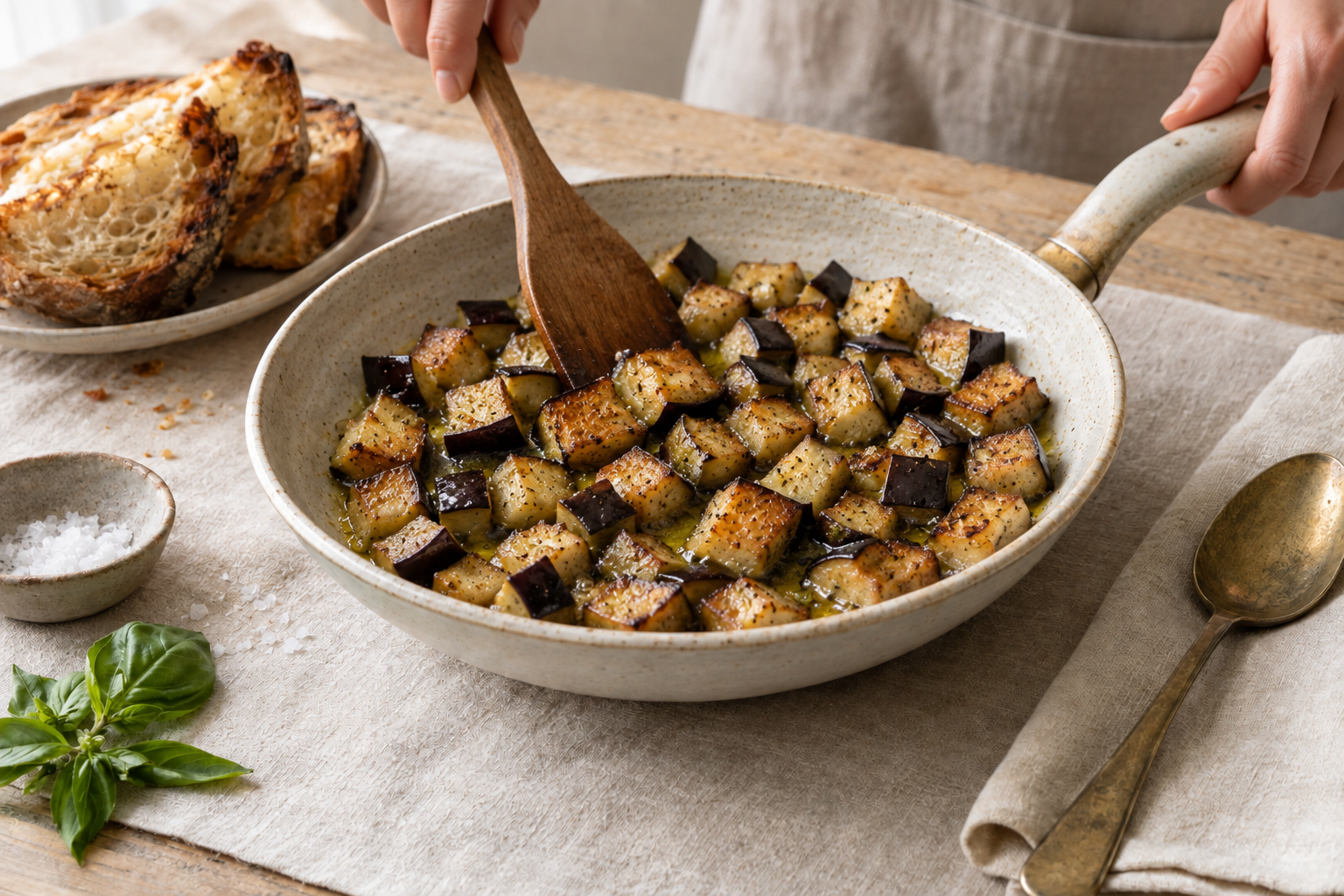
Heat the frying oil in a wide, heavy skillet over medium-high heat until it reaches 350°F (175°C). Working in batches so the pan is not crowded, fry the eggplant, turning it now and then, until golden at the edges and tender in the center, about 5–7 minutes per batch. Keep the oil between 325–350°F (165–175°C) and add more oil as needed.
- 3
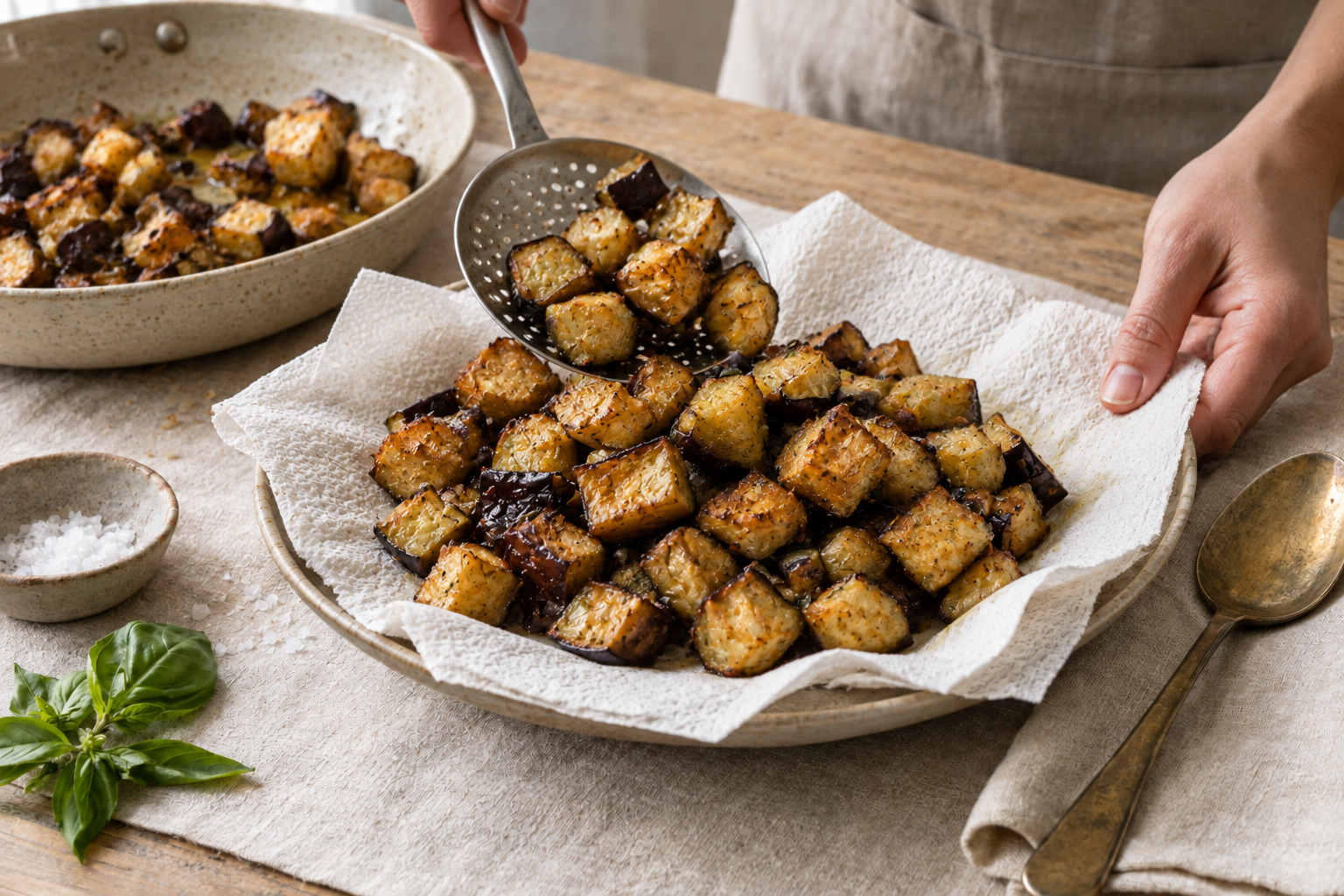
Lift the eggplant out with a slotted spoon and drain it on a paper-towel-lined tray. Season lightly with some of the measured salt while it is still warm.
- 4
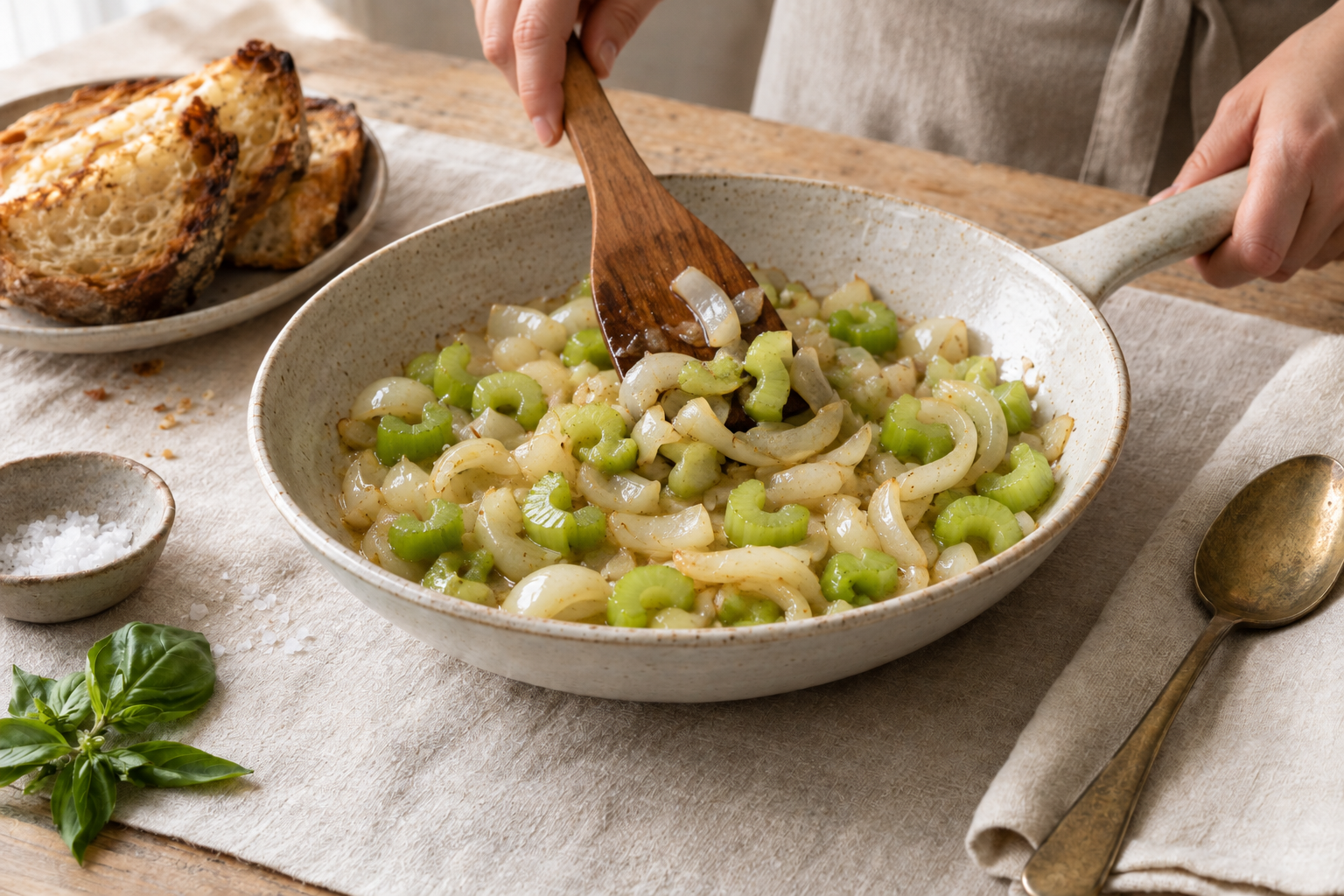
Pour off the frying oil and carefully wipe the skillet. Add the remaining 2 tablespoons (30 ml) olive oil and set the pan over medium heat. Cook the onion and celery with the remaining salt and the pepper, stirring often, until soft and glossy but not browned, about 8–10 minutes.
- 5
Stir in the tomatoes and simmer until the mixture thickens and no longer looks watery, about 8–10 minutes. Stir occasionally so the tomato does not catch on the bottom.
- 6
Stir the vinegar and sugar into the tomato mixture and simmer for 2 minutes. Fold in the olives, capers, and fried eggplant gently, then cook for 2–3 minutes, just until everything is hot and coated. Taste and adjust the salt if needed.
- 7
Take the pan off the heat and let the caponata rest for at least 30 minutes. Tear the basil over the top before serving. Serve warm or at room temperature; for the best balance, make it ahead and chill it, then bring it back to room temperature before serving.
FAQ
Can I make Sicilian caponata ahead? Yes, caponata is an excellent make-ahead dish. Chill it in a covered container after it has cooled, then bring it to room temperature before serving so the sweet-sour flavor comes through.
Can I make Sicilian caponata ahead?
Yes, caponata is an excellent make-ahead dish. Chill it in a covered container after it has cooled, then bring it to room temperature before serving so the sweet-sour flavor comes through.
Should caponata be served hot or cold?
Caponata is best served at room temperature. It is fine warm, but chilling and then letting it lose its refrigerator chill gives the flavors time to meld.
How long does homemade caponata keep?
Homemade caponata keeps for up to 4 days in the refrigerator in a covered container. Refrigerate it within 2 hours of cooking.
What do you serve with caponata?
Serve caponata with toasted bread as an antipasto, alongside grilled fish or meat, or as a make-ahead lunch. It is also good spooned over simple pasta.
Comments
No approved comments yet.
Sign in to leave a comment. Comments stay hidden until they are approved.
Related recipes
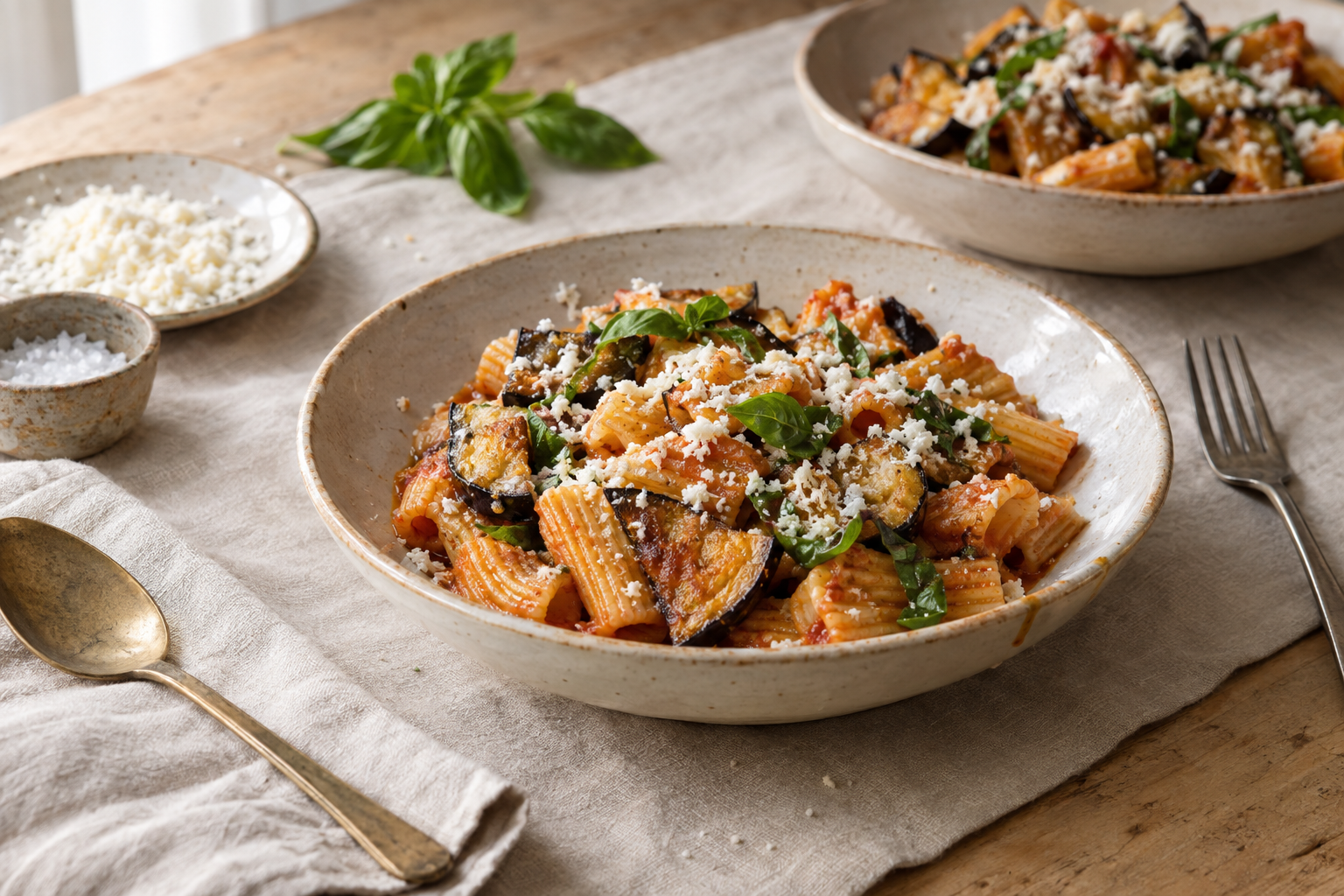
Pasta alla Norma Recipe
This pasta alla Norma recipe pairs tender tomato sauce and basil with crisp fried eggplant and salty ricotta salata for a balanced Sicilian supper.
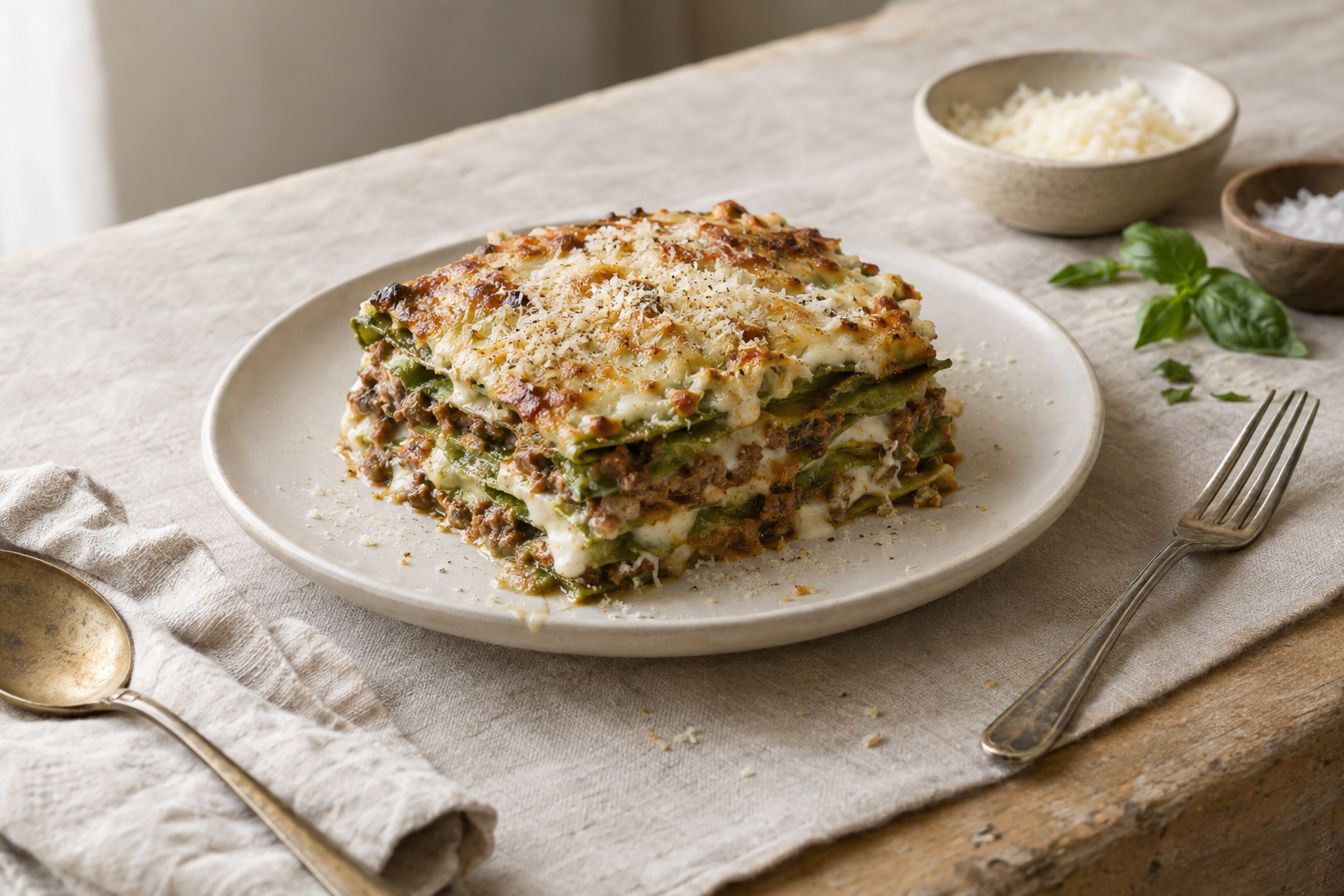
Lasagna Bolognese Recipe From Scratch
This lasagna Bolognese layers fresh spinach pasta, slow-cooked ragù, béchamel, and Parmesan, with make-ahead steps that keep dinner manageable.
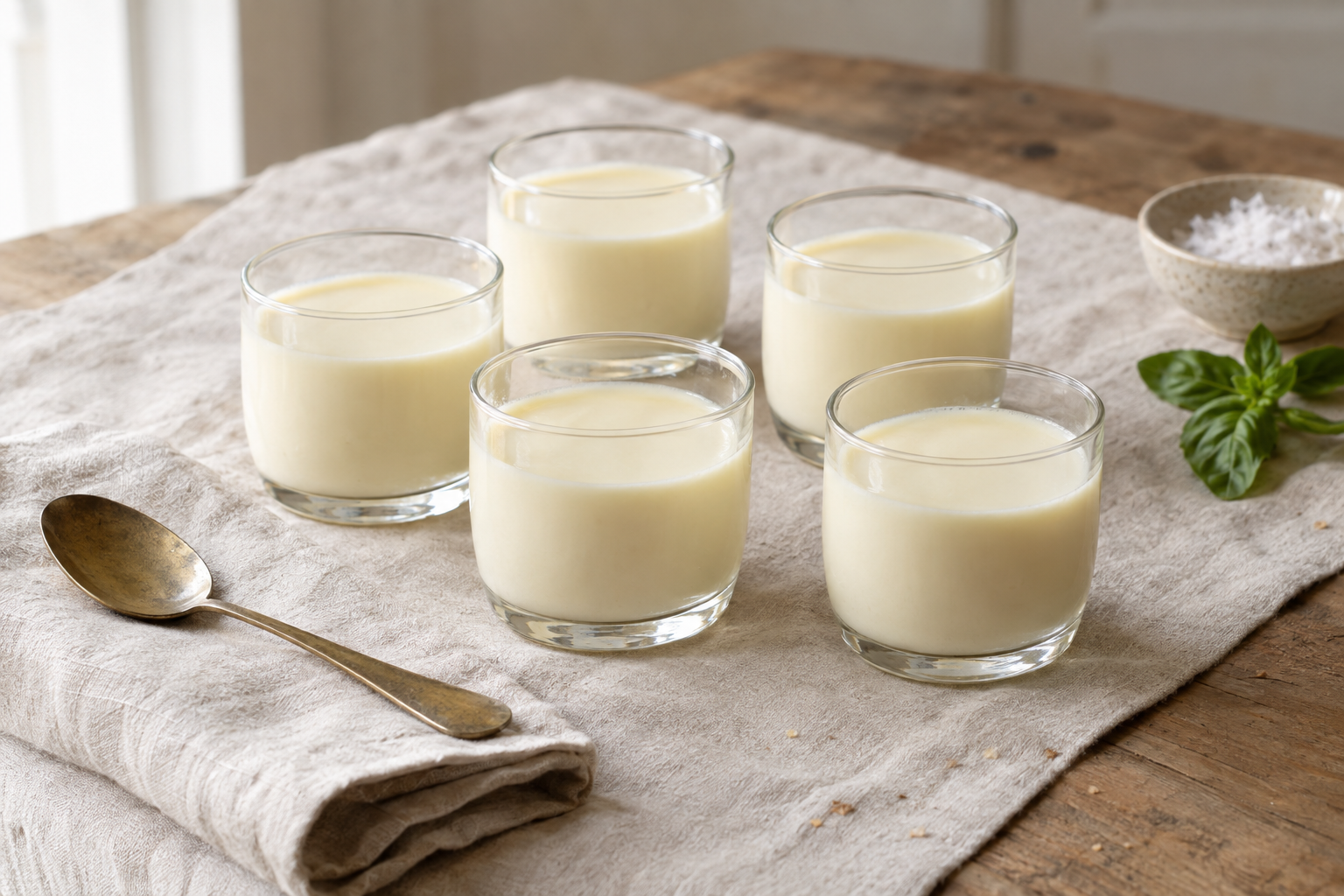
Easy Italian Panna Cotta Recipe
This easy Italian panna cotta recipe uses a simple cream-to-milk ratio and just enough gelatin for a silky, gently set dessert you can make ahead.
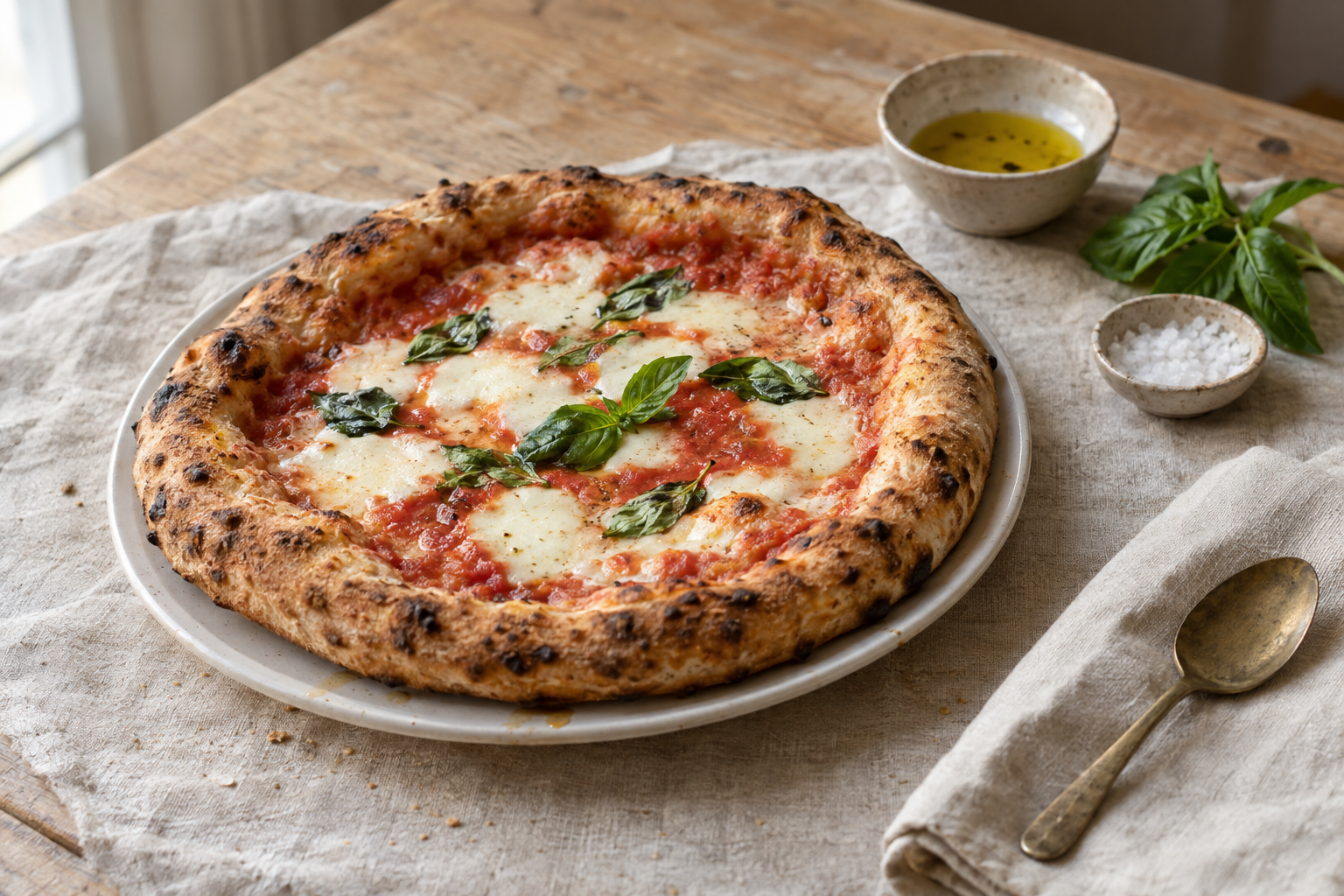
Neapolitan Pizza Margherita Recipe
Slow-rise dough and a hot home-oven steel give this Neapolitan Margherita a tender center, crisp edge, and balanced tomato, mozzarella, and basil at home.