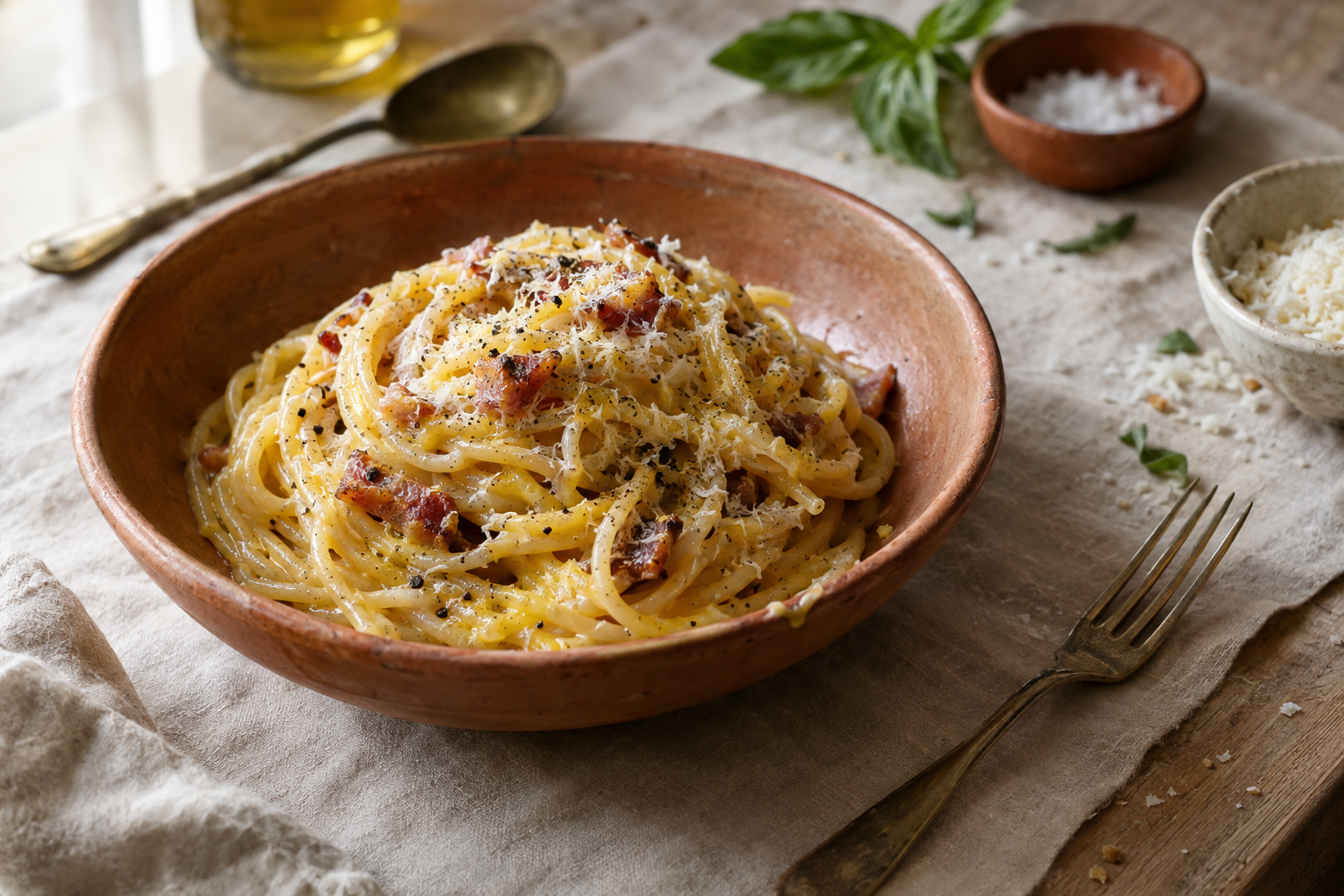
Authentic Cacio e Pepe Recipe
This authentic cacio e pepe recipe pairs pasta with a smooth Pecorino Romano and black pepper sauce, using starchy water and gentle heat instead of cream.
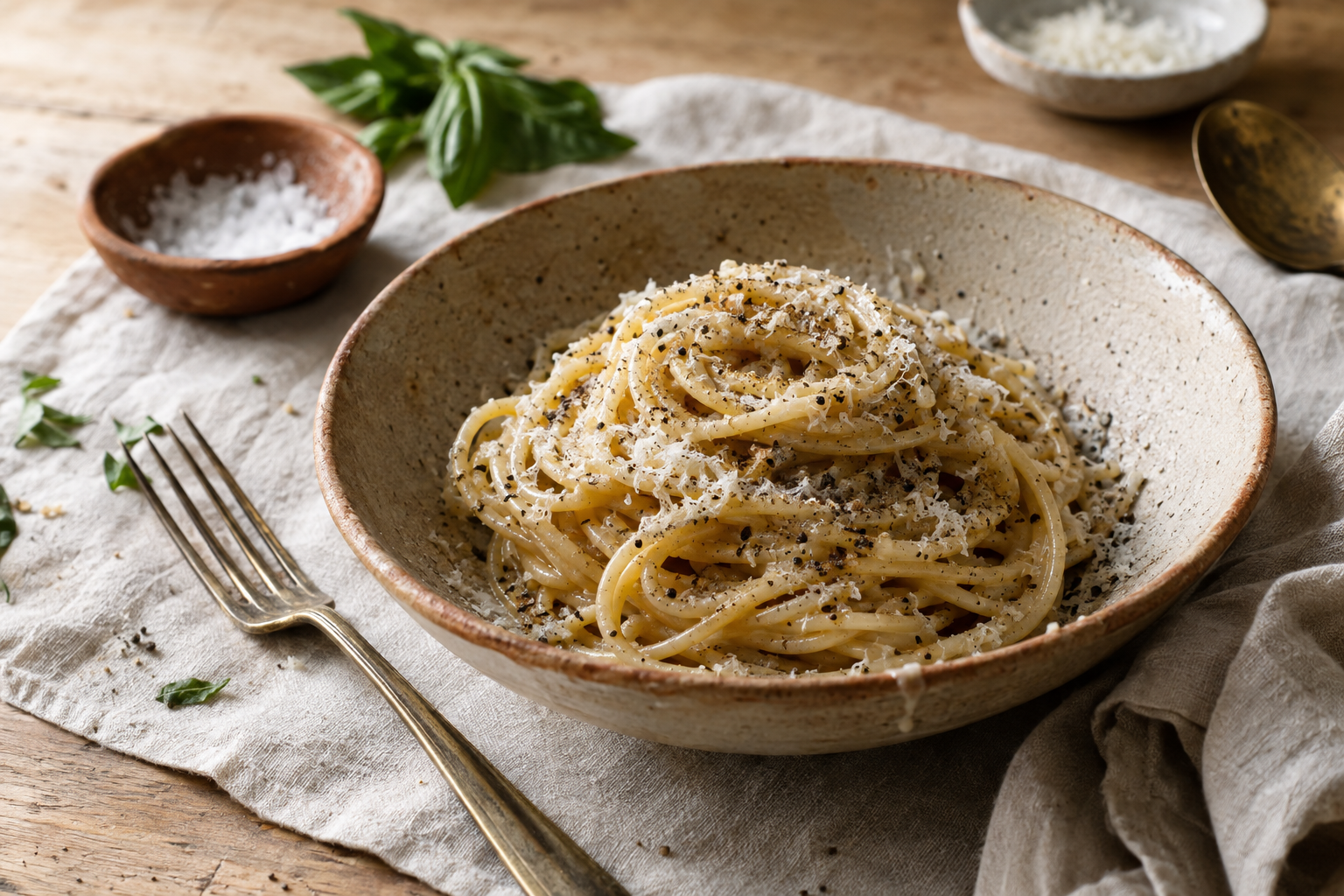
Cacio e pepe is a Roman pasta dish made with Pecorino Romano, black pepper, and pasta water—no cream needed. It comes from Lazio, where the sheep’s milk cheese gives this spare dish its salty, savory backbone. The ingredient list is short; the trick is keeping the cheese smooth instead of letting it turn into little rubbery clumps.
I use finely grated cheese and starchy pasta water to make a thick paste, then toss it with the pasta off the heat. That gentle approach gives you more control than tipping cheese straight into a hot pan. The word mantecatura means the final mixing that brings a sauce together, and here it is done with a little patience and steady tossing. If you enjoy Roman pasta dishes, you can also try Spaghetti alla Carbonara; for a different kind of careful stirring, see Risotto alla Milanese.
Use Pecorino Romano, not a mild young cheese, and grate it very fine so it melts evenly. This version works because the pasta water is starchy, the cheese is finely grated, and the pan is off the heat when they meet.
By Lucia Moretti
Step by step
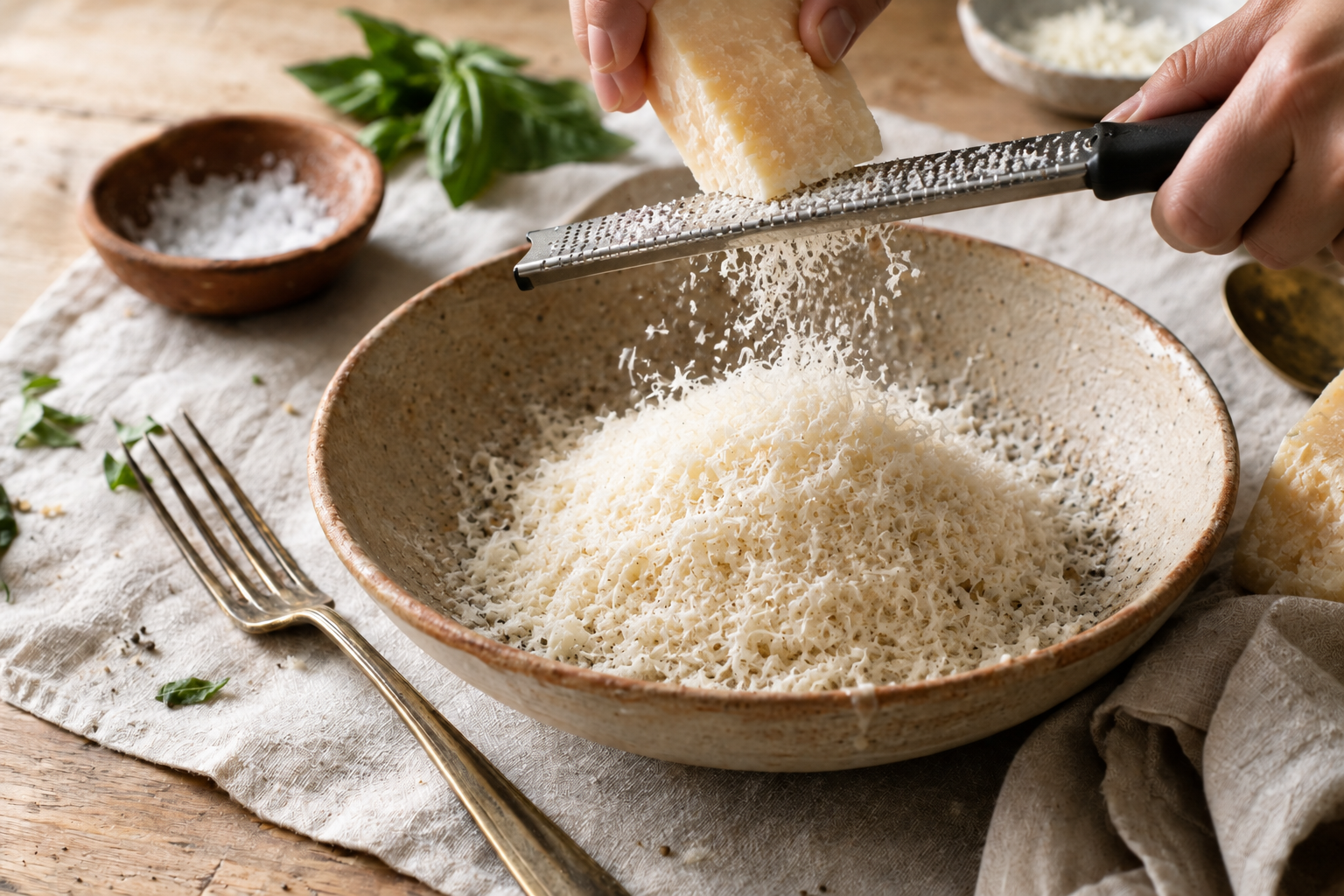
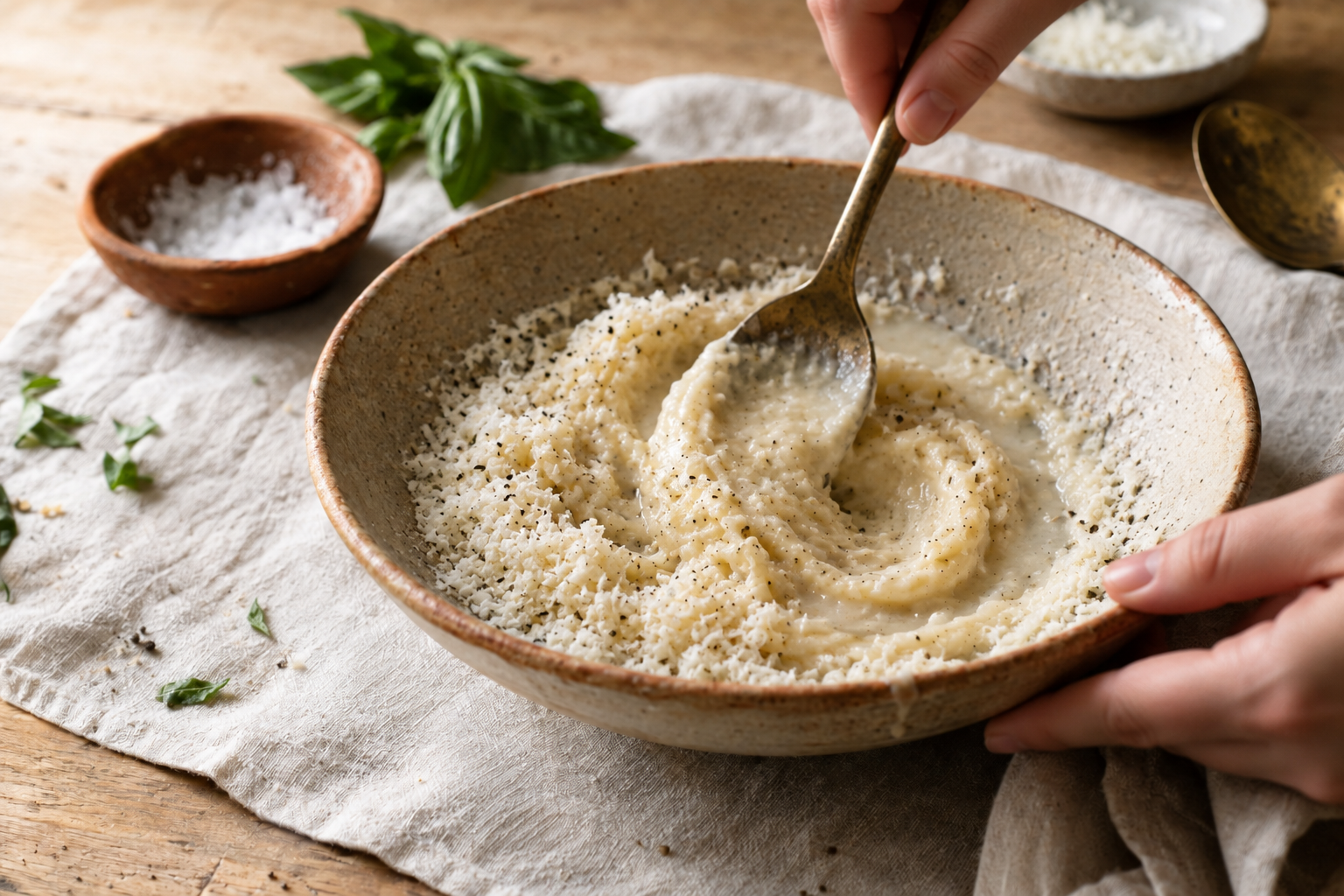
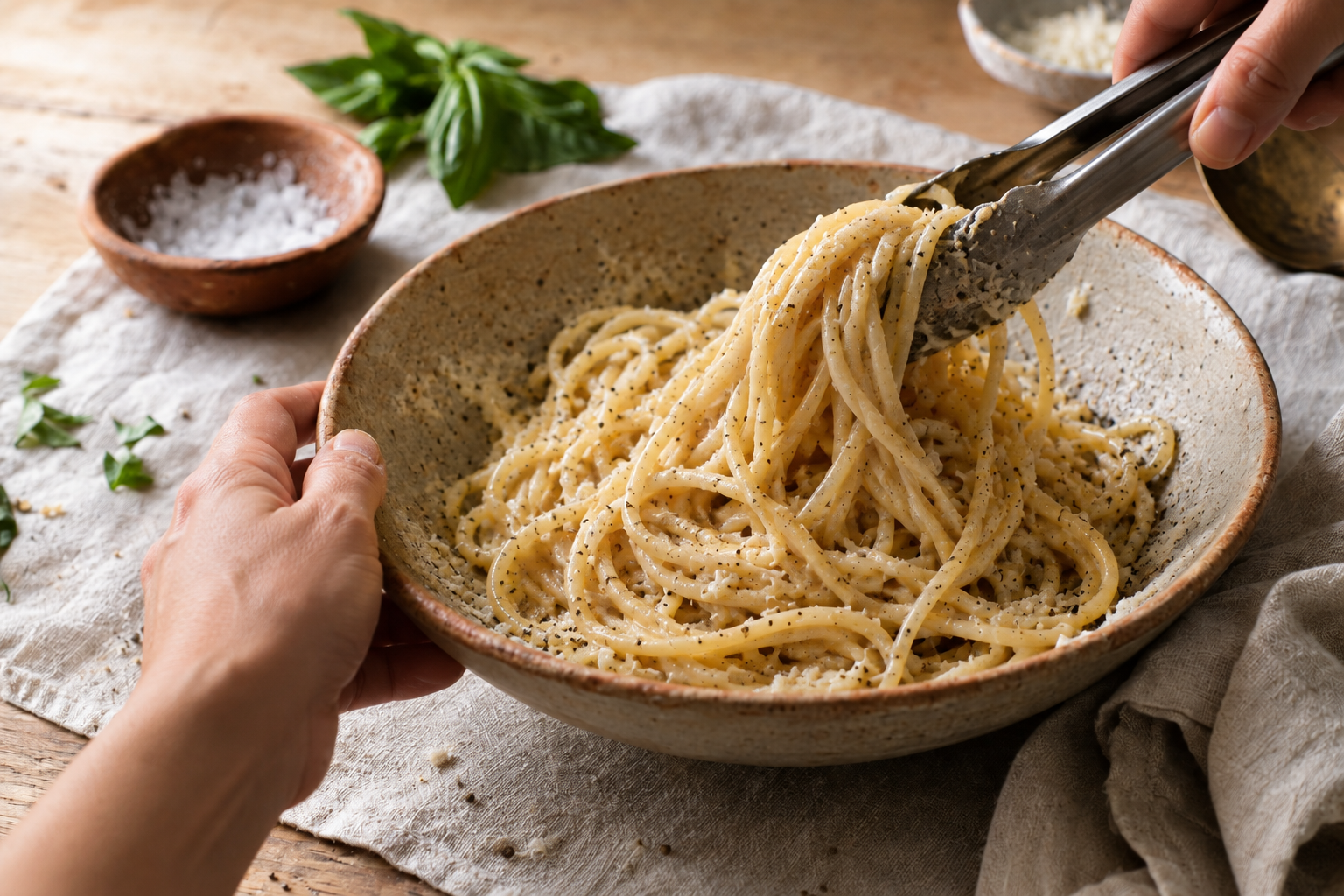
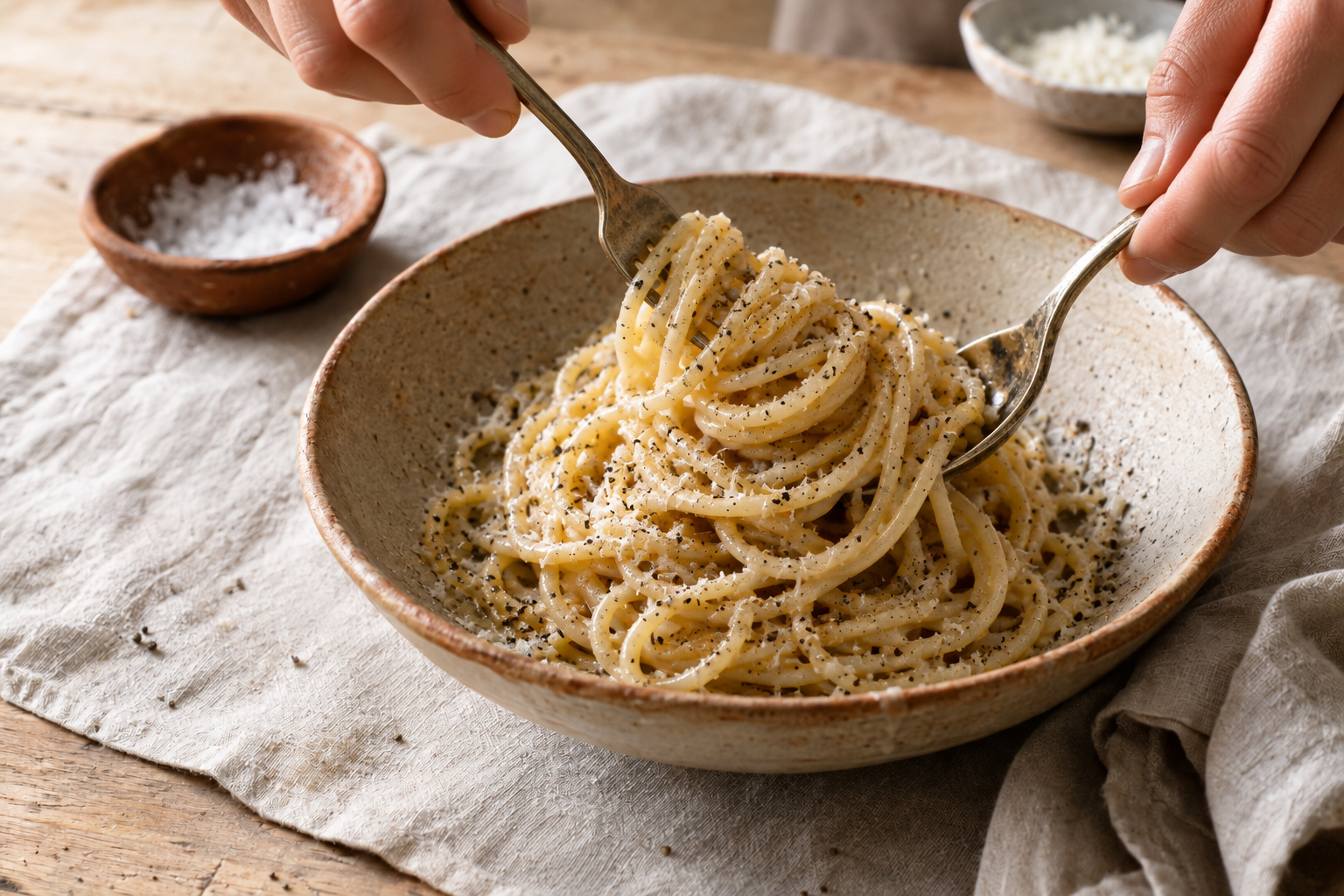
These photos follow the method in order, from the first prep step to the plated dish.
Where It Goes Wrong
The cheese forms clumps or strings. Take the skillet off the heat and let it cool briefly. Make the cheese paste with warm, not steaming, pasta water before tossing it with the pasta.
| Symptom | Cause | Fix |
|---|---|---|
| The cheese forms clumps or strings. | The pan or pasta water was too hot when the cheese was added. | Take the skillet off the heat and let it cool briefly. Make the cheese paste with warm, not steaming, pasta water before tossing it with the pasta. |
| The sauce is thick and pasty. | The pasta absorbed too much liquid, or not enough pasta water was added during tossing. | Add reserved pasta water 1 tablespoon at a time and keep tossing until the sauce turns glossy. |
| The sauce is thin and slides off the pasta. | Too much pasta water was added at once, or the pasta was not tossed enough to emulsify it. | Toss steadily off the heat. If needed, add a small pinch of finely grated cheese and keep tossing. |
| The pepper tastes bitter. | It was toasted over high heat or left in the hot skillet too long. | Toast it over medium-low heat only until fragrant, then take the pan off the burner. |
| The dish tastes too salty. | Pecorino Romano is naturally salty, and the pasta water may have been heavily salted. | Salt the water lightly and taste before adding any extra cheese at the table. |
Recipe
Ingredients
Method
- 1
Grate the Pecorino Romano as finely as you can and set it aside. Fine shreds blend into the sauce more easily than thick, uneven ones.
- 2
Toast the black pepper in a large skillet over medium-low heat for 1 to 2 minutes, stirring, until fragrant. Take the skillet off the heat so the pepper does not scorch.
- 3
Bring 3 quarts (2.8 L) of water to a boil in a large pot, add the salt, then cook the pasta until about 2 minutes shy of the package’s al dente time. Stir well during the first minute so the strands do not stick.
- 4
Scoop out at least 1½ cups (360 ml) of pasta water. Let ⅓ cup (80 ml) sit in a bowl until warm but no longer steaming, about 140°F (60°C). Whisk that warm water gradually into the grated cheese until you have a thick, smooth paste.
- 5
Transfer the pasta directly to the skillet with the toasted pepper. Add ½ cup (120 ml) of pasta water and toss over medium heat for 1 to 2 minutes, until the pasta is al dente and the water looks slightly cloudy.
- 6
Take the skillet off the heat and let it stand for about 30 seconds. Add the cheese paste in two batches, tossing continuously until it coats the pasta in a glossy sauce. Add reserved pasta water 1 tablespoon at a time if the sauce looks too thick.
- 7
Serve immediately in warm bowls, with a little extra black pepper if you like. The sauce thickens as it sits, so bring it to the table while it is loose and glossy.
FAQ
Does authentic cacio e pepe have cream? No, authentic cacio e pepe does not need cream. Finely grated Pecorino Romano and starchy pasta water make the sauce creamy when tossed together carefully.
Does authentic cacio e pepe have cream?
No, authentic cacio e pepe does not need cream. Finely grated Pecorino Romano and starchy pasta water make the sauce creamy when tossed together carefully.
Why does my cacio e pepe cheese clump?
The cheese usually clumps because it gets too hot. Let the pasta and skillet cool briefly, and mix finely grated cheese with warm, not steaming, pasta water.
What cheese is best for cacio e pepe?
Pecorino Romano is the classic choice. Its salty, sharp flavor is central to the dish, and fine grating helps it melt smoothly.
Can I make cacio e pepe ahead of time?
Cacio e pepe is best served right after it is made. The sauce thickens as it cools, though you can loosen leftovers gently with a splash of water while reheating.
Comments
No approved comments yet.
Sign in to leave a comment. Comments stay hidden until they are approved.